

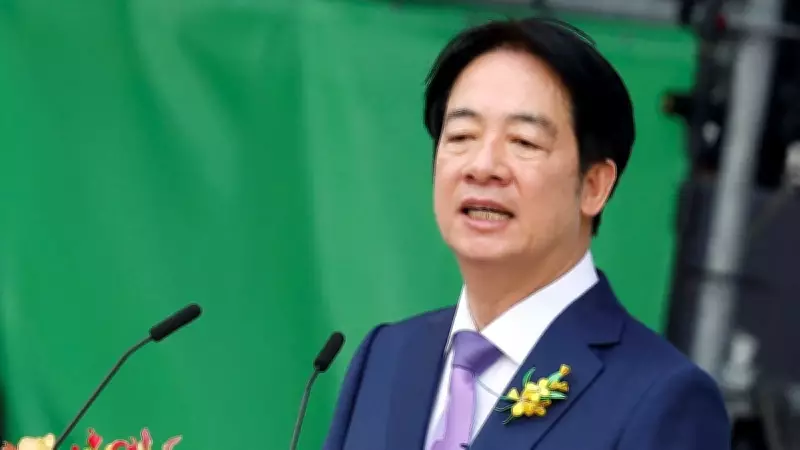
Taiwan has condemned China after a New York Times reporter was expelled from the island following an interview with President Lai Ching-te. The incident has intensified long-standing tensions between Beijing and Taipei, with China viewing democratically governed Taiwan as its own territory and Lai as a "separatist." Lai, who rejects Beijing's sovereignty claims, maintains that only the island's people can decide their future.
Background of the Incident
The New York Times journalist, whose identity has not been disclosed, conducted an interview with President Lai on May 30, 2026. Shortly after the interview, the reporter was ordered to leave Taiwan by Chinese authorities, who accused the journalist of violating visa regulations. Taiwan's Ministry of Foreign Affairs strongly protested the expulsion, calling it an act of intimidation and a violation of press freedom.
China's Stance on Taiwan
China has consistently asserted that Taiwan is an inalienable part of its territory and has opposed any official interactions between foreign media and Taiwanese leaders. Beijing views President Lai's stance as a challenge to the One-China principle, which is the cornerstone of its foreign policy. The Chinese government has warned that such actions could have serious consequences for cross-strait relations.

Taiwan's Response
In response to the expulsion, Taiwan's government issued a statement condemning China's actions as an attack on democratic values and freedom of the press. President Lai reiterated that Taiwan is a sovereign nation and that its people have the right to determine their own future without external interference. The incident has sparked widespread criticism from international media and human rights organizations.
International Reactions
The United States and other Western nations have expressed concern over the expulsion, urging China to respect press freedom and the rights of journalists. The New York Times has called for the immediate return of its reporter and condemned China's actions as a threat to independent journalism. The United Nations has also weighed in, emphasizing the importance of protecting journalists and their work.
Implications for Cross-Strait Relations
This incident is likely to further strain relations between China and Taiwan, which have been tense since Lai's election. Analysts warn that China may increase its military and diplomatic pressure on Taiwan, while Taiwan will seek stronger support from the international community. The expulsion of the New York Times reporter is seen as a warning to other foreign media outlets covering Taiwan's political landscape.
Conclusion
The expulsion of the New York Times reporter underscores the ongoing conflict between China's territorial claims and Taiwan's pursuit of self-determination. As both sides remain entrenched in their positions, the incident highlights the challenges faced by journalists operating in politically sensitive regions. Taiwan continues to call for international solidarity in defending democratic values and press freedom.






