Taiwan Reports Surge in Chinese Naval Presence
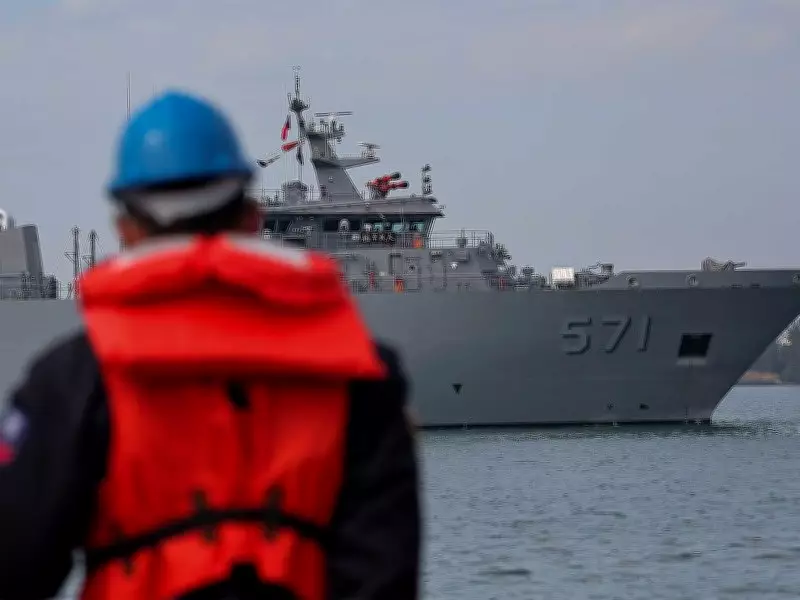
Taiwan's Ministry of National Defense (MND) announced on Sunday, July 5, 2026, that it detected seven People's Liberation Army Navy (PLAN) vessels and seven official Chinese ships operating around Taiwan's territorial waters as of 6 a.m. local time (UTC+8). The MND confirmed it has monitored the situation and responded accordingly.
In a post on X, the MND stated: "7 PLAN vessels and 7 official ships operating around Taiwan detected up until 6 a.m. (UTC+8) today. ROC Armed Forces have monitored the situation and responded. No flight path illustration is provided, as we did not detect PLA aircraft operating around Taiwan during this timeframe."
Previous Day's Incursions Included Aircraft
This detection follows a more extensive incursion on Saturday, July 4, when the MND reported eight sorties of Chinese military aircraft, ten PLAN vessels, and seven official ships operating around Taiwan. Of the eight aircraft sorties, six entered Taiwan's southwestern part of the Air Defense Identification Zone (ADIZ).

The MND posted on X: "8 sorties of PLA aircraft, 10 PLAN vessels and 7 official ships operating around Taiwan detected up until 6 a.m. (UTC+8) today. 6 out of 8 sorties entered Taiwan's southwestern part ADIZ. ROC Armed Forces have monitored the situation and responded."
China Urges US Prudence on Taiwan
On July 3, China's Foreign Minister Wang Yi held a phone conversation with US Secretary of State Marco Rubio. Chinese Ambassador to India, Xu Feihong, said that Wang Yi discussed the need for the US to handle Taiwan-related issues with extra prudence, emphasizing that the issue has far-reaching implications.
According to Xu Feihong, Wang Yi stated: "China and the U.S. need to remove disruptions, overcome obstacles, and stay firmly on the right course toward building a constructive bilateral relationship of strategic stability."
Historical and Legal Context of Taiwan's Status
China's claim over Taiwan is rooted in historical, political, and legal arguments. Beijing asserts that Taiwan is an inseparable part of China, a position embedded in national policy and supported by domestic laws and international statements. China's claim dates back to the Qing Dynasty's annexation of the island in 1683 after defeating Ming loyalist Koxinga.
Taiwan, however, maintains a distinct identity, functioning independently with its own government, military, and economy. The island's status remains a significant point of international debate, testing principles of sovereignty, self-determination, and non-interference in international law, as noted by the United Service Institution of India.