

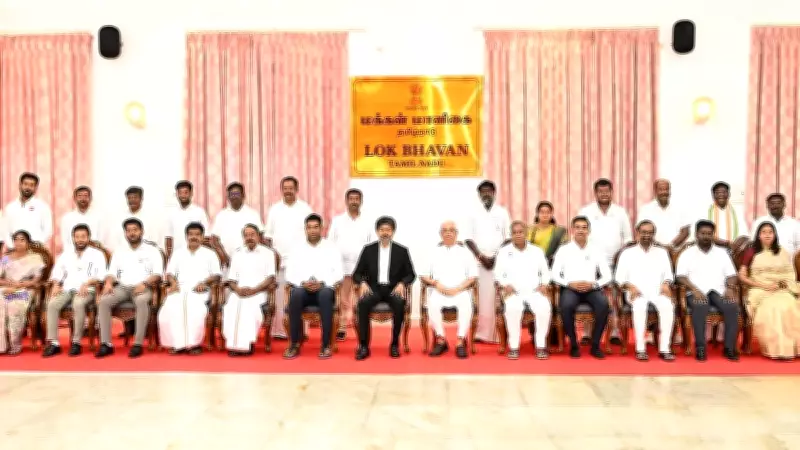
The recitation of the Tamil Nadu state song after the national anthem and Vande Mataram during the swearing-in ceremony of 21 TVK MLAs and two Congress legislators has sparked a political controversy. The event, which took place on May 21, 2026, saw Governor Rajendra Vishwanath Arlekar administering the oath of office to the newly elected members. The inclusion of the state song after the national anthem and Vande Mataram has been criticized by opposition parties, who argue that it undermines the primacy of the national anthem. Supporters, however, defend the practice as a celebration of regional identity within the constitutional framework. The controversy highlights the ongoing tensions between national and regional symbols in Indian politics.
Background of the Ceremony
The swearing-in ceremony was held at the Raj Bhavan in Chennai, where 21 MLAs from the Tamilaga Vettri Kazhagam (TVK) and two from the Congress party took the oath. Governor Arlekar administered the oath in accordance with constitutional provisions. The ceremony began with the national anthem, followed by Vande Mataram, and then the Tamil Nadu state song, 'Tamil Thai Vazhthu'. This sequence has been a point of contention in the past as well.
Political Reactions
Opposition leaders, including those from the BJP and AIADMK, have condemned the move, stating that the national anthem should be the sole anthem played at official functions. They have accused the ruling party of promoting regionalism over nationalism. In response, TVK leaders have asserted that the state song is a mark of respect for Tamil culture and language, and its recitation is in line with the state's traditions.

Legal and Constitutional Aspects
Article 51A of the Constitution outlines the fundamental duties of citizens, which include respecting the national anthem. However, there is no specific prohibition against playing state songs after the national anthem. The Supreme Court has previously ruled that the national anthem must be given primacy, but state songs can be played as long as they do not disrespect the national anthem. Legal experts are divided on whether the sequence followed in this ceremony violates any law.
Public Opinion
The incident has generated widespread debate on social media, with users expressing divergent views. Some see it as a harmless expression of regional pride, while others view it as a deliberate affront to national unity. The controversy is expected to continue in the coming days, with potential political implications for the ruling coalition in Tamil Nadu.






