

Teenager's Terrifying Encounter with Leopard in Himachal Pradesh
In an extraordinary display of raw courage and survival instinct, an 18-year-old student from Himachal Pradesh fought off and killed a nearly three-year-old leopard during a sudden morning attack. The incident occurred in Sarli village within Arki tehsil of Solan district, highlighting the escalating human-wildlife conflict in the region.
The Fateful Morning Attack
Pravesh Sharma, a second-year electrician course student at the Industrial Training Institute in Arki, was on a routine errand to fetch milk from his uncle's house when his life took a dramatic turn. At approximately 7 AM, just 25 meters from his home, Sharma noticed subtle movement among leaves before the leopard—concealed behind a tree—launched its assault.
"I noticed a slight movement among the leaves and, before I could react, the leopard, which was sitting behind a tree, lunged at me," Sharma recounted to reporters. The predator's attack was swift and brutal, catching the teenager completely off guard in the open field.

Fifteen Minutes of Life-or-Death Struggle
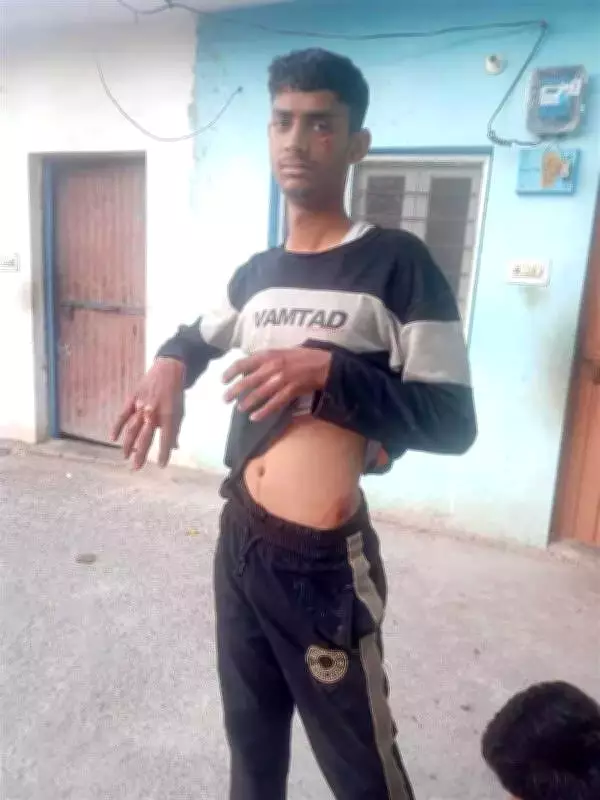
What followed was a grueling 10-15 minute battle for survival. Despite sustaining multiple injuries to his hands, arms, shoulders, knees, back, and under one eye, Sharma refused to succumb to the leopard's ferocity. He used his bare hands to block the animal's repeated attempts to seize his neck, demonstrating remarkable presence of mind under extreme duress.
"The leopard tried repeatedly to bite and scratch me, but I managed to control its jaws and claws," Sharma explained. "The leopard's fangs were trapped in my grip. But I managed to land solid punches at its jaws."
As the struggle intensified, Sharma utilized nearby stones and eventually a stick to fend off the predator. When the leopard fell during the confrontation, the teenager seized the opportunity to deliver decisive blows with the stick. By the time his father, Balak Ram Sharma, arrived at the scene armed with another stick, the leopard had already succumbed to its injuries.
Aftermath and Recognition
Following the harrowing ordeal, Sharma was immediately admitted to Arki hospital for treatment of his extensive injuries. Medical professionals treated his wounds, and he was discharged later the same evening, a testament to both his physical resilience and the prompt medical attention he received.
The forest department acknowledged Sharma's extraordinary bravery by awarding him Rs 5,000 as immediate relief. This recognition underscores the department's appreciation for his courageous defense against the wild predator.
Persistent Wildlife Threat in the Region
This attack is not an isolated incident but rather part of a disturbing pattern of human-leopard conflicts in the area near Biyoli forest. Just days earlier, on March 6, another leopard attempted to attack a villager riding a two-wheeler, forcing the individual to flee for his life. Weeks prior to that incident, the same predator had killed a dog in the village.
Villagers had previously expressed their concerns to local forest authorities following the March 6 attack. "After the March 6 attack, the villagers had complained to the local forest block officer, urging him to put up cages to trap the leopard, but the official advised them to submit a written complaint to the head office in Shimla," explained Balak Ram Sharma, the teenager's father.
However, in the wake of this latest and most dramatic confrontation, forest officials have now assured residents that they will take action to capture any remaining leopards roaming in the area. This commitment comes as small comfort to a community living in constant fear of similar attacks.
Broader Implications for Wildlife Management
The incident raises serious questions about wildlife management and conflict mitigation strategies in regions where human settlements border forest areas. While leopards are protected species under Indian wildlife laws, increasing encounters with humans create complex challenges for conservation efforts and public safety.

Local residents now face the difficult balance between coexisting with wildlife and ensuring their own security. The forest department's response—both in terms of immediate relief for victims and long-term strategies for conflict prevention—will be closely watched by communities throughout Himachal Pradesh facing similar threats.
Pravesh Sharma's remarkable survival story serves as both an inspiration and a stark warning about the realities of human-wildlife conflict in modern India. His bravery in the face of mortal danger has undoubtedly saved his own life while drawing attention to a pressing environmental and public safety issue affecting numerous rural communities across the country.





