

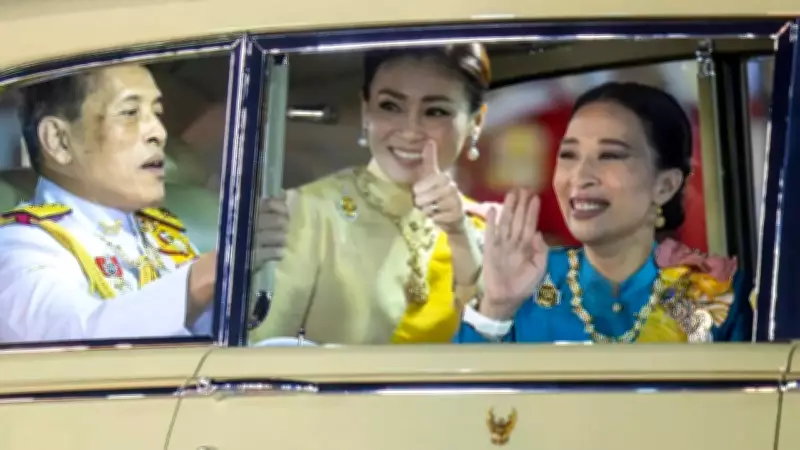
Princess Bajrakitiyabha Narendira Debyavati, the eldest daughter of Thailand's King Maha Vajiralongkorn, has passed away after being in a coma for over three years, the royal household announced on Friday. She was 47 years old.
Health Crisis and Passing
The princess collapsed in December 2022 while exercising her dogs. Doctors attributed the collapse to a severely irregular heartbeat caused by a mycoplasma infection in her heart. Despite intensive treatment, she never regained consciousness.
"The medical team provided the closest and most intensive care possible, but her condition continued to decline progressively," the palace stated. She died at 7:48 PM local time on Thursday at King Chulalongkorn Memorial Hospital in Bangkok.

With her death, the Thai royal family has lost its most visibly accomplished member and someone who might have played a pivotal role in the unclear succession.
The 'Lawyer Princess'
Often referred to in local media as "the lawyer princess," Bajrakitiyabha held a doctoral degree in law from Cornell University and was a qualified barrister in Thailand. She worked briefly at the Thai mission to the United Nations in New York before returning to Thailand to work in the Attorney-General's offices.
From 2012 to 2014, she served as Thailand's ambassador to Austria, where she built a relationship with the UN Office on Drugs and Crime. She began speaking out on the need for penal reform, focusing particularly on vulnerable women in prison. Thailand has one of the world's highest numbers of female inmates.
She initiated the Kamlangjai (Inspiration) royal project to support women and children in prison and prepare them for reintegration into society. She also led Thailand's advocacy campaign that led the UN General Assembly to adopt the Bangkok Rules in 2010, aimed at enhancing the lives of female inmates.
Royal Role and Succession Questions
In 2021, her father made her a chief of staff in his private bodyguard, granting her the rank of general. In August 2025, while still hospitalized, she was appointed deputy commander of the king's personal Royal Security Command.
Her abilities and the trust her father appeared to have in her made her an inevitable topic of speculation about the royal succession. King Vajiralongkorn, 73, has not yet named an heir. Thai custom dictates that the heir should be male, but a 1974 constitutional amendment allows a female to take the throne.
The king has five sons, but four from his second marriage were disowned in 1996 and live with their mother in the United States. His fifth son, Dipangkorn, by his third wife, is the presumed heir, although questions have been raised about his ability to perform the monarch's role.
For many Thai royalists, Princess Bajrakitiyabha seemed the most promising figure to succeed her father, either as queen or as regent to assist Prince Dipangkorn. Her death leaves the succession question unanswered, and the severity of the country's lèse-majesté law prohibits public discussion.
The palace stated that funeral rites will be conducted with the highest royal honors. Her body will be enshrined at Piman Rattaya Throne Hall within the Grand Palace. Members of the public will be allowed to offer lustral water and pay respects starting Saturday, June 13.






