

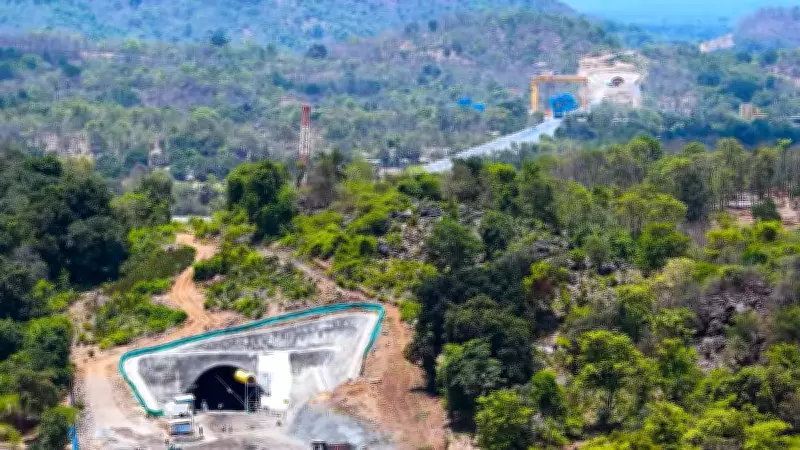
The Mumbai-Ahmedabad bullet train project has achieved a significant milestone with the third tunnel breakthrough in Maharashtra. This development marks progress in the construction of the high-speed rail corridor, which aims to connect the two major cities.
Details of the Breakthrough
The breakthrough occurred in the mountainous region of the state, where engineers and workers have been diligently carving through challenging terrain. The tunnel is part of a series of underground passages that will facilitate the high-speed train's journey. This particular breakthrough is a testament to the advanced engineering techniques employed by the project team.
Significance for the Project
Each tunnel breakthrough brings the project closer to completion. The Mumbai-Ahmedabad bullet train, once operational, is expected to significantly reduce travel time between the financial capital and the economic hub of Gujarat. The project is a flagship initiative under India's infrastructure development plans.

The breakthrough was celebrated by officials, who highlighted the collaborative effort between various agencies. The use of tunnel boring machines (TBMs) has been crucial in this process, allowing for efficient excavation while minimizing environmental impact.
Challenges and Solutions
Constructing tunnels in the Western Ghats presents unique challenges, including geological complexities and the need to maintain safety standards. The project has employed state-of-the-art monitoring systems to ensure stability and worker safety. Additionally, measures have been taken to protect local ecosystems during construction.
Future Milestones
The third breakthrough follows two previous successes, with more tunnels planned along the route. The overall project timeline remains on track, with expectations for completion in the coming years. Once finished, the bullet train will operate at speeds of up to 320 km/h, offering a modern alternative to existing transportation options.
This achievement underscores India's commitment to upgrading its railway infrastructure and adopting high-speed technology. The project is also expected to boost economic growth and connectivity in the region.






