

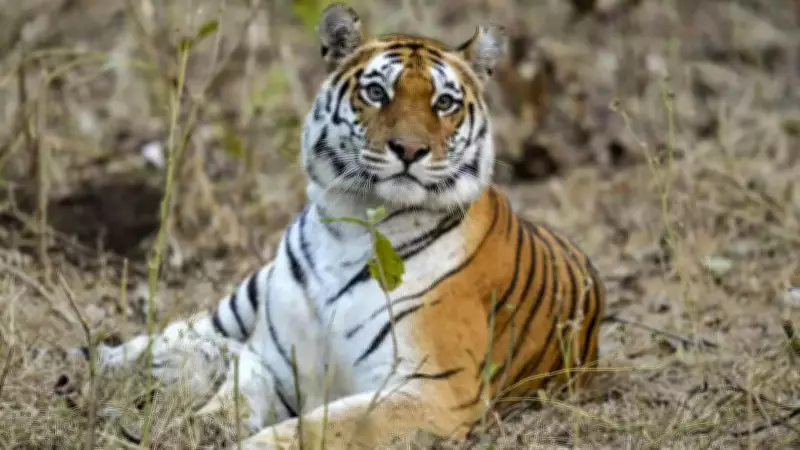
Tiger from Maharashtra Triggers Panic in Rajahmundry's Populated Zones
A solitary tiger that migrated from the Tadoba Tiger Reserve in Maharashtra has instilled fear and panic among residents in the populated areas surrounding Rajahmundry, located in the East Godavari district of Andhra Pradesh. The big cat's unexpected presence in human-dominated landscapes has raised significant concerns for public safety and wildlife management.
Livestock Attacks and Urban Sightings
The tiger crossed the Godavari River from the Eluru district and has already claimed the lives of three cows and a calf in Thorredu village, which falls under the Rajahmundry rural mandal. In a startling development, the tiger was spotted wandering near Auto Nagar on Tuesday night, an area situated between Lalacheruvu and Diwancheruvu—both densely populated regions. Witnesses managed to capture the tiger on their mobile devices as it skillfully crossed the high wall of a private function hall, highlighting its adaptability to urban environments.
In the early hours of Wednesday, the tiger escalated its activities by killing a buffalo in RaghunaDha Puram before moving towards the Ankalammathalli temple hillock. Forest officials have confirmed the presence of its pug marks in this area, indicating its movement patterns. Currently, the big cat is believed to be hiding in a cashew plantation near the satellite city and Hukumpeta areas, which are also heavily populated, adding to the urgency of the situation.

Massive Forest Department Operation Underway
In response to the escalating crisis, the forest department has secured all necessary permissions to capture the tiger using a variety of advanced methods. A comprehensive rescue operation is in full swing, with an expert team from Pune en route to Rajahmundry to provide specialized assistance. Teams from Visakhapatnam and other locations have already been deployed on the ground, bringing the total number of active teams to 12.
The operation is equipped with state-of-the-art resources to ensure a safe capture. Veterinary doctors are stationed on-site to provide immediate care if needed, while drones, cages, trap cameras, and thermal cameras have been strategically set up near the locations where pug marks were found. This multi-faceted approach aims to track and contain the tiger without causing harm to the animal or the public.
Preventive Measures and Public Warnings
Response teams, including special rapid response units, police, and revenue officials, are working tirelessly to implement preventive measures. Authorities are using loudspeakers to broadcast warnings to residents in the villages of Rajanagaram, Sitanagarasm, and Rajahmundry rural mandals. The advisories urge people to remain indoors at night and to secure their cattle within their homes to prevent further livestock losses and potential human-tiger conflicts.
This incident underscores the challenges of wildlife conservation in regions where human settlements intersect with natural habitats, prompting calls for enhanced monitoring and rapid response protocols to manage such migrations effectively.






