

Beyond Beaches: How Geography Defines the World's Longest Coastlines
Coastlines are often imagined as simple stretches of sand meeting the sea, but their actual length is a complex geographical puzzle. According to World Atlas, factors like shoreline shape, island formations, and deep fjords dramatically extend a country's coastline, making borders appear larger and more intricate. This fragmentation, driven by natural elements, not only defines maps but also fuels economic, biological, and climatic vitality.
The Geographical Forces Behind Extended Coastlines
Countries with exceptionally long coastlines typically owe this to their fragmented geography and unique natural features. Elements such as bays, peninsulas, and islands create jagged, convoluted shores that complicate measurements but enrich marine ecosystems. These coastlines serve as critical hubs for marine life, support thriving fishing industries, and facilitate international shipping lanes, underscoring their global importance.
Top 10 Countries with the Longest Coastlines Worldwide
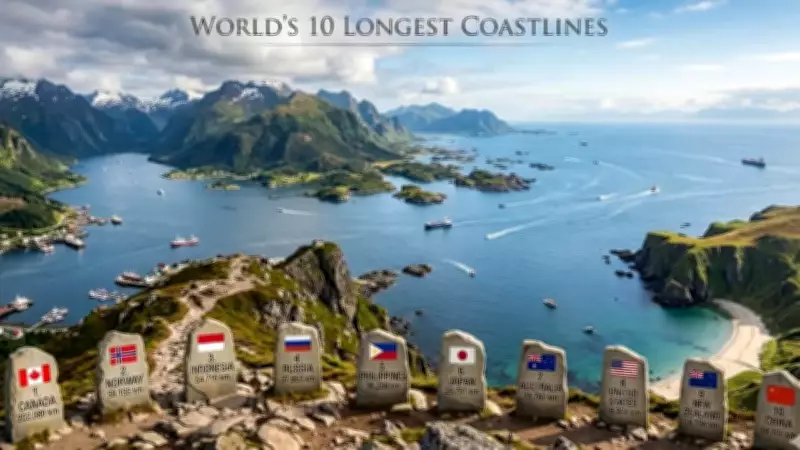
Here is a detailed list of the nations boasting the most extensive coastlines, highlighting what makes each unique:

- Canada (202,080 km): With the world's longest coastline, Canada's shores stretch across the Atlantic, Pacific, and Arctic Oceans. Its length is amplified by countless islands, bays, and fjords, creating a highly convoluted border.
- Norway (58,133 km): Norway's coastline is famed for its deep fjords, carved by glacial action, which extend far inland. This geographical feature significantly boosts its length and supports a robust fishing industry.
- Indonesia (54,716 km): Comprising over 17,000 islands, Indonesia's coastline is among the longest, teeming with coral reefs and mangrove forests that harbor diverse marine species.
- Russia (37,653 km): Russia's vast coastline spans the Arctic and Pacific Oceans, often frozen in winter. Its cold environments add a unique challenge to coastal activities.
- Philippines (36,289 km): As an archipelago, the Philippines boasts a complex coastline known for beautiful coral reefs, rich marine life, and numerous fishing villages.
- Japan (29,751 km): Japan's archipelago nature results in a lengthy coastline featuring bays, peninsulas, and rugged shorelines that enhance its maritime profile.
- Australia (25,760 km): Australia's coastline includes diverse terrains like beaches, cliffs, and the Great Barrier Reef, supporting tourism and ecosystems, though it is less jagged than others.
- United States (19,924 km): The U.S. coastline spans the Atlantic, Pacific, and Gulf of Mexico, with Alaska contributing significantly to its overall length.
- New Zealand (15,134 km): Formed by volcanic and tectonic activity, New Zealand's coastline features fiords, coves, and rugged cliffs, adding to its scenic appeal.
- China (14,500 km): China's coastline along the Pacific Ocean is less indented but economically vital, with densely populated coastal zones driving growth.
Economic and Environmental Impacts of Long Coastlines
These extensive coastlines are not just geographical curiosities; they play pivotal roles in national economies and ecosystems. From Norway's fishing hubs to Indonesia's biodiverse reefs, long coastlines foster industries like tourism, shipping, and aquaculture. They also act as buffers against climate change, supporting coastal communities and marine conservation efforts. Understanding these dynamics highlights why coastline length matters beyond mere measurement.






