Total Lunar Eclipse 2026: A Rare Blood Moon Aligns with Holi Festival
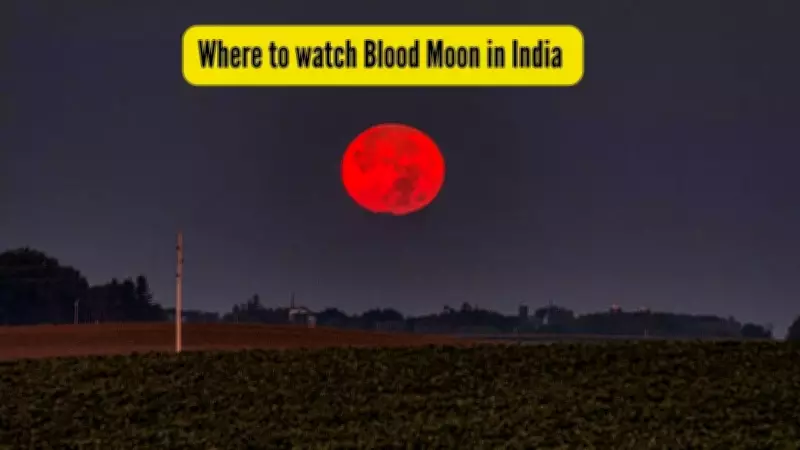
March 3, 2026, will witness the first lunar eclipse of the year, an astronomical event of significant importance. This total lunar eclipse, commonly referred to as a "Blood Moon," will see the Moon adopt a deep red hue as it passes through Earth's shadow. Adding to its uniqueness, this celestial spectacle coincides with the annual festival of Holi, creating a rare convergence of cultural and natural phenomena.
Eclipse Timing and Viewing Details
According to official schedules, the eclipse will commence at 3:20 PM IST and conclude between 6:46 PM and 6:48 PM IST. The total eclipse phase, when the Moon appears reddest, will occur from approximately 4:34 PM to 5:33 PM IST. Skywatchers across India will have a brief but memorable window to observe this event, often lasting between 15 to 45 minutes.
Best Viewing Locations in India
While the Moon will be visible after sunset in most regions, the northeastern states and the Andaman & Nicobar Islands offer the best viewing opportunities due to earlier sunsets. These areas provide a golden chance to observe the deeper red glow of the Blood Moon.

Best cities in Northeast India for earlier viewing (around 5:15 PM - 5:24 PM):
- Guwahati, Assam
- Itanagar, Arunachal Pradesh
- Shillong, Meghalaya
City-wise moonrise timings and visibility:
- Kolkata: Around 5:39 PM IST, offering up to an hour of viewing with the eclipse still active.
- Nagpur & Chandrapur: Partial but noticeable moonrise from about 6:18 PM to 7:30 PM.
- Delhi & Lucknow: Around 6:20 – 6:30 PM IST; look towards the eastern horizon soon after sunset for a 20-minute window.
- Mumbai & Pune: Short visibility of 5–10 minutes before the eclipse ends.
- Bengaluru, Chennai, Hyderabad: Partial eclipse visible for 10–30 minutes.
- Other Southern Cities (Coimbatore, Kochi, Thiruvananthapuram): Brief view as moonrise occurs close to the eclipse end time.
How to Optimize Your Viewing Experience
To get the best view, focus on the eastern horizon at sunset, where the eclipsed Moon will be visible. No special equipment is needed, as lunar eclipses are safe to view with the naked eye. However, using binoculars or a telescope can enhance details and provide a more immersive experience.
Tonight's Blood Moon is not just a normal event; it represents a natural spectacle that occurs once in decades, made even more special by its alignment with the vibrant Holi festival. Even a brief glimpse can be a lifetime memory for astronomy enthusiasts and casual observers alike.