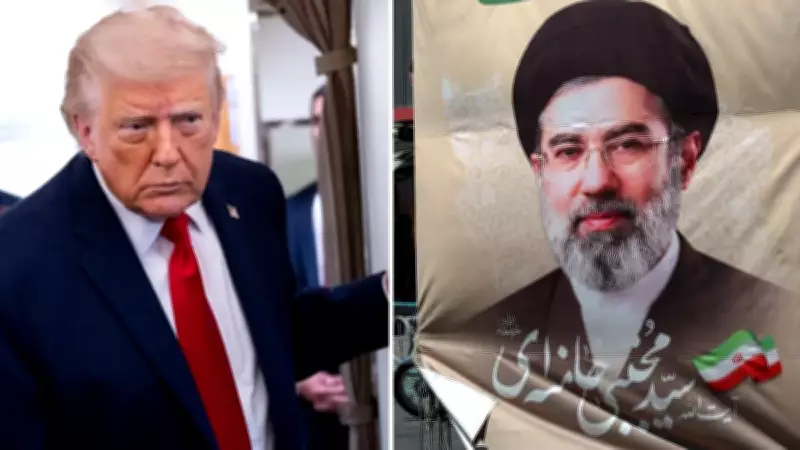
Former US President Donald Trump has made a sensational claim that Iranian leaders directly telephoned him following American airstrikes on Iranian targets. The assertion, made during a public address, has been met with immediate and vehement denial from Tehran, which has branded the statement a "sheer lie."
Trump's Allegation
Speaking at a campaign rally, Trump asserted that high-ranking Iranian officials reached out to him personally after the United States conducted military strikes in Iran. He did not provide specific details about the content of the alleged call or the identities of the Iranian leaders involved. Trump framed this as an indication of his strong leadership and the respect he commands on the global stage.
Iran's Response
The Iranian government swiftly rejected Trump's account. A spokesperson for the Iranian Foreign Ministry called the claim "baseless and fabricated," emphasizing that no such communication occurred. The ministry further accused Trump of attempting to distort facts for political gain, particularly ahead of upcoming elections. Iranian state media echoed the denial, with headlines describing Trump's statement as a "complete falsehood."

Context of US Strikes
The alleged phone call comes in the wake of a series of US airstrikes against Iranian military positions. These strikes were reportedly in response to recent attacks on American assets in the region, though details remain classified. The Biden administration has neither confirmed nor denied Trump's claims, but officials have privately expressed skepticism. Analysts note that direct communication between a former president and a foreign adversary would be highly unusual and potentially violate diplomatic protocols.
Reactions and Implications
The controversy has sparked debate among political commentators. Some view Trump's claim as an attempt to bolster his image as a decisive leader, while others see it as a dangerous escalation of rhetoric. International relations experts warn that such unsubstantiated claims could undermine diplomatic efforts and increase mistrust between the US and Iran. The Iranian government has called for an international investigation into the matter, though it is unclear whether any formal inquiry will take place.
As the story develops, both sides remain entrenched in their positions. Trump's supporters have rallied behind his narrative, while critics accuse him of spreading misinformation. The incident highlights the ongoing tensions between the two nations and the complex dynamics of post-presidential influence.