Trump-Xi Summit: Underwhelming Results and Strategic Divergence
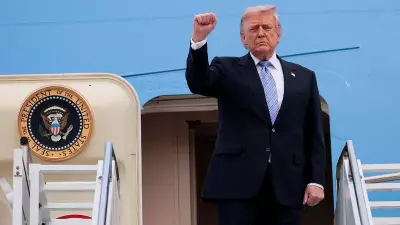
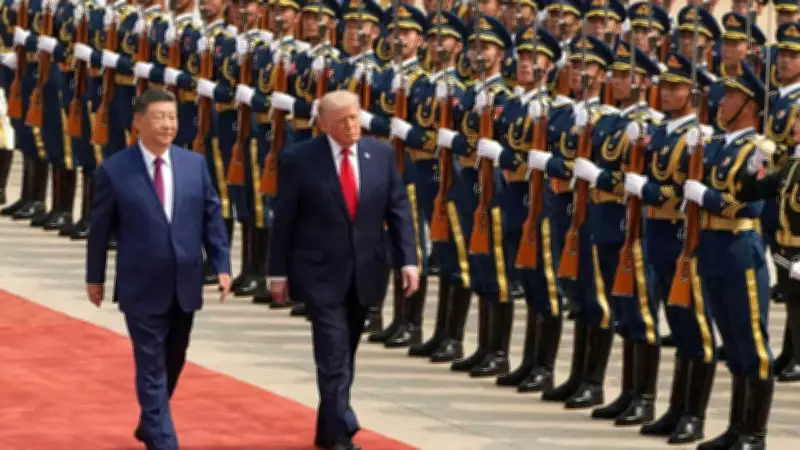
The recent summit between President Donald Trump and Chinese President Xi Jinping in China failed to deliver any significant breakthroughs, particularly regarding the Strait of Hormuz. While the world anticipated progress on critical issues, the two major powers appeared to size each other up without shifting their strategic positions. The American and Chinese readouts of the meetings starkly differed, revealing a fundamental disconnect.
The U.S. readout highlighted discussions on Iran, noting China's acknowledgment that the Strait of Hormuz should remain open, demilitarized, and that Tehran must not acquire a nuclear bomb. However, the Chinese readout completely omitted this topic. Conversely, the Chinese readout strongly emphasized the Taiwan issue, with Xi warning that mishandling it could lead to tensions, clashes, or even conflict between Washington and Beijing. The U.S. readout remained silent on Taiwan.
Trade disputes also remained unresolved. There was no extension of the trade truce set to expire in October. Trump touted economic wins, including Chinese commitments to buy American agricultural products, oil, and 200 Boeing jets, but China had not confirmed these pledges at the time of writing. Thus, the U.S.-China relationship remains fraught, with no meaningful progress on trade, Iran, the Russia-Ukraine war, or Taiwan.

Taiwan: A Growing Flashpoint
During their in-person discussions, Xi pressed Trump on whether the U.S. would defend Taiwan if China attacked. Trump responded that he does not discuss such issues, adding that the last thing he needs is another war 9,500 miles away. This exchange carries two critical implications.
First, Xi's direct inquiry suggests a Chinese invasion of Taiwan is under serious consideration, possibly awaiting the right timing. If Xi prolongs his reign, an attack on Taiwan could serve to consolidate his position. Second, Trump's reluctance signals weak U.S. determination to defend Taiwan. He also indicated he would decide on the $11 billion U.S. arms sale to Taiwan, a topic raised in the talks. This is ominous for Taiwan.
If China perceives Trump's lack of commitment, it might launch an invasion within the next two years, before Trump potentially leaves office. While Secretary of State Marco Rubio stated no change in U.S. policy, Trump's signals differ. Taiwan must build its own deterrence quickly, learning from Ukraine's asymmetric warfare capabilities. Ukraine has ramped up drone and unmanned systems production, effectively holding back Russian forces and striking deep into Russian territory. Taiwan should create a defensive wall using short-range missiles, long-range drones, and anti-ballistic missile systems across its outlying islands in the Taiwan Strait.
Russia's Massive Attack on Kyiv
Shortly after Russia's May 9 Victory Day parade, for which Moscow sought a temporary truce, Russian forces launched a massive assault on Ukraine, targeting Kyiv. A missile struck a residential building, partially destroying it and killing 24 people, including three children. In total, 56 missiles and 675 drones were launched. Ukraine retaliated with drone strikes on multiple Russian regions, including the Ryazan oil refinery deep inside Russia. A day later, a massive drone attack hit Moscow, demonstrating Ukraine's growing long-range strike capability despite heavy air defenses.
These actions show Russia's lack of genuine interest in peace. Putin's recent claims that the war might end soon appear to be mind games. Russia faces a manpower crunch, losing more soldiers to Ukrainian drones than it can replace, and the frontline is barely moving. However, Russia seeks to save face and is willing to sacrifice more soldiers and resources. Putin could stop the war but chooses not to, undermining any notion of his willingness to consider peace.

Latvia's Political Firestorm
Latvian Prime Minister Evika Silina resigned after her coalition government collapsed over a drone incident. Ukrainian drones were manipulated and redirected by Russian forces using electronic warfare, causing one to explode at a Latvian fuel depot. Silina fired Defense Minister Andris Spruds for failing to prevent the incident, prompting Spruds' Progressives Party to leave the coalition, forcing Silina's resignation. Latvia will hold parliamentary elections in October, and many view these resignations as politically motivated.
The incident underscores the need to strengthen Baltic air defense. Latvia is a staunch Ukraine supporter but must bolster its own defenses against Russian hybrid warfare, including cyber attacks, propaganda, and political interference. Ukraine has offered to help shore up Latvia's air and anti-drone defenses. NATO must reinforce its eastern flank to address these threats.
US-Nigeria Kill ISIS No.2
In a major blow to the Islamic State, its No.2 leader, Abu Bilal al-Minuki, was killed in a joint US-Nigeria operation. Al-Minuki was a key figure in the Islamic State West Africa Province (ISWAP), the local affiliate in West Africa. A former Boko Haram member who pledged allegiance to IS, he had a serious jihadist record. His elimination should impede the rising tide of jihadism in sub-Saharan Africa, aiding regional security and stability.