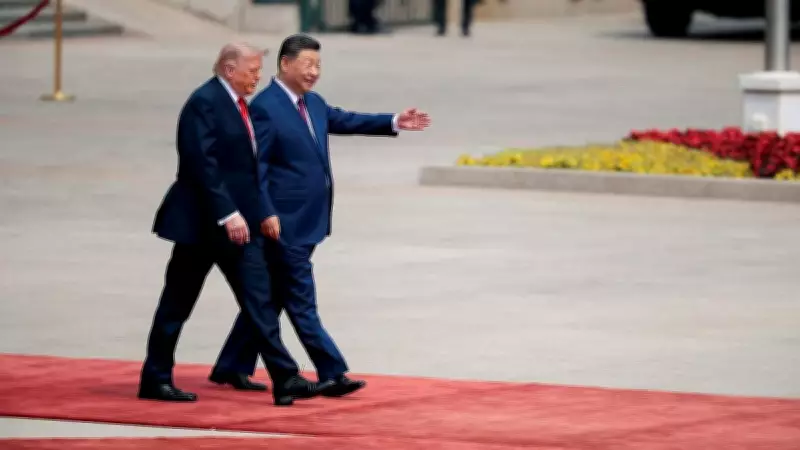
President Donald Trump's recent meeting with Chinese leader Xi Jinping in Beijing marked a significant shift in US foreign policy, as both governments introduced the new phrase 'constructive strategic stability' to describe their bilateral relationship. This terminology signals a departure from previous confrontational rhetoric, positioning China as a peer power rather than a rival or adversary.
A New Framework for Relations
The concept of 'constructive strategic stability' emerged from high-level discussions aimed at reducing tensions and fostering cooperation on key global issues. According to diplomatic sources, the phrase reflects a mutual understanding that both nations must work together to address challenges such as trade imbalances, climate change, and regional security. This approach marks a sharp turn from Trump's earlier campaign promises to take a hard line against China.
Implications for Global Order
Analysts suggest that this shift could reshape the international landscape, as the US and China collaborate more closely on economic and security matters. The new framework may lead to joint initiatives in technology, infrastructure, and counterterrorism. However, critics warn that embracing China as a peer power could undermine US leverage on issues like human rights and intellectual property.

The announcement was made during a joint press conference in Beijing, where both leaders emphasized the importance of dialogue and mutual respect. Trump stated, 'We have a very special relationship with China, and I believe we can achieve great things together.' Xi echoed this sentiment, calling for 'a new era of cooperation based on equality and mutual benefit.'
Reactions and Analysis
Reactions from US allies have been mixed. Some European and Asian partners expressed concern that the US might soften its stance on China's assertive actions in the South China Sea and its trade practices. Meanwhile, Chinese state media hailed the meeting as a diplomatic victory, highlighting the recognition of China's global status.
Economic experts note that the new term could pave the way for tariff reductions and increased investment flows. The stock markets in both countries responded positively, with indices rising on hopes of reduced trade friction. However, details on specific policy changes remain scarce.
This development comes amid ongoing debates within the Trump administration about the best approach to China. Some officials, including Secretary of State Rex Tillerson, have advocated for a more cooperative stance, while others, like National Security Advisor John Bolton, have pushed for a tougher line. The adoption of 'constructive strategic stability' suggests that the cooperative faction has gained the upper hand.
Looking Ahead
As the US and China move forward with this new framework, the world will be watching closely to see how it translates into concrete actions. Upcoming summits and bilateral meetings will test the durability of this shift. For now, the phrase 'constructive strategic stability' represents a bold attempt to redefine the most important bilateral relationship in the world.