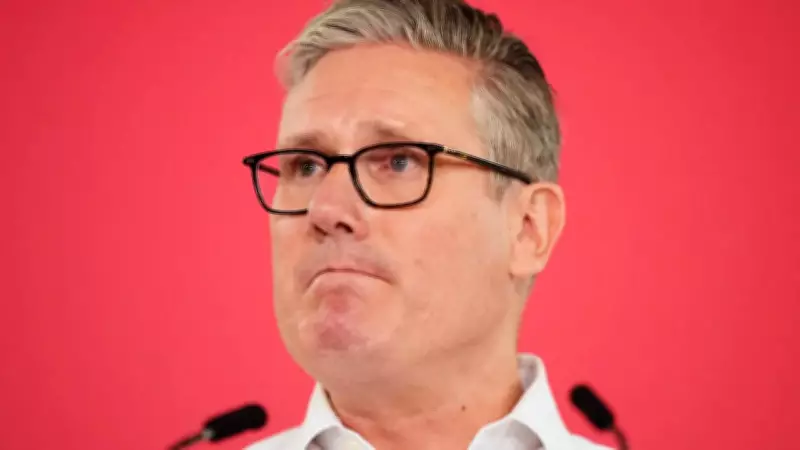
LONDON: UK Prime Minister Keir Starmer is facing a battle for his job after his Labour Party suffered a calamitous set of results in local elections last week. If repeated at a general election, these results would see Labour comprehensively ejected from power.
Despite winning a landslide election victory in July 2024, Labour's popularity has sunk, and Starmer is getting much of the blame. The reasons are varied, including a series of policy missteps, a perceived lack of vision, a struggling British economy, and questions over his judgment—especially his appointment of Peter Mandelson as UK ambassador to Washington despite Mandelson's ties to convicted sex offender Jeffrey Epstein.
How to Get on Track
The next UK national election does not have to be held until 2029, but British politics allows parties to change leader midterm without needing a general election. Many within Labour think the only way to get the government back on track and to see off threats from the right and the left is for Starmer to go, and as soon as possible.

"We have to change and we have to do it quickly," Labour lawmaker Catherine West said. "We have to lay out a timetable and we have to turn this ship around."
Changing leaders is easier said than done. Labour, unlike the main opposition Conservative Party, does not have a history of ousting its leaders. There are several ways Starmer could go, with some more straightforward than others.
The Easiest Way
The simplest option is for Starmer to announce his intention to resign, triggering an election for the Labour leadership. A resignation could come if a Cabinet delegation tells Starmer that he has lost too much support within the party, or if members of his government quit in protest. If Starmer resigns, the Cabinet and Labour's governing body would likely pick an interim leader to be prime minister, probably someone not running to be Labour leader—Deputy Prime Minister David Lammy could fit the bill.
Under Labour's rules, candidates must have the support of a fifth of the party's House of Commons lawmakers—a number that currently stands at 81. Those meeting that threshold would then need the support of 5 percent of local constituency parties, or at least three party affiliates, such as trade unions and cooperative societies. Eligible members of the party and affiliates would then vote for the leader using an electoral system that ranks candidates. The winner is the first candidate to secure more than 50 percent of the vote. King Charles III would then invite the winner to become prime minister and form a government.
The Not-So-Easy Way
Starmer has insisted that he will not quit, saying that would "plunge the country into chaos." If he does not resign, he could face a challenge from one or more Labour lawmakers. The first to move was West, who said Saturday that she would try to run for party leader if the Cabinet did not remove Starmer by Monday. West acknowledged that she had nowhere near the support of 81 colleagues needed to force a contest, and her move appeared to be an attempt to force more high-profile contenders to make a move.
Unlike the Conservative Party, which has a history of getting rid of leaders such as Margaret Thatcher in 1990 and Boris Johnson in 2022, Labour does not have that muscle memory. No Labour prime minister has ever been dislodged, though Tony Blair announced his plan to resign in 2007 after a series of low-level resignations. Challengers would have to meet the eligibility thresholds above, but Starmer would automatically be on the ballot.

Potential Candidates
Those considered to harbour leadership ambitions include Health Secretary Wes Streeting, and former Deputy Prime Minister Angela Rayner, who had to resign last year after acknowledging that she did not pay enough tax on a house purchase; an investigation into that is ongoing. Andy Burnham, the popular mayor of Greater Manchester, is widely perceived as one of the strongest candidates. However, he is not eligible to stand at present because he is not in Parliament. Earlier this year, Labour officials blocked him from running in a special parliamentary election. But if Starmer indicates that he intends to stand down—for example, at Labour's annual conference in September—a way could be found for Burnham to return to the House of Commons. A Labour lawmaker in a relatively safe seat could quit, opening up another chance for Burnham. Winning that special election is another matter, if the latest local election results are any guide.