

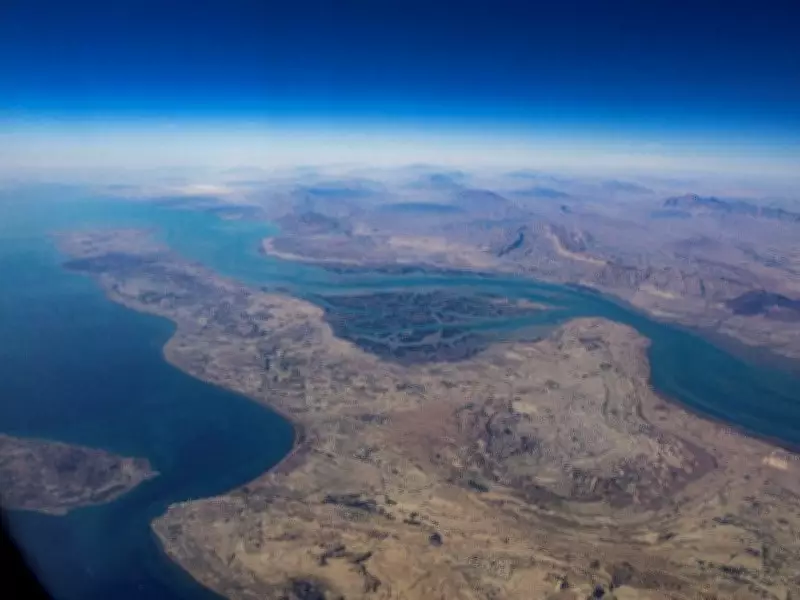
The United States military announced that American forces had successfully defeated a succession of Iranian missile and drone operations directed against neighboring nations in the region, while simultaneously executing protective counter-strikes on Iran's Qeshm Island.
US Central Command Details Hostile Engagements
In an official statement detailing the hostile engagements, US Central Command confirmed that Tehran had initiated a wave of aerial assaults across the theater. The military command noted that Iran launched several ballistic missiles toward regional neighbors; however, all failed to hit their intended targets.
Providing a specific operational breakdown of the trajectories and the subsequent defensive actions taken alongside regional allies, CENTCOM disclosed that two Iranian missiles fired at Kuwait fell short or broke apart en route, and three missiles launched at Bahrain were immediately intercepted by US and Bahrain air defense forces.

Second Wave of Attacks
Following those initial engagements, a fresh wave of attacks rolled into the early hours of Wednesday. Kuwaiti authorities confirmed that the nation's air defense networks actively engaged and neutralized a wave of incoming missiles and drones, following reports of loud detonations across multiple sectors of the country.
These sudden escalations coincided with assertions from Iran's state-controlled broadcaster, which maintained that American military installations stationed within Kuwait had been deliberately targeted as a countermeasure against recent Western maneuvers across the Gulf region.
Kuwaiti Military Response
According to an official communique released by the Kuwaiti Army's General Staff, the severe blasts reported by local residents were directly tied to operational defensive responses executed against incoming aerial threats. The military command announced that Kuwaiti air defenses are currently confronting hostile missile and drone attacks. The General Staff of the Army notes that if explosion sounds are heard, they are the result of air defense systems intercepting the hostile attacks.
Following the defensive engagements, the military apparatus issued an immediate advisory cautioning the populace against approaching or handling any fallen remnants, shrapnel, or unidentifiable items, warning that such materials carry significant safety hazards. Furthermore, the authorities implored the public to strictly observe all safety directives broadcast by the appropriate administrative bodies.
Public Safety Instructions
Reinforcing these security protocols, Ministry of Defense spokesperson Colonel Saud Abdulaziz Al-Otaibi appealed to both citizens and foreign residents to immediately contact emergency services via the 112 hotline upon discovering any anomalous debris. Colonel Al-Otaibi additionally called on the public to completely disregard speculative accounts, urging them to verify developments exclusively through state-sanctioned information channels and comply with security mandates.
The military leadership re-emphasized this directive, stating that the General Staff of the Army calls on everyone to cooperate and adhere to the issued guidelines to preserve the security and safety of all.
Conflicting Narratives from Iran
While domestic security measures were being implemented on the ground, parallel regional media reports broadcast conflicting narratives regarding the source of the bombardment. Separately, Iran's state-run broadcaster IRIB asserted that American military infrastructure situated inside Kuwait had been struck in direct retaliation for what Tehran characterized as Washington's aggressive actions spanning the Persian Gulf, the Strait of Hormuz, and Qeshm Island.
According to the Iranian state broadcaster's specific narrative: Following the hostile actions of the U.S. in the Persian Gulf, the Strait of Hormuz, and Qeshm Island, American bases in Kuwait were hit. While the claims could not be independently verified, the entire cross-border friction unfolds against a backdrop of rapidly deteriorating regional stability following recent direct military confrontations involving Iran, the United States, and Israel.

Regional Emergency Protocols
Amid these widening regional hostilities, emergency protocols were similarly triggered in neighboring Bahrain, where the country's Interior Ministry activated warning sirens and instructed residents to remain calm and head to the nearest safe place. In a subsequent independent brief, Kuwait's military hierarchy re-corroborated that its forces were actively managing reactions to the missile and drone attacks, reiterating that any heavy detonations audible across the country stem from localized interception operations.
The prominent Gulf nation, which serves as a major American partner, has contended with recurrent Iranian strikes since a series of combined operations by the United States and Israel targeted internal Iranian locations and eliminated prominent figures within the state's senior leadership in late February.
Ongoing Defensive Measures
Elaborating further on the source-agnostic defensive measures, the military updated in a post on X that any sounds of explosions heard are the result of air defense systems intercepting these hostile attacks, choosing not to specify the precise origin of the launches. This latest volley follows an incident on Monday, during which Kuwait announced it had successfully thwarted a separate barrage of missiles and drones, subsequently holding Iran fully responsible for these heinous attacks.
Concurrently, the United States military's Central Command issued an operational update confirming that its localized forces had successfully intercepted two Iranian ballistic missiles targeting American forces based in Kuwait. Providing further clarification regarding the status of their infrastructure and personnel following that engagement, CENTCOM announced in a post on X that these missiles were immediately defeated and no American personnel were harmed.





