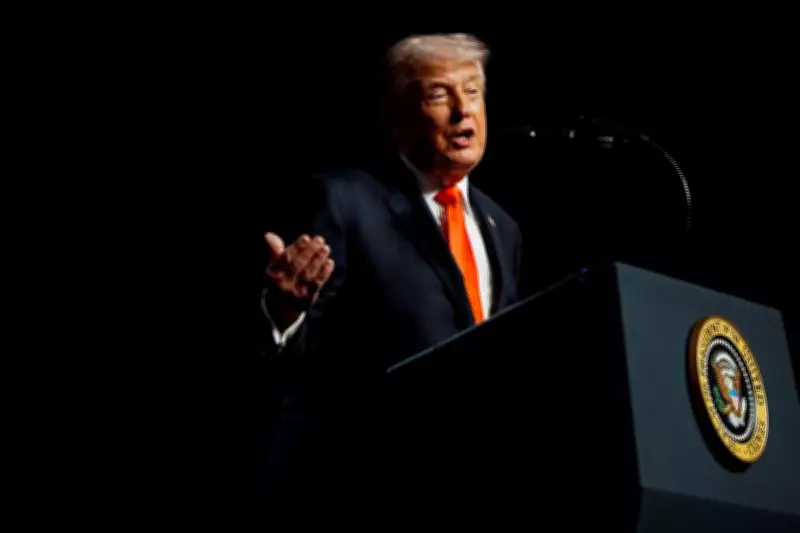
US President Donald Trump announced on Sunday that the United States will begin guiding stranded ships from the strategic Strait of Hormuz starting Monday, a move aimed at ensuring safe passage through the vital waterway amid heightened tensions with Iran.
US Steps In to Ensure Safe Passage
Speaking at the White House, Trump said that the US Navy would assist vessels that have been left stranded due to recent incidents in the region. The announcement comes after a series of confrontations between Iran and Western forces, including the seizure of oil tankers by Iranian authorities.
Background of Tensions
The Strait of Hormuz, a narrow passage connecting the Persian Gulf to the Arabian Sea, is a critical chokepoint for global oil shipments. Approximately 20% of the world's petroleum passes through this strait. Recent weeks have seen increased tensions, with Iran seizing several tankers, prompting the US to bolster its naval presence in the area.

Trump emphasized that the US mission is purely defensive and aimed at maintaining freedom of navigation. "We are not looking for conflict, but we will protect our interests and those of our allies," he stated.
International Reactions
The announcement has drawn mixed reactions. Some allies have welcomed the US initiative, while others have expressed concerns about potential escalation. Iran has warned against any US interference, calling it a violation of its sovereignty.
Shipping companies have been advised to coordinate with US naval forces for safe transit. The US Navy's Fifth Fleet, based in Bahrain, will oversee the operation.
Strategic Implications
Analysts say the US move could further strain relations with Iran, which views the strait as within its sphere of influence. However, the US insists that its actions are necessary to prevent disruptions to global oil supplies.
The situation remains fluid, with both sides signaling readiness for further actions. The international community is watching closely as the US prepares to implement its plan from Monday.