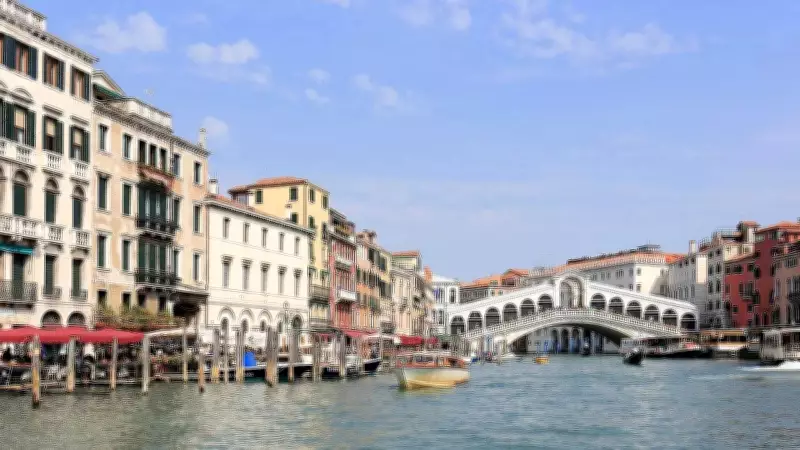
Some cities are remembered for their skylines. Others for monuments, rivers or ancient walls. Venice occupies a different place in the imagination. It is a city where streets often give way to waterways, where daily life unfolds beside canals, and where the relationship between land and water has shaped everything from architecture to trade.
Visitors arriving for the first time are often struck by the unusual geography before anything else. Buildings appear to rise directly from the water, bridges connect neighbourhoods instead of roads, and the city seems to stretch across a maze of islands. Yet many people are unaware of the scale of that arrangement. Venice is not built on a single landmass. It is spread across 118 small islands that sit within a shallow lagoon in northeastern Italy, creating one of the most distinctive urban landscapes in the world.
Why is Venice known as the city of 118 islands?
According to UNESCO, Venice was founded during the 5th century and gradually expanded across 118 small islands within the Venetian Lagoon. The settlement emerged during a turbulent period when communities sought refuge from repeated invasions affecting mainland areas.

What began as scattered settlements developed into something much larger. Over time, Venice evolved into a maritime centre whose influence extended far beyond the lagoon itself. As reported under UNESCO's description, the city had become a major seapower by the 10th century, connecting Europe with trading routes across the Mediterranean and beyond. The geography that once offered protection also shaped the city's identity. Rather than replacing the waterways, Venetians adapted to them. Canals became transport routes, while bridges connected communities spread across separate islands. The result was an urban environment unlike almost any other.
Inside Venice's network of islands and bridges
The number 118 can sound abstract until one considers what those islands contain. They are not identical patches of land separated by water. Each developed its own character, function and traditions over centuries.
According to WorldAtlas, the islands are linked by roughly 400 bridges, creating a network that allows movement throughout the city despite its fragmented layout. Some islands became centres of commerce, others places of worship, craftsmanship or fishing. Many of the smaller islands remain less familiar to international visitors, yet they form part of the broader cultural landscape that has allowed Venice to retain its unique identity.
Murano: The island famous for glassmaking
Among Venice's most recognised islands is Murano, located north of the historic centre. Its reputation rests largely on glassmaking, a craft that has become synonymous with the island itself. Historical accounts note that glass production was concentrated on Murano centuries ago, partly as a precaution against fires that threatened the densely built city. Over time, local artisans developed techniques that attracted buyers and collectors from across Europe. Today, visitors often travel to Murano to observe glassmakers at work and explore workshops that continue traditions handed down through generations. Decorative pieces, sculptures and intricate glass designs remain among the island's best-known exports.
Burano: Venice's colourful island
Not far from Murano lies Burano, another island that has developed a distinct identity. It is frequently recognised for its brightly painted houses, which line canals in vivid shades that contrast sharply with the more subdued tones found elsewhere in Venice. As highlighted by WorldAtlas, Burano also has a long association with lace-making. While tourism has become an important part of the local economy, the island still reflects traditions that have linked generations of residents to specialised forms of craftsmanship. The colourful appearance of Burano has made it one of the most photographed parts of the Venetian Lagoon, though its cultural significance extends well beyond its visual appeal.

Torcello: One of Venice's oldest islands
Some islands reveal a quieter side of Venetian history. Torcello, situated among marshes and mudflats in the northern lagoon, offers a glimpse into an earlier period of settlement. The island is known for historic religious buildings, including the Basilica of Santa Maria Assunta and the Church of Santa Fosca. Archaeological discoveries found in and around the lagoon have also helped historians understand how communities developed in the region over many centuries. According to UNESCO, settlements across the lagoon demonstrate a long interaction between people and their environment, illustrating how communities adapted to the challenges of living amid shifting waterways and coastal conditions.
Lido and Pellestrina: A different side of Venice
Venice's image is often dominated by famous landmarks such as St Mark's Square and the Grand Canal. Yet much of the city's character comes from islands that sit beyond the usual tourist routes. Lido, for instance, is associated with long stretches of beach and attracts large numbers of visitors during warmer months. Nearby Pellestrina presents a different atmosphere, shaped more by fishing traditions and everyday local life than by major tourist attractions. Together, these islands demonstrate that Venice is not a single destination but a collection of interconnected communities, each contributing to the wider story of the city.
The lasting legacy of Venice's island geography
The arrangement of Venice across 118 islands is not simply a geographical curiosity. It explains much of the city's history, economy, architecture and culture. UNESCO describes Venice and its lagoon as an inseparable whole, where centuries of human activity have interacted with a fragile natural environment. The city's layout, shaped by canals, islands and waterways, remains central to its identity today. For visitors, the answer to the question is straightforward: Venice is the famous city made up of 118 small islands. The deeper story, however, lies in how those islands became one of the world's most remarkable urban landscapes, a place where history and geography continue to exist side by side.
How to visit the city of 118 islands
Despite its unusual setting across 118 islands, Venice is well-connected to the rest of Italy and Europe. Most international visitors arrive through Venice Marco Polo Airport, located on the mainland north of the city. From the airport, travellers can reach Venice by bus, taxi, private transfer or water transport.
Rail travel remains one of the most popular ways to enter the city. Trains from major Italian cities such as Rome, Milan and Florence arrive at Venezia Santa Lucia Railway Station, which sits directly on the edge of the historic city. Unlike many railway stations, visitors step out to canals and water buses rather than conventional streets.
Those travelling by road usually leave their vehicles at parking facilities on the outskirts of the historic centre, as much of Venice is inaccessible to cars. From there, movement within the city takes place on foot or by water transport, including the vaporetto water buses that connect Venice with many of the surrounding islands.
For travellers exploring northern Italy, Venice is also accessible by regional and high-speed rail services, making it possible to visit from several nearby cities in a single day.