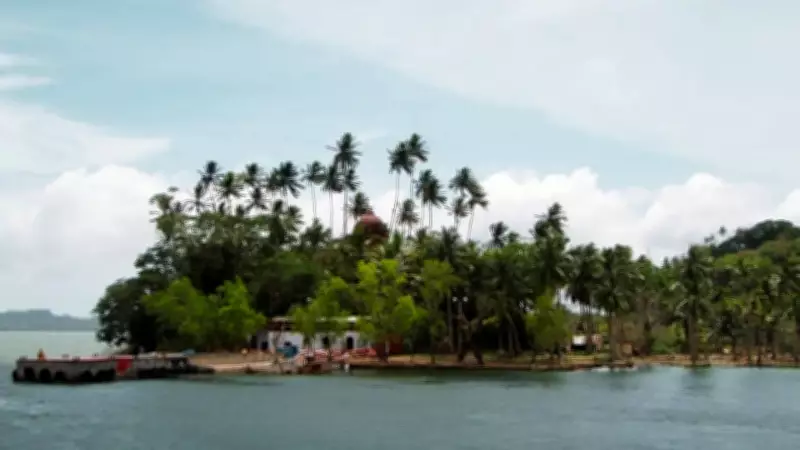
Have you heard of the 'Viper Chain Gang Jail'? If not, here is an interesting story for you. While reflecting on the contribution of the Andaman and Nicobar Islands to the Indian freedom struggle, the most prominent landmark that comes to mind is the Cellular Jail in Port Blair. This jail, notorious for confining revolutionaries in solitary cells, is considered an epitome of oppression in the islands. However, several decades before the Cellular Jail gained fame, another island served as a reminder of the cruelty of British penal justice. That island is Viper Island, located not far from Port Blair, which stands as a testament to the dark past of the Andamans.
The Prison Before Cellular Jail
The construction of Viper Jail took place from 1864 to 1867 under the guidance of Lt. Col. Barnett Ford, who was the superintendent of the penal settlement. At that time, Britain had already established Port Blair as the capital for its penal settlement. The inmates selected to be held here were supposed to be the most unruly ones in the settlement. Compared to the later-built Cellular Jail, this jail was relatively small in size. However, it was notorious for its extreme torture of prisoners. It comprised solitary cells, lock-up cells, whipping posts, stocks, and gallows. The inmates were forced to do hard labor under the chain gang, earning the jail the reputation of 'Viper Chain Gang Jail.' Even female inmates were imprisoned here. These forms of punishment served other purposes beyond just imprisonment.
Famous Gallows Where History Took Place
Among the remaining structures on the island is the gallows on top of the hill, which serves as a reminder of the dark history associated with the island. This structure stands on a hill overlooking the sea, making it seem like an isolated spot. One of the major figures executed on this island was Sher Ali Afridi. He was brought to Viper Island as a convict but later assassinated Lord Mayo, the Viceroy of India at the time, when he visited Hope Town in February 1872. What makes this murder historically significant is that Lord Mayo is the only Viceroy of India to have been assassinated. Sher Ali was hanged on Viper Island on 11 March 1872. The gallows became symbolic of the fate of those prisoners who tried to challenge colonial rule. While the Cellular Jail became more well-known, the history of Viper Island formed the basis for the British colonial experience of punishing people by exiling them to remote areas of the islands.

Overwhelmed by the Cellular Jail
After the completion of the Cellular Jail in 1906, Viper Jail lost its importance and gradually moved into the shadow of the new building. The Cellular Jail was now used for holding and punishing political prisoners and freedom fighters. The jail built on Viper Island fell into disrepair after the Cellular Jail began functioning. Tropical plants slowly began growing on the island, turning it into ruins. Today, one can see remains of walls, old cells, and the old gallows.
Viper Island as an Attraction Today
Tourists visiting the islands may include a tour of Viper Island in their itinerary of nearby locations. To get there, one must take a cruise from Port Blair lasting about 20 minutes. While crowds flock to watch the light and sound show in the evenings at the Cellular Jail, Viper Island remains relatively tranquil. While exhibitions and galleries in museums tell its story in great detail, Viper Island's story is best told by the ruins. As visitors wander through the ruins of the prison, it becomes challenging to reconcile the beauty and tranquility that now surround them with what happened there many years ago.
Viper Island: A Forgotten Part of British History
Visiting Viper Island reminds people that the tale of punishment by the British did not start with the Cellular Jail. In fact, before the construction of the famous jail on the nearby island, the small island of Viper operated as part of the earliest British penal colony.