

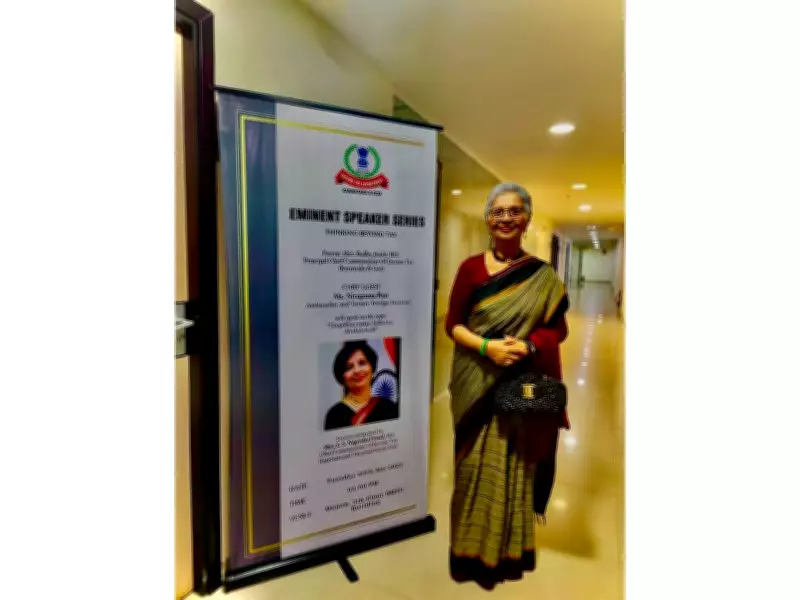
Former Foreign Secretary Nirupama Rao has stated that the ongoing West Asia war and the engagement between former US President Donald Trump and Chinese President Xi Jinping are poised to significantly alter the landscape for India-US relations. Speaking at a recent event, Rao emphasized the need for India to recalibrate its foreign policy in response to these global shifts.
Impact of West Asia Conflict
The conflict in West Asia, particularly the Israel-Hamas war, has created a volatile geopolitical environment. Rao noted that this war not only affects regional stability but also influences the strategic calculations of major powers, including the United States and China. For India, this means navigating a complex web of alliances and interests, especially given its close ties with both Israel and Arab nations.
Trump-Xi Engagement and Its Implications
Rao highlighted that the renewed engagement between Trump and Xi signals a potential realignment in US-China relations. This could have direct consequences for India, as the US may seek to balance its strategic partnership with India against its economic and diplomatic interests with China. She warned that India must be prepared for a scenario where US-China competition intensifies or where they find common ground on issues like trade and climate change, potentially sidelining Indian concerns.

Strategic Recalibration for India
To address these challenges, Rao advocated for a more nuanced and proactive Indian foreign policy. She suggested that India should strengthen its ties with other like-minded nations, such as Japan, Australia, and European powers, to diversify its strategic partnerships. Additionally, India must invest in its own defense capabilities and economic resilience to reduce dependency on external actors.
Role of Diplomacy
Rao underscored the importance of skilled diplomacy in this evolving landscape. She called for greater engagement with all major players, including China, to manage differences and explore areas of cooperation. The former foreign secretary also stressed the need for India to articulate its own vision for regional and global order, rather than merely reacting to the actions of others.
In conclusion, Rao's remarks serve as a timely reminder that India's foreign policy must adapt to the changing global dynamics driven by conflicts and great-power rivalries. The coming years will test India's diplomatic agility and strategic foresight.






