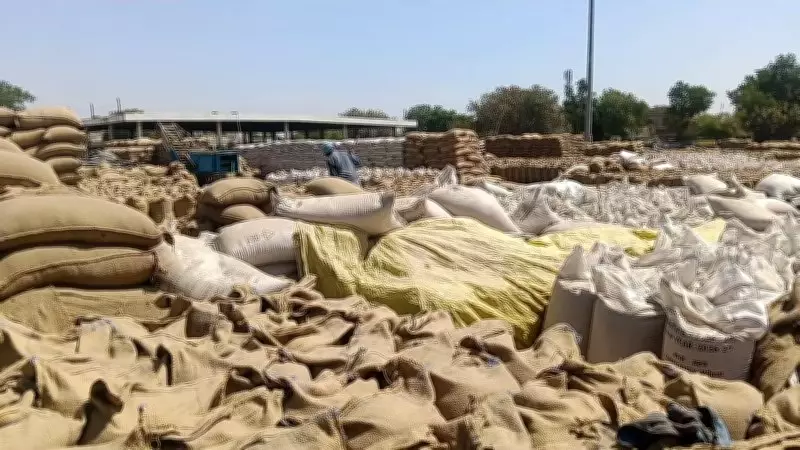
In a troubling development for farmers and arhtiyas in Moga district, wheat sacks lie exposed to the sky in as many as 112 mandis due to significant delays in lifting. The situation has left thousands of quintals of wheat vulnerable to adverse weather conditions, causing widespread distress among the farming community.
Extent of the Problem
Reports indicate that procurement operations have been hampered by logistical bottlenecks, with government agencies failing to lift the procured wheat in a timely manner. Farmers, who had hoped for a smooth sale of their produce, are now facing uncertainty as the grain remains in the open, susceptible to rain and sun.
Arhtiyas, the commission agents, have also expressed concern, stating that the delays are affecting their business and adding to the financial burden on farmers. They have urged the administration to expedite the lifting process to prevent further damage to the crop.

Impact on Farmers
Many farmers have reported that the prolonged exposure has already caused some deterioration in grain quality, which could lead to lower prices or rejection by procurement agencies. With the harvesting season at its peak, the delays are compounding the challenges faced by growers already dealing with rising input costs.
One farmer from a village near Moga city lamented, "We worked hard to produce this wheat, but now we are worried about its fate. The government must act fast to lift the grain and provide us with timely payments."
Administrative Response
Local officials have acknowledged the issue and assured that steps are being taken to speed up the lifting process. They cited a shortage of labor and transportation as key factors behind the delay. However, farmers remain skeptical, demanding immediate action.
The district administration has been directed to coordinate with procurement agencies to clear the backlog. Meanwhile, arrangements are being made to cover the wheat stacks with tarpaulins to protect them from the elements.
Broader Implications
The situation in Moga is not isolated, as similar lifting delays have been reported in other parts of Punjab. Experts warn that if not addressed promptly, the delays could affect the overall wheat procurement in the state, impacting both farmers' incomes and the public distribution system.
As the wait continues, farmers and arhtiyas hope for a swift resolution to the crisis, emphasizing the need for better planning and infrastructure to prevent such occurrences in the future.