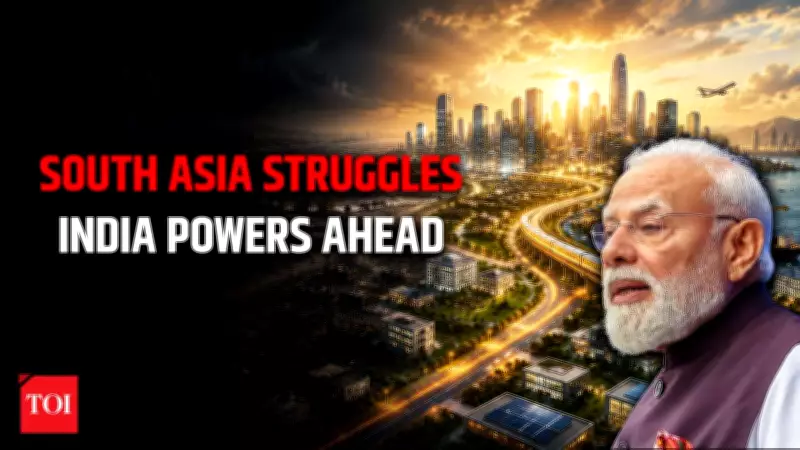
India’s Neighbours Are Struggling. Why Is India Still The Bright Spot In South Asia?
While several South Asian economies continue to battle debt, slowing growth, political instability, and financial pressures, India remains one of the world's fastest-growing major economies. From Pakistan and Bangladesh to Sri Lanka, Nepal, and Myanmar, many of India's neighbours are facing economic challenges. So what makes India different? This article explores the latest economic data, India's growth story, and why global institutions continue to view India as the region's strongest economic performer in 2026.
Regional Economic Challenges
India’s neighbours are grappling with a range of economic difficulties. Pakistan is facing high inflation and a balance of payments crisis, while Bangladesh is experiencing political turmoil and slowing export growth. Sri Lanka has yet to fully recover from its 2022 debt default, and Nepal’s economy is hampered by remittance dependence and weak tourism. Myanmar’s economy is in freefall due to civil conflict and sanctions.
India’s Growth Drivers
India’s economy, by contrast, is projected to grow at around 7% in 2026, driven by robust domestic demand, a strong services sector, and infrastructure investment. The government’s focus on digitalization, manufacturing incentives, and financial inclusion has attracted foreign investment. Additionally, India’s stable political environment and demographic dividend provide a solid foundation for sustained growth.

Global Institutional Confidence
International bodies like the International Monetary Fund and World Bank have consistently upgraded India’s growth forecasts. They cite India’s resilient banking system, expanding middle class, and policy reforms as key factors. In contrast, neighbouring countries face downgrades due to fiscal deficits and political risks.
Conclusion
India’s ability to maintain economic momentum amid regional turmoil highlights its structural strengths. While challenges remain, including unemployment and regional disparities, India’s trajectory positions it as a beacon of stability and growth in South Asia.