

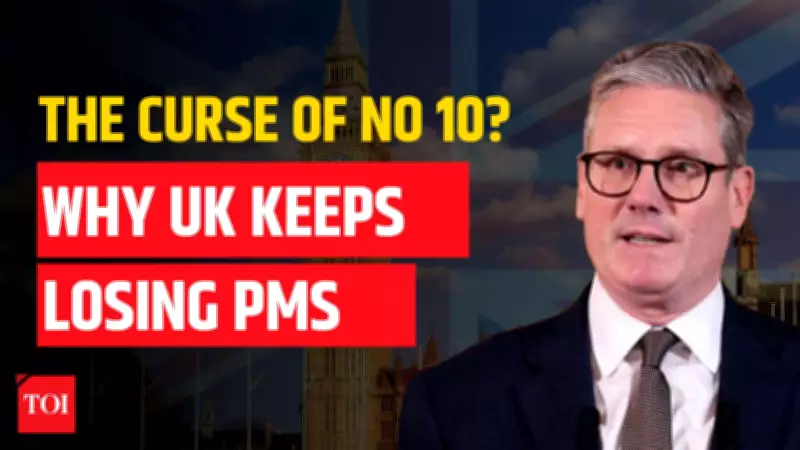
Britain's political instability has once again come into sharp focus as Prime Minister Keir Starmer faces mounting pressure following Labour's disastrous 2026 local election results. The crisis has renewed wider questions about why the United Kingdom has cycled through so many prime ministers in such a short period. Since the Brexit referendum in 2016, the country has witnessed an extraordinary succession of leaders, including David Cameron, Theresa May, Boris Johnson, Liz Truss, Rishi Sunak, and now Starmer, who is facing a potential revolt from within his own party.
Structural Weaknesses in the Political System
Analysts argue that Britain's problems go far beyond individual leaders. Instead, they point to deep structural weaknesses in the political system, growing public anger over the economy, intense media pressure, and bitter divisions within both major parties. The economic and political aftershocks of Brexit continue to dominate public life, while voters increasingly lose faith in Westminster politics.
The Rise of Reform UK
The rise of Reform UK has added further pressure on both Labour and the Conservatives. Many observers warn that Britain's political crisis is becoming systemic rather than temporary. The turmoil surrounding Downing Street now raises broader questions about whether Britain's current political model is still capable of delivering long-term stable government.

Since 2016, the UK has seen six prime ministers, a rate of turnover unprecedented in modern British history. Each leader has struggled to navigate the complex legacy of Brexit, economic stagnation, and public disillusionment. The 2026 local elections, in which Labour suffered heavy losses, have only deepened the sense of crisis.
Critics argue that the British political system, with its first-past-the-post electoral system and weak checks on executive power, is ill-equipped to handle the deep divisions in society. Meanwhile, the 24-hour news cycle and social media amplify every misstep, making it increasingly difficult for leaders to maintain public trust.
As Keir Starmer fights to hold onto his position, the question remains: can the UK break the curse of No. 10, or will it continue to churn through leaders at an alarming rate?






