

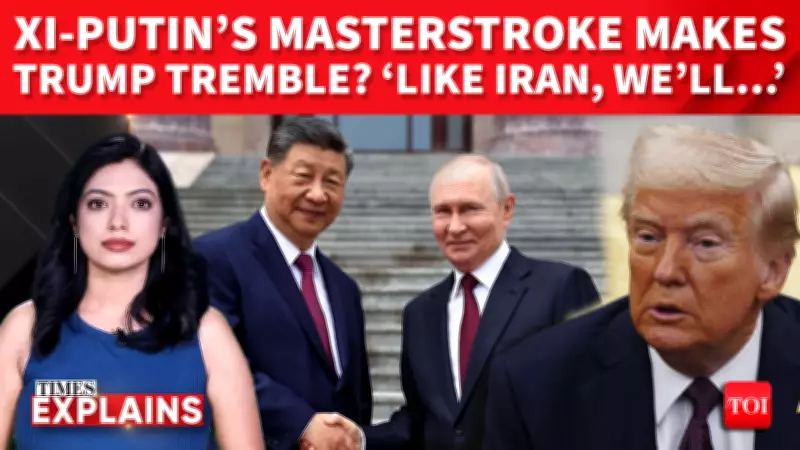
As Donald Trump exits Beijing after tense, high-pressure talks shadowed by Taiwan warnings, Iran tensions, and visible strategic friction, Vladimir Putin arrives to a dramatically different reception — warmth, unity, and unmistakable bonhomie with Xi Jinping. The contrast could not be sharper.
Contrasting Receptions in Beijing
While Trump's visit exposed mistrust and confrontation beneath the diplomacy, the Xi–Putin meeting projected alignment, coordination, and a powerful Eurasian front. From strategic messaging to global power shifts, Beijing may have just shown the world how China and Russia are closing ranks against growing American pressure.
Strategic Implications for Global Power Dynamics
Observers note that the divergent treatment of the two leaders underscores Beijing's strategic calculus. Trump's talks were marked by contentious exchanges over Taiwan and Iran, whereas Putin was greeted with red-carpet ceremony and effusive praise. This signals a deepening Sino-Russian partnership aimed at counterbalancing US hegemony.

The timing is critical: with Iran tensions escalating and the US pressing China on multiple fronts, the Xi-Putin axis presents a united front. Analysts suggest that this could lead to coordinated moves in international forums, energy deals, and military cooperation, further challenging the US-led world order.






