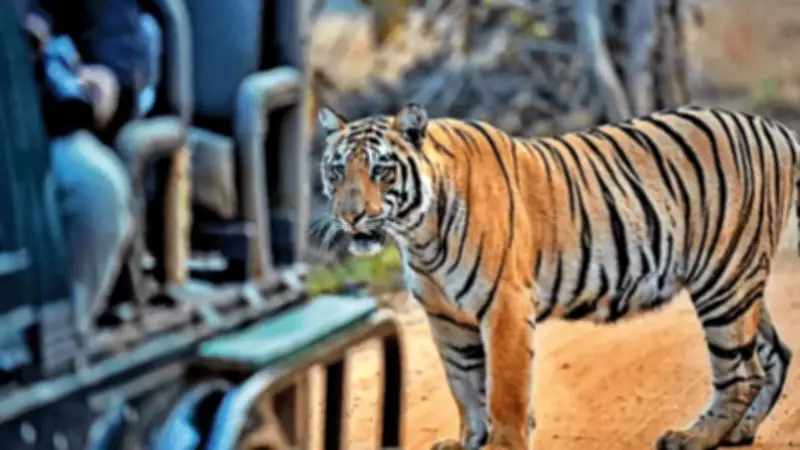
Alarming Poaching Data: 200 Big Cats Killed in India Over Two Decades
According to a Right to Information (RTI) reply from the Wildlife Crime Control Bureau (WCCB) under the Ministry of Environment, Forest and Climate Change, a staggering 200 big cats were poached across India between 2005 and December 2025. The data highlights central India as a major hotspot for these illegal activities, raising serious concerns about wildlife conservation efforts in the country.
Central India Bears the Brunt of Tiger Poaching
The RTI data indicates that 59 of the total poaching cases occurred in central Indian habitats. Statewise figures provided by the WCCB show that Madhya Pradesh recorded the highest number of tiger poaching cases at 36, followed by Uttar Pradesh with 14 cases, Karnataka with 13, and Maharashtra with nine. Other states with significant numbers include Assam (six), Uttarakhand and Kerala (four each), and Tamil Nadu, Chhattisgarh, and Andhra Pradesh (three each).
Expert Insights: International Demand Drives Poaching
Wildlife experts have directly linked these killings to international demand for body parts. Dr. YV Jhala, an International Union for Conservation of Nature (IUCN) expert on big cats and former senior scientist and dean of the Wildlife Institute of India, expressed deep concern over the numbers. "These figures are alarming because authorities seize only a small fraction of poached tigers and leopards," he stated. "Poaching remains a lucrative trade despite stringent laws, driven by high-price markets for big cat parts in neighboring countries like China and Southeast Asian nations."

Dr. Jhala further contextualized the data, explaining, "The statistics reflect seizures in these states, not the actual scale of poaching, as stricter enforcement leads to more recoveries. We must evaluate seizure numbers alongside tiger population trends to understand the full impact. Field observations indicate that Jharkhand, Chhattisgarh, Odisha, and North Eastern states are hotspots where poaching is causing significant declines in large cat populations."
Leopard Poaching: A Widespread Crisis
The RTI data also revealed that 92 leopards were poached during the same period. WCCB records show that Himachal Pradesh registered the highest number of leopard poaching cases at 21, followed by Andhra Pradesh with eight, Jammu and Kashmir with six, and Punjab, Uttar Pradesh, Uttarakhand, Madhya Pradesh, and Tamil Nadu with five cases each.
Notably, nearly 35% of leopard poaching cases occurred in Himachal Pradesh, Jammu and Kashmir, and Uttarakhand. Experts suggest this pattern points to a possible rise in human-wildlife conflict, attributed to forest fragmentation, encroached wildlife corridors, and increased vehicular and human movement near big cat habitats.
Conservation Context and Activist Perspective
India is home to approximately 3,600 tigers, accounting for nearly 75% of the global tiger population, according to the latest estimation by the Ministry of Environment, Forest and Climate Change through the Wildlife Institute of India and National Tiger Conservation Authority (NTCA). Additionally, the country has around 13,800 leopards across tiger range forests, as per another assessment.
Amit Gupta, the activist who obtained the RTI information, commented on the findings. "The data clearly shows that while tiger poaching remains concentrated in central India, leopard poaching is more widespread across the country, particularly in Himalayan states like Himachal Pradesh," he said. This underscores the need for targeted conservation strategies that address regional variations in poaching threats.
The persistent poaching of big cats in India highlights critical challenges in wildlife protection, from international trafficking networks to local human-wildlife conflicts. As conservation efforts intensify, these findings serve as a stark reminder of the ongoing battle to safeguard India's iconic feline species.