Delhi's Alarming Vehicle Load Triggers Urgent PMO Intervention
The Prime Minister's Office has raised serious concerns about Delhi's disproportionate share of vehicles in the National Capital Region, with data revealing that 37% of vehicles in Delhi-NCR still operate under outdated BS I to BS III emission norms. This alarming statistic emerged during a high-level meeting chaired by the Principal Secretary to the Prime Minister on October 24.
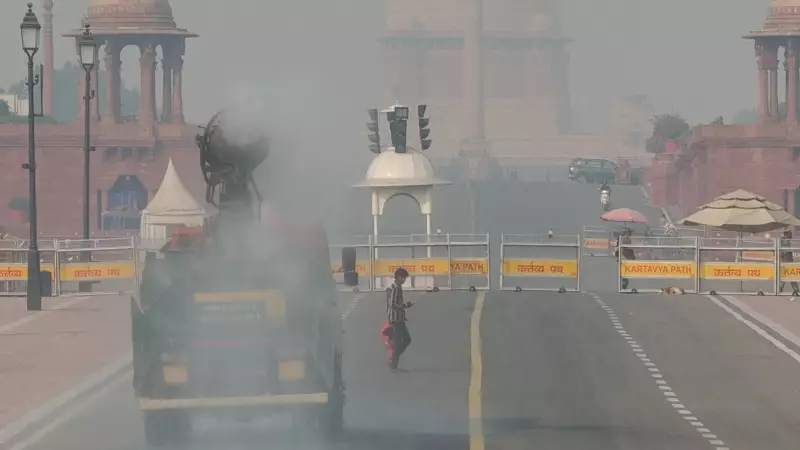
The meeting brought together secretaries from eight key departments - including environment, power, housing, and agriculture - along with chief secretaries from five states: Delhi, Rajasthan, Haryana, Punjab, and Uttar Pradesh. The gathering occurred as Delhi's air quality deteriorated to 'very poor' levels, with the Air Quality Index crossing 350, prompting the implementation of Stage 2 of the Graded Response Action Plan.
Staggering Vehicle Statistics Highlight Delhi's Pollution Crisis
Senior government officials disclosed that Delhi's vehicle concentration presents a critical challenge. Of the NCR's 2.97 crore registered vehicles, nearly 1.57 crore are concentrated in Delhi - a city that occupies only 2.7% of the NCR's geographical area. This massive vehicle density has been identified as a primary contributor to the region's worsening air quality.

The Commission for Air Quality Management, a statutory body established by the Supreme Court, has consistently highlighted transportation and vehicular pollution as key concerns. In response, the PMO has directed the four states bordering Delhi - Haryana, Uttar Pradesh, Rajasthan, and Punjab - to immediately implement "practical and result-oriented measures for visible improvement in air quality."
Electric Vehicle Adoption Fails to Gain Traction
Despite government efforts, electric vehicle adoption remains worryingly low. Data from October reveals that only 4,419 electric two-wheelers were registered in Delhi, bringing the year's total to 31,447. In stark contrast, petrol-run two-wheelers saw 78,114 registrations in October alone - more than double the entire year's EV two-wheeler registrations.
The scenario is equally concerning for four-wheelers, with only 2,331 EVs and EV-hybrid private vehicles registered in October. From January to October this year, a total of 17,942 such vehicles were registered, while 1,27,099 petrol or diesel-run private four-wheelers hit Delhi's roads during the same period, according to fuel-wise analysis of registered vehicles on the Government's VAHAN dashboard.
Urgent Measures and Enforcement Strategies
The high-level meeting resulted in several critical decisions aimed at accelerating the transition to cleaner transportation. States have been directed to review and revise EV policies across all vehicle categories - including two-wheelers, three-wheelers, cars, buses, and commercial vehicles - with clear timelines and implementation mechanisms.
Additionally, states were advised to expedite notification of cab and bike aggregator policies and develop a unified portal for monitoring progress. To strengthen enforcement, the NCR states of Delhi, UP, Haryana, and Rajasthan were urged to deploy their advanced technological systems, including automatic number plate recognition (ANPR), radio frequency identification (RFID), and integrated traffic management (ITMS) systems.
The Ministry of Road Transport and Highways has been tasked with expediting a scientific study on pollution from vehicles running on fossil fuels, recognizing the urgent need for evidence-based policy interventions.
Pollution Data Confirms Transportation Sector's Major Role
Recent pollution data underscores the critical nature of the vehicle problem. Official data shows that from October 15 to November 25, average PM10 levels in the capital region reached approximately 295 ug/m3, while PM2.5 levels averaged 171 ug/m3. These figures dramatically exceed WHO safety standards, which specify that PM2.5 levels should not exceed 15ug/m3 and PM10 should stay below 45 ug/m3.

Data from the Decision Support System of the Indian Institute of Tropical Meteorology revealed that the transport sector remained the major contributor to air pollution this season, accounting for 14-20% of pollution between November 1 and 22. The Centre for Science and Environment's analysis estimated that vehicles alone could cause half of particulate matter pollution during winter months.
Historical studies corroborate these findings, with a 2018 emissions inventory by The Energy Resources Institute finding that the transport sector's contribution to emissions was the highest at 81%, followed by power plants at just 7%.
Silver Lining: Farm Fire Incidents Show Decline
Amid the concerning vehicle data, one positive trend has emerged: farm fire incidents have reached a five-year low. From September 15 to November 23, only 27,720 cases were detected in Punjab, Haryana, UP, Rajasthan, and MP, compared to 32,584 in 2024, 54,727 in 2023, 65,881 in 2022, and 85,915 in 2021.
This declining trend in agricultural burning has shifted greater focus to the transportation sector as the next frontier in Delhi's battle for cleaner air. The PMO's intervention signals the government's recognition that without addressing the vehicle emission crisis, sustainable improvements in Delhi's air quality remain elusive.