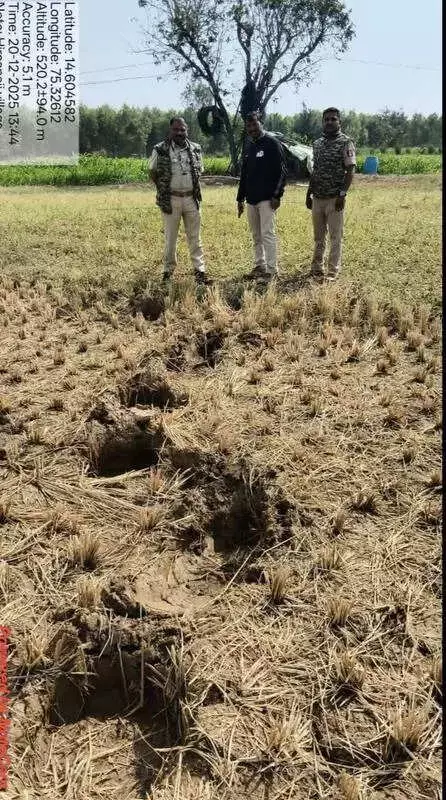
For close to a month, a dedicated team of 60 forest department staff in Shivamogga has been engaged in an exhausting and round-the-clock operation. Their mission is to monitor and manage the movement of three elephants that have been causing significant disruption across four forest ranges within the Sagar forest division.
A Trail of Crop Destruction and Elusive Movements
The elephants, primarily roaming in the Soraba taluk, have left a path of agricultural damage in their wake. Farmers have reported substantial losses as the animals have destroyed paddy and pineapple crops. The task for the forest personnel is made immensely challenging because the elephants frequently change their direction, making it difficult to predict their next move and effectively safeguard farmlands.
Adding to the complexity of the situation is the presence of a separate herd of five to six elephants within the Shettihalli wildlife sanctuary. This group was previously a common sight in the Bhadra Tiger Reserve, indicating a shift in their habitat patterns. In the current conflict zone, two elephants were initially sighted near Soraba, where they took shelter. In a concerning incident about a week ago, a tusker managed to evade the watchful eyes of staff from the Arasalu and Choradi ranges, successfully crossing into the Ambigola range on the border of Sagar and Soraba.

Fresh Entries and Mounting Pressure on Ground Staff
The forest staff, already worried after failing to drive back the initial two elephants, now face renewed pressure with the fresh entry of more jumbos into the area. Reports from the Shiralakoppa range indicate another tusker is on the move in a different direction. This elephant crossed into the Soraba border from the Anavatti range and reached Hamsabhavi, which falls under the Byadagi range of the neighbouring Haveri forest division.
This elephant's journey through Heremagadi, Hanchi, and Ginivala forests is providing crucial material for a fresh study. Experts are observing its use of an old corridor that historically connects Chikkamagaluru to Dandeli in Uttara Kannada district, highlighting potential disruptions in traditional elephant pathways.
The Human Toll of the Conflict
The conflict is not just troubling farmers but also placing an immense burden on the forest department personnel. In every affected range—Sagar, Soraba, and Shiralakoppa—staff are guarding the elephants in two or three shifts daily. The logistical challenges are severe, with staff having to prepare their meals in nearby villages during their long deployments.
One staff member, speaking to TOI, revealed the strain on the ground, stating they are "blindly following higher officers' orders." The financial strain is also real, with some under-officers reportedly paying for expenses from their own pockets to keep the operation running.
According to experts, the forest department in the Sagar division is actively trying to stop the elephants from moving further. This strategy is driven by concerns over potential crop damage in the regions of Siddapura, Sirsi, and Yallapura. D Mohan Kumar, the Deputy Conservator of Forests (DCF) for the Sagar forest division, told TOI that the objective is to drive the elephants back to the Shettihalli forest.
The timing of this conflict is critical for agriculture in the Malnad region. Paddy harvesting is currently underway, and there are standing sugarcane crops that are now under threat from the roaming elephants, risking further economic losses for the local communities.