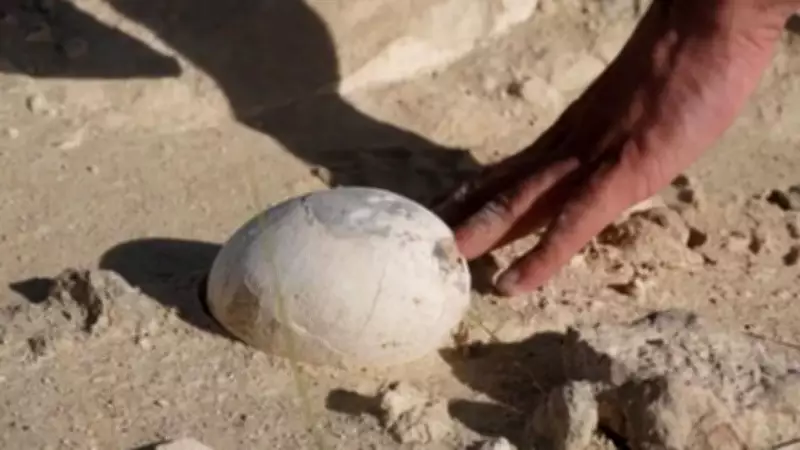
70-Million-Year-Old Carnivorous Dinosaur Egg Unearthed in South America
In a groundbreaking paleontological discovery, a fossilized dinosaur egg estimated to be approximately 70 million years old has been uncovered in South America. Scientists are hailing this find as remarkable due to its exceptional preservation and potential significance for understanding prehistoric life.
An Unprecedented Discovery
The discovery was made by researchers from the Laboratory of Comparative Anatomy and Evolution of Vertebrates (LACEV) at the Argentine Museum of Natural Sciences. Led by paleontologist Federico Agnolín and his colleague Matías Motta, the team believes this could represent the first complete egg of a carnivorous dinosaur ever discovered in South America.
The egg was revealed during a live broadcast, allowing both scientific colleagues and the public to witness this historic moment simultaneously, as reported by Discover Magazine. This transparent approach to scientific discovery represents a new era in paleontological research.

Rare and Intriguing Characteristics
Fossilized eggs of carnivorous dinosaurs are exceptionally rare worldwide, making this particular specimen especially valuable to researchers. The egg displays several distinctive features that set it apart from previously discovered dinosaur eggs:
- Oval shape resembling modern bird eggs rather than the round, thick shells typical of long-necked sauropods
- Unusual markings on the shell surface that suggest it might belong to a previously unknown species
- Initial speculation that it might belong to Bonapartenykus, a small local theropod, has been largely dismissed
Agnolín and his research team now believe the egg likely belongs to a different type of carnivorous dinosaur altogether, potentially representing a species not previously documented in the fossil record.
Potential Embryonic Contents
The research team plans to conduct a micro-CT scan of the egg before the end of the year. This advanced imaging technique could reveal whether any embryonic skeleton remains preserved inside the fossilized shell.
Even if the embryo isn't completely intact, researchers believe it might still provide crucial information about:
- The posture of developing carnivorous dinosaurs
- Growth patterns during embryonic development
- How their respiratory systems functioned before hatching
Dinosaur embryos are extremely rare discoveries globally. In Argentina specifically, only sauropod embryos have been found previously. If this egg contains a carnivorous dinosaur embryo, it would represent an unprecedented opportunity to study these predators during their developmental stages.
Nesting Evidence and Behavioral Insights
Near the fossilized egg, researchers made additional significant discoveries that provide context about dinosaur nesting behaviors:
- Fossils of Rocasaurus muniozi, a titanosaur that appears to have breathed similarly to modern birds
- Additional egg fragments and eroded shells suggesting the presence of a nest
Until now, no known carnivorous dinosaur nests have been documented in South America. This discovery could help scientists understand how nesting behaviors evolved, potentially bridging the evolutionary gap between reptiles that simply lay eggs and modern birds that build nests, incubate eggs, and care for their chicks.
Skeletons alone rarely provide behavioral information, but nests can reveal significant details about dinosaur social structures and parenting behaviors. This find may indicate whether these carnivorous dinosaurs were social creatures, solitary hunters, or attentive parents to their offspring.
Scientific Significance and Future Research
Agnolín emphasizes that this discovery represents more than just a remarkable fossil find. It demonstrates the scientific process unfolding in real time and provides a unique window into the evolutionary path that eventually led to bird-like parenting behaviors.

The research team's work continues as they prepare for the micro-CT scanning that could reveal the egg's internal contents. This discovery has the potential to reshape our understanding of carnivorous dinosaur reproduction, development, and behavior during the Late Cretaceous period in South America.