

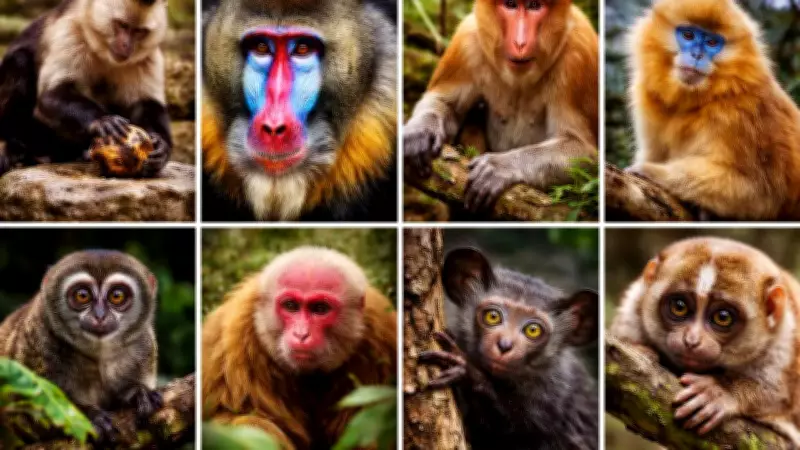
Exploring the World's Most Extraordinary Monkey Species
Monkeys represent one of the most diverse and fascinating groups of creatures on our planet. Their incredible variety stems from millions of years of evolution, resulting in species with astonishing physical characteristics and peculiar behaviors that never fail to captivate observers. What makes these primates truly special extends beyond their uniqueness—it encompasses the remarkable advantages these traits provide for environmental adaptation and survival.
According to the International Union for Conservation of Nature, primates exhibit an extraordinary range of physical traits and behaviors that have been meticulously shaped by their specific habitats and survival requirements. These adaptations may involve attracting mates, enduring harsh weather conditions, or efficiently acquiring food resources. The following eight unusual monkey species showcase nature's incredible creativity and will undoubtedly surprise even the most knowledgeable wildlife enthusiasts.
Sunda Slow Loris: The Venomous Charmer
The slow loris presents a deceptively adorable appearance with its large, round eyes and gentle demeanor, yet it holds a surprising secret—it ranks among the very few venomous mammals in existence. This remarkable primate secretes toxic substances from specialized glands, creating a potent defense mechanism against predators and competitors. Recognizable by its characteristically lethargic movements and distinctive facial features, the slow loris demonstrates how appearances can be deceiving in the animal kingdom.

Night Monkey: The Nocturnal Specialist
Commonly known as the owl monkey, this unique primate stands out as the only truly nocturnal monkey species. Its evolutionary adaptations include exceptionally large eyes perfectly suited for superior night vision, along with sophisticated communication systems utilizing both vocalizations and scent markers. This fundamental difference in circadian rhythm sets the night monkey apart from its diurnal relatives, showcasing how primates have diversified to occupy different ecological niches.
Aye-Aye: The Woodpecker Mimic
Aye-ayes represent one of the most distinctive primate species, featuring an elongated, slender middle finger that serves as a specialized foraging tool. These remarkable animals employ a unique tapping technique on tree bark to locate insect larvae, then use their specialized digit to extract their prey—a behavior strikingly similar to that of woodpeckers. The aye-aye's unusual appearance has inspired numerous local legends and folklore, highlighting how extraordinary physical traits can capture human imagination across cultures.
Bald Uakari: The Health Indicator
Bald uakaris immediately capture attention with their vivid reddish faces and complete absence of facial hair. Interestingly, the intensity of facial coloration serves as a biological health indicator—the redder the face, the healthier the individual. Conversely, pale facial coloration suggests potential illness, making this distinctive trait not merely cosmetic but functionally significant for social interactions and mate selection within uakari communities.
Golden Snub-Nosed Monkey: The Cold Climate Specialist
Thriving in the frigid mountainous regions of China, this remarkable monkey sports a luxurious golden coat and a distinctive small, upturned nose. These specialized adaptations enable survival in extremely low temperatures that would challenge most primates. The combination of its striking appearance and harsh habitat makes the golden snub-nosed monkey one of the world's most visually distinctive and environmentally specialized primate species.
Proboscis Monkey: The Nasal Performer
Instantly recognizable by its extraordinarily large, pendulous nose, the proboscis monkey utilizes this prominent feature to amplify vocalizations during mating rituals. While this anatomical characteristic might appear peculiar at first glance, it serves essential biological functions related to communication and reproductive success. The nose's size and resonance capabilities play crucial roles in social dynamics and mate attraction within proboscis monkey populations.

Mandrill: The Colorful Communicator
Mandrills rank among the most vibrantly colored mammals, displaying spectacular facial patterns featuring brilliant shades of red and blue. These striking colors function as sophisticated visual signals within complex social hierarchies, indicating dominance status and attracting potential mates. The mandrill's chromatic brilliance represents one of nature's most elaborate examples of how physical appearance facilitates social organization and reproductive strategies in primate societies.
Capuchin Monkey: The Intelligent Tool User
Capuchin monkeys have earned recognition not for extraordinary physical features but for their exceptional cognitive abilities. Possessing one of the highest brain-to-body ratios among primates, these intelligent animals demonstrate sophisticated tool use, employing rocks to crack open nuts and utilizing other objects to solve environmental challenges. Their advanced social behaviors and problem-solving capabilities establish capuchins as among the most intellectually gifted monkey species, showcasing how intelligence represents another remarkable adaptation in primate evolution.
These eight extraordinary monkey species illustrate the incredible diversity and adaptability of primates worldwide. From venomous defenses to specialized foraging techniques, from climate adaptations to complex social signaling, each species demonstrates unique evolutionary solutions to environmental challenges. As we continue to study and protect these remarkable animals, we gain deeper insights into the wonders of biological adaptation and the importance of conserving Earth's precious biodiversity.





