

CEPT University Study Uncovers Ahmedabad's Uneven Urban Tree Distribution
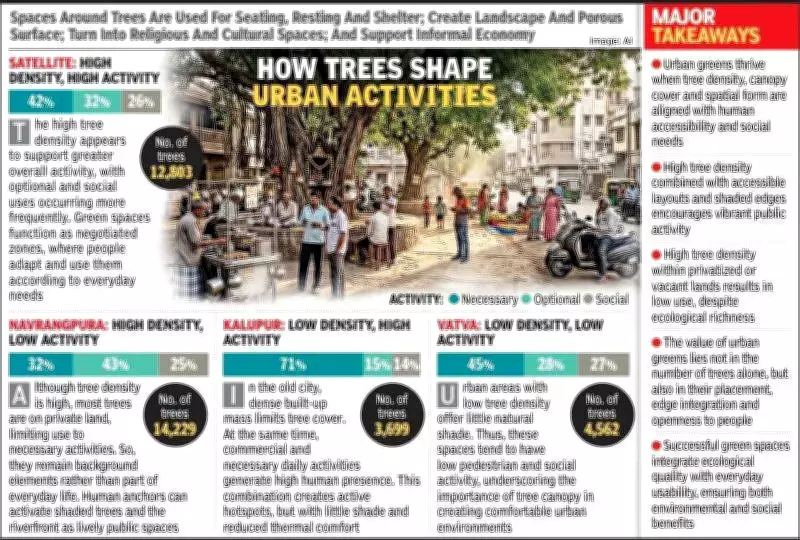
A comprehensive study conducted by students from CEPT University has revealed significant disparities in Ahmedabad's tree cover, with approximately 60% of surveyed areas in both eastern and western parts of the city recording only 10 to 12 fully grown trees per square kilometer. This research, titled "Dynamic Urban Spaces: Greens," provides crucial insights into how urban greenery functions beyond formal planning.
Research Methodology and Key Findings
The study was carried out during the monsoon semester under the guidance of tutor Daniel D'Souza and teaching assistant Jeel Gajjar. A team of 14 students meticulously examined 156 precincts, each measuring 1x1 square kilometer, across Ahmedabad. Their investigation encompassed multiple urban elements including tree distribution, walkability conditions, edge characteristics, road hierarchy, land use patterns, plot specifics, and building footprints.
Researchers documented a total of 249,000 trees throughout the study area, identifying distinct concentration patterns. High-density tree clusters were primarily located in central and western Ahmedabad, while eastern and southern regions exhibited significantly sparser coverage. The data showed that 28% of surveyed precincts contained between 10 and 35 trees per square kilometer, with merely 12% exceeding 35 trees per square kilometer.

The Vital Role of Informal Green Spaces
One of the study's most significant revelations is that Ahmedabad's green infrastructure isn't solely the product of official urban planning. The research emphasizes how informal, community-driven practices substantially complement and enhance formal urban design. From yoga lawns and exercise gardens to vendor streets and improvised playgrounds, these spaces demonstrate how physical green structures actively shape and sustain collective urban behaviors.
The study explicitly states: "Urban greens are not limited to formal parks but extend into everyday, informal and improvised spaces such as parks with greenery, landscaped green space with high-rise buildings, and large green lawns." This perspective challenges conventional notions of urban greenery, recognizing the ecological and social value of spontaneous green areas.
Everyday Urban Life and Roadside Ecology
The research team observed that roadside trees serve as integral components of Ahmedabad's daily urban experience. These trees provide essential shade for street vendors, including shikanji sellers who depend on overhead canopy for their afternoon business operations. Similarly, small roadside temples often rely on surrounding trees for their environmental and aesthetic context.
Road edges throughout Ahmedabad reflect this organic informality, with tea stalls, vendors, and informal gathering spots transforming ordinary urban corners into vibrant spaces of livelihood and social interaction. These unplanned yet vital green spaces host much of the city's everyday life, functioning as crucial urban ecosystems despite their informal nature.
The study concludes that understanding and preserving these informal green spaces is essential for sustainable urban development, as they contribute significantly to Ahmedabad's environmental resilience and social fabric beyond what formal planning alone can achieve.






