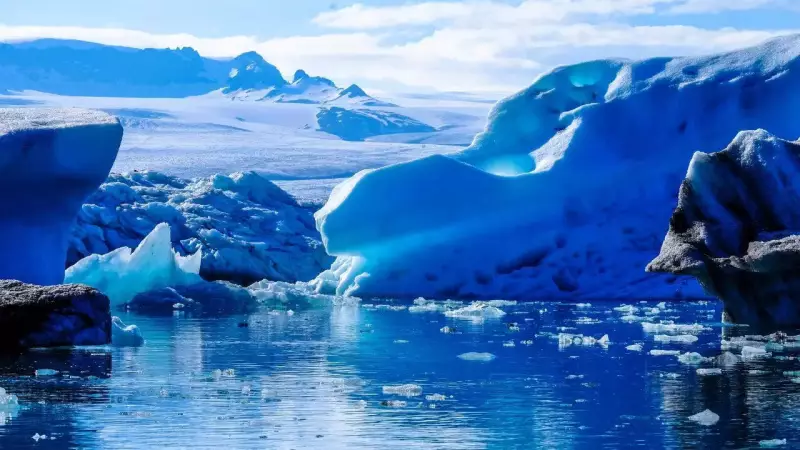
Imagine a lush, vibrant rainforest flourishing within the icy expanse we recognize today as Antarctica. While this may sound like a scene from a science fiction novel, groundbreaking research confirms that approximately 90 million years ago, Antarctica was sufficiently warm to support temperate rainforests in close proximity to the South Pole.
Scientific Discovery of an Ancient Ecosystem
A pivotal scientific study, published in PubMed Central under the title "Temperate rainforests near the South Pole during peak Cretaceous warmth," has meticulously analyzed fossilized soil, roots, pollen, and spores retrieved from deep beneath the seafloor near West Antarctica. The findings are astonishing, revealing a remarkably warm climate during the Cretaceous period, an era when dinosaurs inhabited Earth and atmospheric carbon dioxide concentrations were significantly elevated compared to contemporary levels.
This ancient rainforest ecosystem likely comprised conifers, ferns, and flowering plants, with average annual temperatures resembling those of modern regions such as parts of Australia or Wales. This stands in stark contrast to the frozen continent known today, highlighting a dramatic climatic transformation over millions of years.

How Evidence Was Uncovered
Researchers conducted excavations of the seafloor near West Antarctica, unearthing ancient soil layers that once formed part of a living forest. Through detailed examination of fossilized roots, pollen, and spores within these layers, scientists have reconstructed a vivid portrayal of vegetation thriving less than 1,000 kilometres from the South Pole.
Such studies are rare due to the delicate nature of the materials, which are prone to decay over time, making this discovery particularly valuable for understanding Earth's climatic history.
Climate Conditions 90 Million Years Ago
During this period, Earth was experiencing the Cretaceous greenhouse phase, representing the warmest climate over the last 140 million years. In the region near the South Pole, the average annual temperature was approximately 12 degrees Celsius, with summer temperatures potentially reaching 19 to 20 degrees Celsius. Rainfall levels were comparable to those in present-day Wales.
Remarkably, these temperate conditions persisted despite extended polar nights, characterized by months of darkness each year with limited sunlight, underscoring the profound influence of greenhouse gases on regional climates.
Causes of Antarctica's Ancient Warmth
The warmth was not a result of mystical phenomena but was intrinsically linked to Earth's ancient climate dynamics and greenhouse gas concentrations. The study estimates that atmospheric CO₂ levels during the Cretaceous were substantially higher than previously believed. Elevated CO₂, combined with the absence of extensive ice sheets, enabled temperate forests to thrive at high latitudes.
In contrast, modern Antarctica is dominated by thick ice and frigid temperatures, largely due to lower carbon dioxide levels and overall climatic cooling over millennia.
Visualizing the Ancient Rainforest
The ancient Antarctic landscape would have resembled a swampy temperate forest, teeming with diverse plant life. Abundant fossils from conifers, ferns, and flowering plants suggest a complex ecosystem akin to modern temperate zones in New Zealand. Fossilized roots embedded in the soil indicate a dense network of vegetation that once blanketed the land, painting a picture of a vibrant, green continent far removed from its current icy state.
Implications for Understanding Climate Change
This discovery holds significant importance for contemporary climate science. By studying past climatic shifts, researchers gain insights into how natural factors influence environmental changes over vast timescales. The existence of a rainforest at such a high latitude demonstrates Earth's capacity to become exceptionally warm under high greenhouse gas concentrations.
While not a precise predictor of future conditions, this finding serves as a crucial piece in comprehending how CO₂ levels can govern global temperatures, offering valuable lessons for addressing current climate challenges.