

440-Year-Old Silver Coin Solves Mystery of Doomed Spanish Colony in Chile
For more than four centuries, the precise location of the doomed Spanish settlement known as Rey Don Felipe remained one of the great maritime mysteries of the colonial era. Now, archaeologists working in southern Chile have made a breakthrough discovery that finally anchors this tragic chapter of history to its exact geographic coordinates.
The Definitive Geographic Anchor
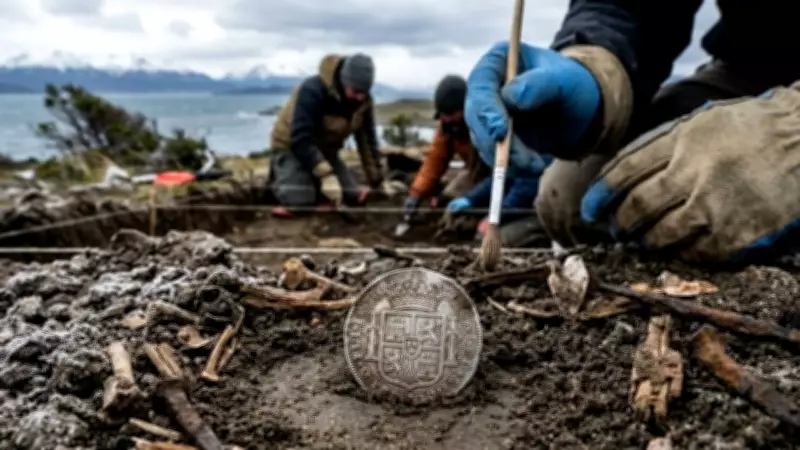
Researchers from Bernardo O'Higgins University have uncovered a 440-year-old silver coin using advanced metal detection technology. This remarkable artifact, identified as a Real de a Ocho or "piece of eight," was found exactly where 16th-century historical records indicated the settlement's church was constructed.
The coin represents what archaeologists call a foundation deposit—a ritual object buried during the founding ceremony of a new settlement. Spanish colonizers typically placed such coins under the cornerstone of churches to consecrate the site, creating what essentially serves as a permanent geographic marker for the entire settlement.

The Tragic History of Port Famine
This discovery definitively confirms the location of what became known as Port Famine, where nearly 300 Spanish settlers perished from starvation and exposure in the harsh sub-Antarctic climate. The colony was established on March 25, 1584, as part of Spain's strategic effort to control the Strait of Magellan against English privateers, particularly the notorious Sir Francis Drake.
Historical accounts reveal the settlement's devastating fate. When English navigator Thomas Cavendish arrived in 1587, he found what he described as a city of the dead, with only about five survivors remaining from the original 300 settlers. The colony's isolation and brutal environmental conditions proved insurmountable for the Spanish colonizers.
Archaeological Significance and Details
The silver coin itself offers multiple layers of historical information:
- Origin: Minted in Potosí, present-day Bolivia, during the reign of King Philip II
- Design: Features the heraldic emblems of the Spanish Crown and the Jerusalem cross
- Significance: Indicates the colonizers had access to high-value currency for establishing permanent economic systems
- Archaeological value: Provides critical dating evidence and confirms cultural characteristics of the site
According to a research paper published on ResearchGate, such coins are invaluable for establishing chronological strata at archaeological sites and verifying their cultural context.
Modern Archaeological Methods
This excavation represents a model of modern, non-invasive archaeology. Funded by the Chilean Ministry of Culture, Arts, and Heritage, the research team employed sophisticated techniques to preserve the site's integrity:
- High-precision geolocation to identify potential excavation areas
- Non-invasive scanning methods to detect soil anomalies before excavation
- Minimal disturbance to the delicate permafrost and 16th-century fortifications
These careful approaches have left the site intact for continued study of colonial logistics and survival strategies in extreme environments.
Broader Historical Implications
The discovery provides crucial insights into early European attempts to colonize sub-Antarctic regions. By mapping the ruins and understanding the settlement's precise location, researchers can better comprehend:
- The strategic importance of the Strait of Magellan during the Age of Exploration
- The environmental challenges faced by European colonizers in extreme climates
- The economic systems and rituals employed by Spanish settlers in South America
- The broader patterns of colonial expansion and failure in the 16th century
This 440-year-old silver coin serves as more than just an archaeological artifact—it represents a physical connection to one of history's most tragic colonial failures, finally bringing closure to a mystery that has endured for centuries.






