Supreme Court's Aravalli Definition Review Ignites Fears for Rajasthan's Ecological and Cultural Heart
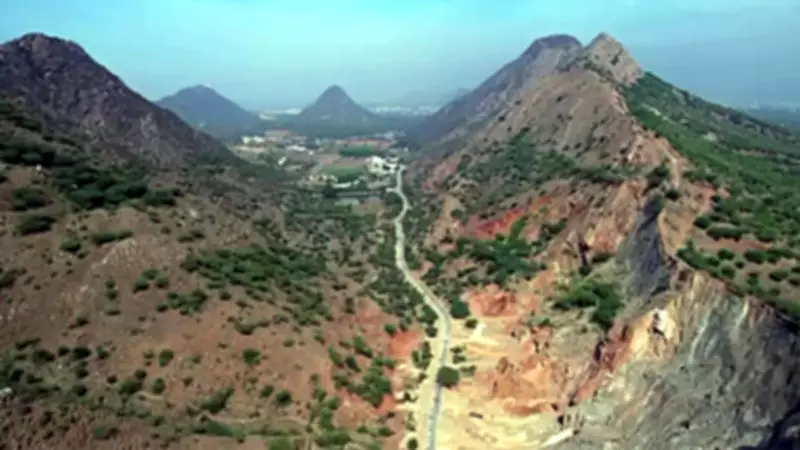
The Aravalli mountain range, stretching 600 kilometers across four states and standing as India's oldest fold mountains at nearly 2 billion years old, faces a critical juncture. The Supreme Court has called for a new yardstick to define these ancient hills, following public outcry over a now-shelved definition that many feared would strip vast areas of environmental safeguards. This controversy underscores a deeper truth: for the communities nestled in its folds, the Aravallis are far more than physical landmarks—they are the bedrock of identity, survival, and culture.
The Stakes of a Shrinking Map
The previously proposed definition, which relied on a 100-meter elevation cutoff and 500-meter proximity between hills, raised alarms that significant portions of the Aravallis could lose legal protections. For local residents, this isn't just a bureaucratic issue; it's an immediate threat to forests, grazing commons, water systems, sacred groves, and the fragile balance that shields community life from mining, fragmentation, and forced migration. "The Aravallis and our communities share a bond that goes back centuries. These mountains are not just geography for us. They are a living god, central to our identity and survival," emphasizes Hari Ram Meena, a tribal writer and former IPS officer.
A Tapestry of Tribes and Traditions
The Aravallis have cradled some of Rajasthan's oldest communities, shaping their histories and ways of life. The Meena tribe once ruled large parts of the Jaipur region, controlling strategic mountain passes before the rise of the Kachwaha Rajputs. In southern Rajasthan, Bhil chieftains held sway over vast forested tracts, with their role so crucial that the royal coat of arms of Mewar depicts a Rajput warrior alongside a Bhil warrior. These mountains also influenced warfare, enabling Maharana Pratap's guerrilla resistance against the Mughals through local knowledge of forests, passes, and water sources.

Beyond protection, the Aravallis sustain life as Rajasthan's ecological spine. They regulate climate, arrest desertification, feed rivers like the Banas, Luni, and Sabarmati, and support forests in an arid landscape. As a cultural watershed, they separate river systems flowing toward the Arabian Sea and the Bay of Bengal while shaping distinct traditions, languages, and lifestyles. For tribes such as the Bhil, Meena, Garasia, Saharia, Raika, Rewari, Mogia, Nath, and Gurjar, the mountains are a living presence, dotted with temples, sacred groves, and hilltop shrines treated as 'prakriti tirtha' or sacred geography.
Daily Life and Deepening Threats
Life in the Aravallis revolves around forest produce, livestock, and water. Communities collect food, fuelwood, medicinal herbs, bamboo, tendu leaves, and wild fruits, while rain-fed terraced farming supports hardy crops like millets and pulses. Traditional water systems—'johads', stepwells, nadis, and baoris—are lifelines built and maintained collectively. "Our water structures are protected not by law but by community ethics," notes Meena. However, this delicate balance is eroding due to state control over forests, restrictions on collective labor, and illegal mining. Social activist Kunj Bihari Sharma warns, "Aravalli forests are not just greenery; they are sources of fuel, fodder, herbs, and water. Humans and wildlife survive together, but mining is hollowing out the hills."
Nomadic Livelihoods at Risk
The impact is starkest for Denotified Tribes (DNTs) and nomadic communities, whose economies depend entirely on grazing landscapes. Gopal Keshawat, former chairperson of the Development and Welfare Board for Denotified, Nomadic, and Semi-Nomadic Communities, highlights that mining has triggered a deep livelihood crisis. "Pastoral communities survive on livestock, milk, wool, and leather. When grazing lands are destroyed, their entire economy collapses," he explains. Keshawat estimates that nearly 10% of India's nomadic population and over one crore people in Rajasthan rely on Aravalli-linked ecosystems, with past commissions recommending mining bans and protected grazing lands to safeguard both people and nature.

Cultural Practices as Conservation
Where laws falter, cultural practices endure. Across Rajasthan, 'orans' or community-protected sacred groves remain untouched due to religious beliefs, with social sanctions prohibiting tree-cutting and hunting. The Gawari dance of the Bhil community, performed over 45 days in Udaipur district, exemplifies this blend of spirituality and ecology. "It is not entertainment, but the worship of nature," says social activist Kishan Gurjar. Similarly, nomadic groups like the Sapera or Kalbelia, once seen as village protectors, hold traditional knowledge of snakes and forests that is now threatened by environmental degradation.
Art, Language, and Living Memory
The Aravallis' influence extends to art and language. In Molela village, terracotta sculptures rely on clay from the Banas river, which originates in the mountains. Potter Prabhu Gameti explains, "The clay is smooth and flexible, making idols that last generations." Researcher Madan Meena warns that environmental destruction erases culture, as livelihoods collapse and people migrate, leading to the loss of over two dozen languages and dialects spoken in the region. "When an art form disappears, an entire vocabulary disappears with it," he adds. From the Mogiya's medicinal herbs to the Nath sect's hilltop shrines, belief, livelihood, and landscape merge seamlessly, reflecting the Aravallis' role in preserving diversity.
As sociologist Shyam Sunder Jyani asserts, "Reducing Aravallis to physical measurements denies its reality. It is a socioecological organism where folk culture, agriculture, and community knowledge are deeply intertwined." The stakes transcend forests and hills, encompassing Rajasthan's living memory—its languages, rituals, arts, and ways of life shaped over millennia. Protecting the Aravallis is not merely about a definition; it's about honoring a legacy that defines a region's soul.