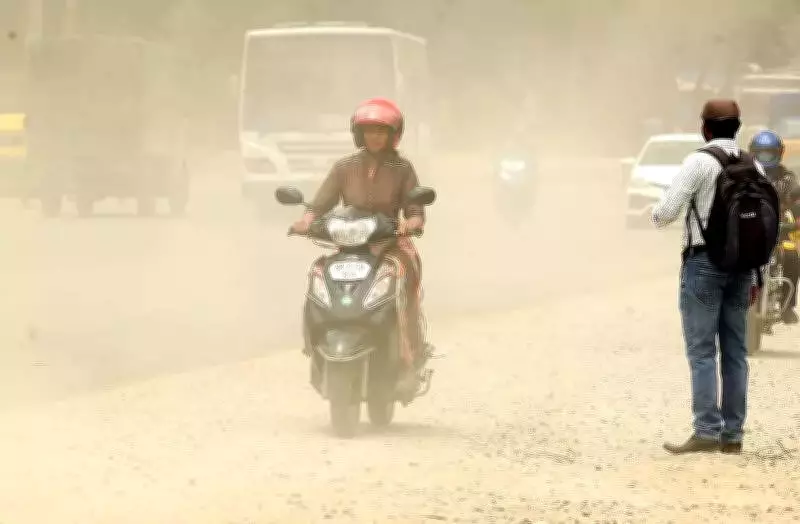
Karnataka Minister Warns Bengaluru Against Becoming Delhi-Like Gas Chamber
In a stern warning, Karnataka Environment Minister Eshwar Khandre declared on Thursday that Bengaluru must not turn into "another gas chamber like Delhi," as he directed the Karnataka State Pollution Control Board (KSPCB) to issue notices to the Greater Bengaluru Authority (GBA) and other local bodies if the city's air quality index (AQI) surpasses 100 in a single day. He emphasized that failure to comply would result in legal consequences, underscoring the urgency of the situation.
Renewed Focus on Pollution Amid Legislative Concerns
Amid growing worries over Bengaluru's deteriorating air quality, Minister Khandre announced plans to convene a meeting of all 28 city legislators, chaired by Deputy Chief Minister DK Shivakumar. This gathering aims to devise comprehensive strategies to tackle air, water, and noise pollution. Sources revealed that this renewed attention stems from concerns raised by Rajajinagar MLA Suresh Kumar during a recent legislature session. Although the minister had previously requested time to address the issue, a review meeting had not been held for nearly a year until Thursday's session with officials.
Current Air Quality Monitoring and Data Insights
Officials briefed the minister on Bengaluru's air quality monitoring system, which includes 11 fixed stations and 13 mobile units across the city. They noted that air quality typically worsens in December and January due to smog, exacerbated by road dust. However, there has been a 5% to 6% improvement compared to the same period last year. On Thursday, the city's AQI was recorded at 98, categorised as satisfactory. Despite this, several areas remain severely affected, with AQI readings such as Veterinary College Junction near Hebbal (160), Jayanagar (143), Silk Board Junction (140), Mysuru Road (137), Kengeri (132), and Jigani (112).

Sources of Pollution and Official Responses
Referring to a 2023 study by the National Institute of Advanced Studies, officials highlighted that 31.8% of pollutants in Bengaluru's air originate from windblown dust. Additionally, 51% of pollutants are attributed to road dust, while the remainder comes from old generator sets and unregulated construction activities. Although vehicular emissions contribute to poor air quality, their impact has significantly reduced due to stringent regulations under Bharat VI rules. In response, Minister Khandre directed civic authorities to deploy mechanised sweepers to minimise road dust.
Health Risks and Political Reactions
BJP MLA Suresh Kumar pointed out that pulmonologists have repeatedly warned about children developing lung fibrosis, and a study by Jayadeva doctors identified air pollution as a major risk factor for premature cardiac arrests. Officials acknowledged that the AQI frequently exceeds 100 on multiple occasions. Noting that the Central Pollution Control Board classifies an AQI above 100 as "moderate," Khandre instructed that if the AQI exceeds this threshold, jurisdictional local bodies, including the GBA, should be issued notices and given a stipulated timeframe to bring it under control.
Water Pollution and Climate Change Considerations
The minister also addressed water pollution, revealing that not all wastewater generated in Bengaluru is treated at treatment plants. Out of 1,600 million litres per day (MLD) of wastewater, only about 60% to 70% is treated, prompting him to seek a report within a month to identify where the remainder is discharged. Furthermore, Khandre linked Bengaluru's rising temperatures to global warming and climate change, stressing the need for local interventions. Strategies will include increasing green cover, tightening dust-control norms, and strengthening enforcement under the Air Act and Water Act.
Activists Call for Regulation of LED Boards
Environmental activists have urged the government to regulate LED boards emitting high-intensity lights, citing a lack of standards on luminous intensity. They criticised the KSPCB for not taking action against such glaring boards, calling it timely for governmental intervention to address this issue as part of broader pollution control efforts.