

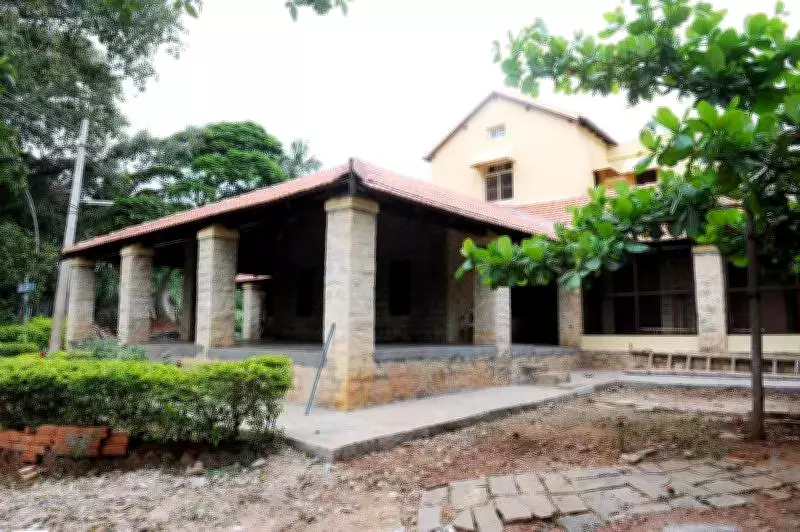
Karnataka High Court Modifies Ban on Bengaluru Eco-Tourism Project
In a significant development, the Karnataka High Court has granted partial relief to the state government regarding the proposed mega eco-tourism project at the Roerich and Devika Rani Roerich Estate on Bengaluru's southern outskirts. The court's decision represents a setback for green activists who have been opposing the development.
Court Modifies Earlier Interim Order
Earlier this week, the court softened its previous direction that had barred all development activity at the estate. The bench has now permitted limited works in non-forest areas of the property, marking a notable shift in the legal proceedings.
The case originated from a Public Interest Litigation (PIL) petition filed by the RR Nagar I Care Trust in January 2026. The petition challenged a December 2024 notification that approved the creation of an eco-tourism and cultural hub at the estate. During the initial hearing, the court had directed both state and central governments to ensure no development occurred at the site.

Government's Urgent Plea for Development
During the latest hearing, the state government presented compelling arguments for allowing certain works to proceed. Officials emphasized that central funds allocated for the project would lapse by March 31, 2026, if work remained completely stalled.
"Some of the works as part of the project do not even require diversion of forest land in any manner," the government argued while seeking permission for landscaping and basic infrastructure development.
The state also highlighted practical concerns, noting that high visitor footfall necessitated the construction of toilet facilities. "Otherwise, this would result in the pollution of waterbodies located on the estate," government representatives told the court.
Specific Permissions Granted
In response to these arguments, the court observed, "In the aforesaid circumstances, we consider it apposite to modify the interim order to permit certain developments at this stage."
The modified order specifically allows construction of:
- Entrance plaza
- Toilet facilities
- Borewells
- Elephant barricades
- Boundary wall
- Landscaped garden
However, the court imposed a crucial condition: "The respondents shall ensure that not a single tree is cut or damaged in the process." All permitted works will remain subject to the final outcome of the ongoing petition.
Elephant Herd Rampage Highlights Conservation Concerns
Recent Wildlife Incident
Just days before the court order, an elephant herd went on a rampage at the estate, causing significant damage to vegetation and parts of the landscaped area. Security personnel reported that four to six elephants camped at the estate for nearly a week.
"The herd came till the main building of the estate and the living quarters of the security personnel," said a member of the security staff. "While they did not cause any damage to the building, several trees and small structures in front of it were uprooted and the garden was trampled."
Forest officials confirmed the incident but declined to provide detailed comments. Sources indicate the forest department has consented to barricading approximately 150 acres of the estate, with estimated costs ranging between ₹2.5 crore and ₹3 crore.
Conservationists Voice Serious Concerns
Environmental experts warn that the proposed development could disrupt an already stressed elephant corridor. The 470-acre Roerich Estate forms part of a crucial wildlife corridor linking Bannerghatta National Park (BNP) with Savanadurga forests.
A conservationist working in the BNP landscape explained: "Hundreds of elephants move every year through this corridor in search of food and water. The waterbodies at the estate offer them a perfect refuge."

The expert expressed particular concern about the proposed barricading: "Barricading 150 acres of the estate that abuts the forest would snatch away the much-needed space for these jumbos, forcing them to sneak into adjoining human habitations in the coming days. The fact that jumbos camped near the main building of the estate itself is testimony to this. The government must reconsider its proposed project."
Broader Implications for Urban Wildlife
The court's decision and the recent elephant incident highlight the complex balance between urban development and wildlife conservation in rapidly expanding cities like Bengaluru. As the city continues to grow outward, previously undisturbed natural areas face increasing pressure from development projects.
The partial relief granted by the Karnataka High Court represents a compromise position that allows some development while maintaining certain environmental protections. However, conservationists remain concerned that even limited infrastructure could have significant impacts on wildlife movement patterns and habitat connectivity.
The final outcome of the PIL petition will determine the long-term future of both the eco-tourism project and the critical elephant corridor it intersects. All parties await further judicial proceedings that will ultimately decide how Bengaluru balances its development aspirations with its environmental responsibilities.





