

Bengaluru's Water Crisis: Expert Warns Against Unsustainable Groundwater Dependence
In Bengaluru, a city perpetually grappling with severe water shortages, especially during the scorching summer months, a prominent hydrogeologist has issued a stark warning about the unsustainable reliance on groundwater resources. KC Subhash Chandra, speaking at the Lifetide Film Festival on Sunday, emphasized the critical need for alternative water management strategies to avert a deepening crisis.
Groundwater: An Unsustainable Resource
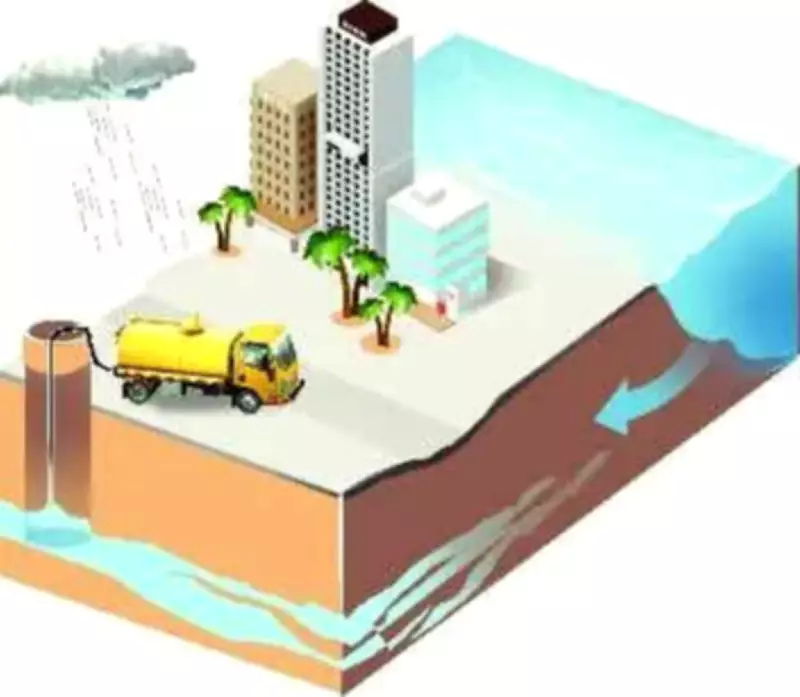
Chandra, a former expert member of the Karnataka Groundwater Authority, stated unequivocally that groundwater is not a viable long-term solution for Bengaluru's water needs. He pointed out that nearly 25% of the city's surface runoff water drains directly into sewage canals, which are already heavily polluted. This contamination prevents fresh water from replenishing the lakes, whose carrying capacity has significantly diminished due to silt accumulation over the years.
The hydrogeologist explained, "Forget about groundwater. It isn't a sustainable resource. The lakes aren't getting fresh water, and their carrying capacity has also come down because of silt." He reminded the audience that while groundwater served the city reliably for many decades, rampant exploitation through uncontrolled borewell drilling has led to severe depletion of these aquifers.

Advocating for Compulsory Rainwater Harvesting
As a practical solution to Bengaluru's water woes, Chandra strongly recommended making rooftop rainwater harvesting mandatory across the city. Drawing from the city's rainfall data, he highlighted that a single rooftop has the potential to generate approximately 80,000 cubic metres of water annually. This measure could significantly reduce dependence on groundwater and help mitigate the recurring water shortages.
Chandra elaborated, "Rooftop rainwater harvesting should be made compulsory in Bengaluru. Considering the city's rainfall patterns, we can generate substantial water volumes from individual buildings, which would alleviate pressure on our dwindling groundwater reserves."
Lifetide Film Festival: Water in Motion
The Lifetide Film Festival, themed "Water in Motion," served as a platform to raise awareness about water scarcity issues not only in Bengaluru but across India. The festival screened seven documentary films that depicted various aspects of water resource challenges throughout the country.
Among the featured films was 'P for Pyaaz, P for Paisa, P for Paani' directed by Laxminarayan Devda, a farmer from Madhya Pradesh. This documentary explores the fragile hydrogeological region of the Narmada Valley, where affluent farmers from the Malwa plateau region lease land to cultivate onions—a notoriously water-intensive crop. The film underscores the complex interplay between agricultural practices, water usage, and environmental sustainability in vulnerable regions.
The festival's screenings highlighted how water scarcity transcends urban centers like Bengaluru, affecting rural and agricultural communities as well. By showcasing these stories, the event aimed to foster a broader conversation about sustainable water management practices that are crucial for India's future.






