Bhavnagar Embraces Cloth Napkins in Major Environmental Push
In the city of Bhavnagar, a quiet yet profound transformation is unfolding within everyday hospitality practices. A growing eco-conscious movement is systematically replacing disposable tissue paper with reusable cloth napkins across hotels, restaurants, and community venues. This initiative, spearheaded by local environmental activists, represents a simple but powerful strategy to combat waste and lessen the environmental toll of single-use products.
The Catalyst: A Pilgrimage Event in Palitana
The movement gained significant momentum following a large religious gathering in Palitana, which attracted hundreds of thousands of pilgrims. Organizers were confronted with the staggering demand for disposable tissues. "We estimated needing approximately 60,000 tissue papers for that single event," explained Tejas Doshi, a recognized environmental activist, state climate change award recipient, and Swachh Bharat Mission brand ambassador.
"When you consider that producing one tonne of tissue paper requires cutting down nearly 24 trees, the environmental scale becomes truly alarming. That realization was our turning point to experiment with cloth napkins—and the response from participants was overwhelmingly positive."

Hotels Lead the Charge with Dramatic Results
Since that pivotal event, Doshi and fellow advocates have been actively encouraging local businesses to reconsider their reliance on disposable napkins. Their efforts are yielding tangible results. A 35-room hotel and restaurant located on Vaghavadi Road, which had been trialing cloth napkins for two years, has now almost completely eliminated tissue paper from its operations.
"Previously, we purchased six to seven boxes of tissues every month. Now, we barely require one box," stated manager Neetu Singh. The establishment now offers tissue paper only upon specific guest request, with staff politely guiding patrons toward the reusable cloth alternative. This hotel has further expanded its sustainable practices by serving purified water in glass bottles instead of single-use plastic containers.
Quantifying the Environmental Impact
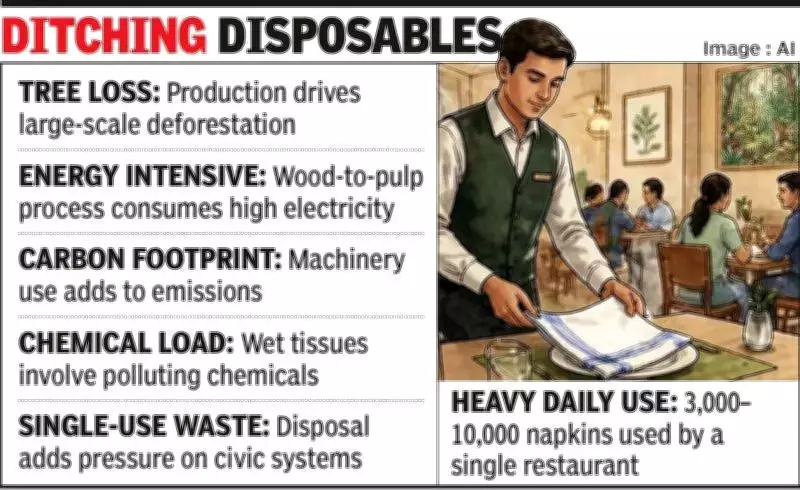
The potential waste reduction from this shift is substantial. Industry estimates indicate that a mid-sized hotel or restaurant typically uses around 3,000 paper napkins daily, while larger venues can consume up to 10,000. Replacing even a fraction of this volume with washable cloth napkins leads to a significant decrease in daily landfill waste.
Another prominent hotel in Bhavnagar, which is part of a national chain, adopted the cloth napkin policy earlier this year. General Manager Saibal Chetarjee acknowledged a modest increase in operational costs—approximately Rs 300 per day for additional laundry services—but emphasized that the ecological advantages far outweigh this expense.
"We are consciously making this choice for the benefit of our environment, and our guests have reacted very positively to the initiative," Chetarjee noted.
Beyond Deforestation: The Hidden Costs of Tissue Paper
Activists highlight that the environmental footprint of tissue paper extends well beyond tree loss. "The manufacturing process itself consumes vast quantities of water and involves numerous chemicals, particularly for producing wet wipes, which contributes to water pollution," said Falguni Joshi, coordinator of the environmental group Prayavaran Mitra. "As a single-use item, its disposal also adds considerably to overall carbon emissions."
Doshi further contextualized the issue, pointing out that the widespread use of disposable tissues in India is often an imported habit without local relevance. "In colder nations, tissues are more practical because water sources can freeze. However, in India, we have a long-standing tradition of using handkerchiefs and cloth. It is a inherently sustainable practice that we should actively revive and promote."

A Scalable Model for Sustainable Urban Living
As more businesses in Bhavnagar join this green initiative, the city's transition to cloth napkins demonstrates how minor, deliberate adjustments in daily routines can collectively generate a major environmental impact. This movement offers a straightforward, replicable model for other urban centers across India and beyond, proving that sustainability can be woven into the fabric of everyday community life.