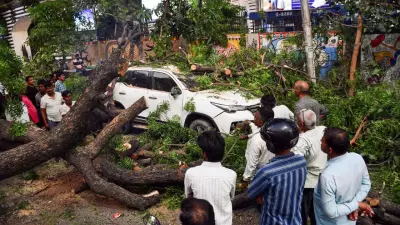
Bihar's increasingly erratic weather patterns reflect the growing impact of climate change on agriculture and rural life, says Abdus Sattar, principal investigator at the Centre for Advance Studies on Climate Change at Rajendra Prasad Central Agricultural University (RPCAU), Pusa, in an interview with B K Mishra of STOI.
Why did Bihar receive excess rains in April and May, damaging crops?
The rising occurrence of extreme weather events in Bihar is linked to changing climate patterns and increasing air temperatures. Rainfall activity during the summer season has also increased. Higher atmospheric temperatures enable the air to hold more moisture, and the incursion of moisture through easterly winds often results in intense rainfall accompanied by thunderstorms. In recent years, local convective systems have become more erratic, leading to intense monsoon showers. Climatic phenomena such as El Niño, La Niña and changes in jet stream patterns are also affecting the monsoon over the Indian subcontinent, creating uncertainty in the onset and withdrawal of the monsoon. High-velocity winds associated with thunderstorms cause significant damage to mango, litchi and other crops.
Why has the weather become so erratic in recent years?
Climate variability has increased mainly due to climate change. Rising temperatures affect atmospheric circulation patterns and the transport of moisture in the atmosphere. As a result, extreme weather events such as abnormal temperatures, heatwaves, heavy rainfall, droughts and thunderstorms have become more frequent.

Why have lightning deaths increased in Bihar in recent years?
Rising temperatures and high atmospheric moisture create unstable atmospheric conditions that are conducive to such phenomena. These conditions lead to the formation of strong convective clouds over a region. It is understood that extreme heating, combined with moisture build-up, promotes thunderstorm activity and increases the frequency of lightning events. Farmers working in open fields are particularly vulnerable to lightning strikes, as they often do not receive prior information or timely warnings about lightning activity.
What should farmers do to protect crops from weather extremes?
There are several measures farmers can adopt to reduce the adverse impacts of climate change and extreme weather events. Farmers need to adopt climate-resilient agricultural practices such as crop diversification, cultivation of short-duration and stress-tolerant varieties, zero tillage in wheat, direct-seeded rice, adjustment of sowing windows, crop insurance, conservation agriculture and the use of weather-based advisory services.
Is the era of 'safe monsoon' on the wane?
Yes, it appears so. Due to climate change, the monsoon system is behaving abnormally. The patterns of monsoon onset, withdrawal and rainfall distribution have changed significantly, leading to extreme rainfall events and prolonged dry spells during the kharif season. This poses a serious threat to rain-fed agriculture in states like Bihar, where nearly 60% of agriculture is practised under rain-fed conditions.