

From Republic Day Pledge to Solo Mission: Bittu Tabahi's River Cleanup Wins Anand Mahindra's Praise
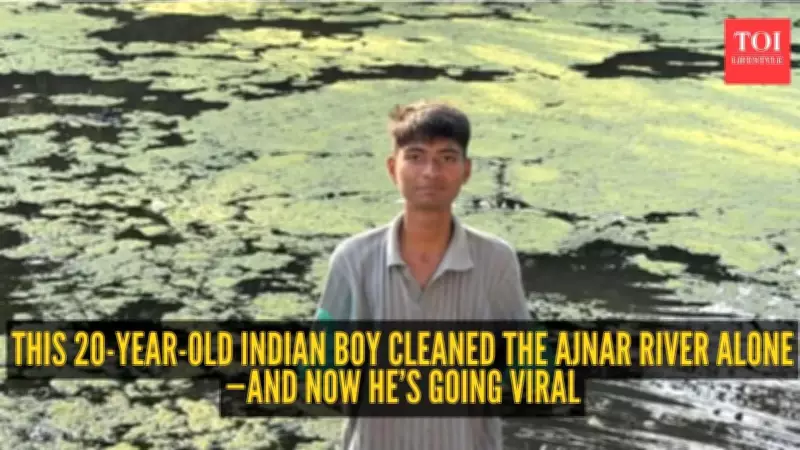
We all know that one person who constantly complains about the trash littering our streets but simply walks past it without taking action. It is easy to talk about problems, but taking concrete steps requires genuine commitment. Then there is Bittu Tabahi, a 20-year-old resident of Biaora in Madhya Pradesh, who chose not to post mere rants about the rampant pollution choking his hometown. Instead, he literally jumped right into the fray, armed with basic tools and an extraordinary amount of grit, to single-handedly transform the heavily polluted Ajnar River. His efforts have captivated the internet, sparking widespread admiration and debate.
The Genesis of a Solo Environmental Crusade
How did a young individual end up taking on the monumental task of cleaning an entire river? The journey began earlier this year on January 26, Republic Day. To mark this significant occasion, Bittu and a group of his friends decided to engage in a genuinely useful activity by heading to the riverbanks to clear out the accumulated mess. However, as often happens with such initiatives, initial enthusiasm can wane quickly when the work becomes arduous and messy. Soon enough, his friends dropped out, deeming the job too overwhelming or too dirty.
Bittu, however, remained steadfast. He refused to abandon the mission, continuing to wade into the murky, garbage-filled waters day after day, entirely on his own. He diligently pulled out suffocating plastic waste, thick layers of toxic algae, and years' worth of neglected debris. It was just one determined individual, a polluted river, and a whole lot of heavy lifting, showcasing the power of personal resolve in environmental conservation.

Social Media Skepticism and the Power of Recognition
In today's digital age, when someone performs a good deed on camera, cynics often emerge to question their motives. Bittu documented his grueling, muddy cleanup sessions on his Instagram handle, @bittu_tabahi, posting striking before-and-after visuals that demonstrated the water gradually running clear again. The response was not uniformly positive initially; many accused him of staging a stunt merely to gain followers, dismissing his back-breaking work as a desperate grab for social media clout.
Enter billionaire industrialist Anand Mahindra, known for spotlighting grassroots underdog stories on X (formerly Twitter). He stumbled upon Bittu's videos and immediately crowned the young man his Monday Motivation. Mahindra did not just share the clip; he effectively silenced the critics with a compelling argument. Defending Bittu's online presence, he wrote, We usually complain that social media rewards the trivial rather than the meaningful. So if a desire for 'likes' can become a force for good that's fine with me. This statement resonated deeply, highlighting how social media incentives can drive positive change.
Dubbed the 'Mountain Man' of Madhya Pradesh
Once Mahindra shared that tweet, Bittu's story gained explosive traction. The post quickly amassed over 204,000 views and nearly 10,000 likes, transforming the comment section into a massive fan club. Netizens began hailing him as a real hero and a lonely warrior of cleanliness. One user drew an emotional comparison, stating, Just like Manjhi the mountain man, we have Bittu the lonely warrior. Others urged people to stop criticizing and start contributing, suggesting crowdsourced funds to support Bittu's ongoing project. A comment pointed out, Started on Republic Day and still at it. Instead of criticising, why don't more of us join such causes in our own cities?

The Tangible Impact and Broader Implications
Today, the Ajnar River looks remarkably different, with water clarity drastically improved and pollution levels visibly reduced. This transformation underscores a crucial lesson: instead of debating the motivations behind good deeds online, perhaps more individuals should take actionable steps in their communities. If a 20-year-old working alone can revive a dying river, imagine what collective efforts could achieve. The Swachh Bharat initiative does not have to remain merely a government slogan; it can be propelled by ordinary citizens willing to get their hands dirty. Bittu Tabahi's story serves as a powerful reminder that environmental stewardship begins with individual action, inspiring others to contribute to a cleaner, healthier planet.





