

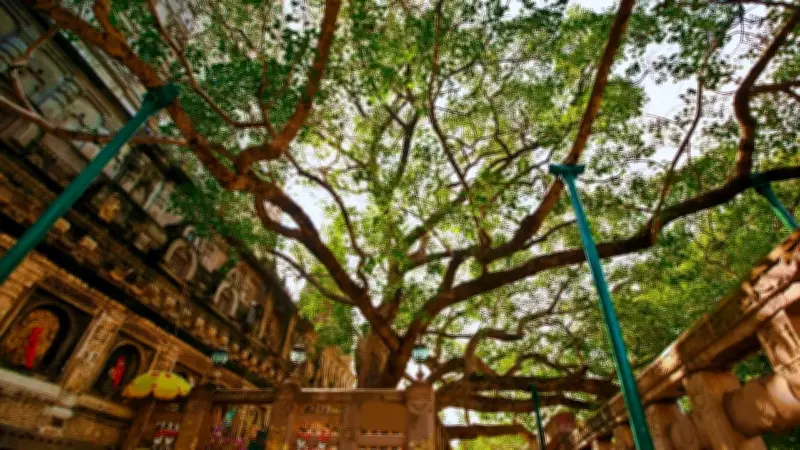
Sacred Bodhi Tree Undergoes Comprehensive Health Assessment in Bodh Gaya
In a significant conservation effort, scientists from the prestigious Forest Research Institute (FRI) in Dehradun conducted a thorough health examination of the revered Bodhi tree at the Mahabodhi Temple complex in Bodh Gaya on Wednesday. This inspection represents a crucial component of ongoing monitoring activities established through a long-term conservation agreement between the Bodhgaya Temple Management Committee (BTMC) and the FRI.
Scientific Team Reports Satisfactory Overall Health Status
The inspection was jointly performed by distinguished plant pathologist Shailesh Pandey and plant physiologist Santan Barthwal, who provided detailed insights into the condition of this sacred tree, which holds immense religious significance as the site where Lord Buddha attained enlightenment. According to Barthwal, the overall health assessment yielded positive results, with the tree demonstrating satisfactory vitality.
"The leaves exhibit freshness and vibrant green coloration, which serves as a reliable indicator of good vitality and photosynthetic efficiency," Barthwal explained. "However, our examination has revealed some age-related physiological challenges that require targeted remedial measures, which we are initiating promptly."

Identified Concerns and Proposed Conservation Measures
One of the primary concerns identified during the comprehensive assessment involved insufficient soil moisture surrounding the tree's root system. Barthwal elaborated on this critical issue, noting that inadequate moisture levels can significantly impede the efficient transportation of essential nutrients to the roots, potentially compromising the tree's long-term health and resilience.
"We will implement strategic measures to enhance soil moisturization, including carefully scheduled periodic water sprinkling interventions tailored to the tree's specific requirements," Barthwal stated, emphasizing the importance of maintaining optimal hydration for this ancient specimen.
Structural Support and Preventive Treatment Protocols
The scientific team also observed concerning structural developments, with several branches exhibiting pronounced tilting toward the ground, creating vulnerability to potential breakage. Barthwal outlined the proposed solution, explaining that additional support pillars would be necessary to prevent sudden branch failure, which could adversely impact the tree's structural integrity and overall strength.
To mitigate weight-related stress and associated risks, the conservation plan includes selective pruning of unwanted and deceased branch portions. Furthermore, targeted medication will be administered where necessary to prevent fungal infections and other pathological conditions that could threaten the tree's health.
"All pruning procedures and therapeutic treatments will be personally supervised by our specialized FRI team," Barthwal assured. "We will maintain medication at the absolute minimum required levels, utilizing exclusively bio-friendly substances to ensure environmental compatibility and preserve the tree's natural growth patterns."
Historical Context and Previous Conservation Efforts
This health inspection was conducted in strict accordance with the memorandum of understanding (MoU) established between the BTMC and the FRI. The responsibility for maintaining the sacred tree's health was formally outsourced to the FRI in 2008, following a significant infestation of mealy bugs that caused concerning symptoms including leaf yellowing, premature leaf fall, distorted growth patterns, and overall physiological weakening.
Prior to this arrangement, conservation expertise had been provided by specialists from Rajendra Agricultural University in Pusa, highlighting the continuous scientific attention this important cultural and religious symbol has received over decades.

Recent Maintenance Activities and Ongoing Challenges
Complementing the tree health assessment, recent maintenance activities have included hydro-cleaning of the shrine structure to remove accumulated dirt and biological growth from exterior surfaces. Previous scientific recommendations had also addressed environmental factors, suggesting limitations on foot traffic to prevent soil compaction and proposing replacement of marble tiles surrounding the tree with porous sand tiles to enhance nutrient flow to the root system.
When questioned about implementing these recommendations, BTMC secretary Mahashweta Maharathi addressed practical considerations, noting that restricting pilgrim movement presented significant feasibility challenges. "We have adopted alternative methodologies to address soil compaction concerns while accommodating devotional practices," Maharathi explained.
Regarding the marble tile issue, Maharathi indicated that additional expert consultation would be sought to evaluate whether the tree has successfully adapted to existing conditions, while reaffirming the committee's commitment to implementing all necessary measures for comprehensive shrine and tree conservation.





