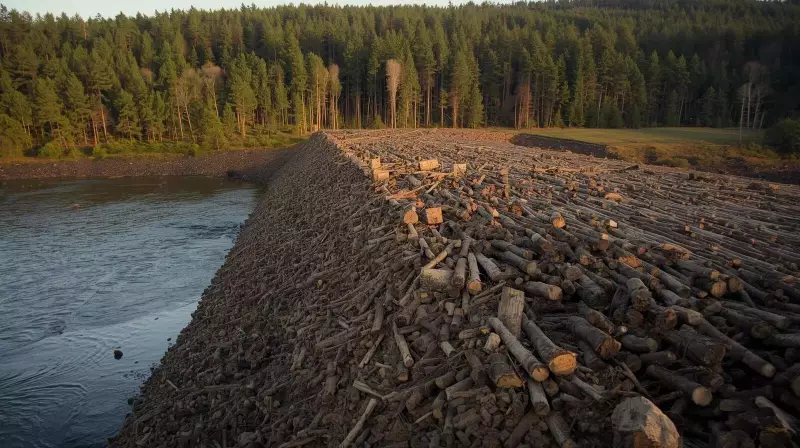
Canada's Wood Buffalo National Park Holds World's Largest Beaver Dam
Wood Buffalo National Park stretches across northern Alberta and parts of the Northwest Territories in Canada. This vast protected area contains an extraordinary natural wonder deep within its boundaries. The park holds the largest beaver dam ever recorded on Earth.
A Remote and Inaccessible Location
The massive beaver structure lies far from any roads, towns, or marked trails. Reaching this remote location on foot would require multiple days of difficult travel. The challenging landscape features extensive wetlands, unstable muskeg terrain, and dense boreal forest.
Most visitors who have seen the dam up close arrived by private sightseeing flights rather than ground approaches. The dam's isolation has helped preserve it from human disturbance for decades.

Impressive Dimensions Visible from Space
The beaver dam measures approximately 775 meters along its front edge. That length equals about seven football fields placed side by side. The entire structure covers an area of roughly 70,000 square meters.
This enormous size makes the dam clearly visible in satellite images taken from space. The structure holds back a significant volume of water estimated at 70,000 cubic meters. To visualize this volume, imagine more than 90,000 dump trucks filled with water.
Discovery Through Satellite Technology
No ground explorer or park ranger initially discovered this remarkable beaver construction. Researchers first identified the dam in 2007 through satellite imagery analysis rather than traditional exploration methods.
Further examination of historical images, including those from NASA, revealed that the dam did not exist before 1980. This suggests beavers have been building and expanding the structure for over four decades.
Generations of Beaver Engineering
Beavers function as natural ecosystem engineers through their dam-building activities. Multiple generations of beavers have contributed to this particular structure over many years.
The animals gradually expanded the dam piece by piece, responding to water flow patterns and environmental conditions. Their work has created an entire water system that holds back runoff from the Birch Mountains at the park's southern edge.
Ecological Significance in a Protected Landscape
Wood Buffalo National Park represents one of the largest protected areas globally. The park supports diverse wildlife including wood bison and whooping cranes. It also contains the Peace Athabasca Delta, among the world's largest inland freshwater deltas.
The massive beaver dam contributes quietly to this rich ecosystem. It creates wetlands, slows water movement, and provides habitat for various species. Unlike many tourist attractions, this natural wonder requires no fences or management. It simply exists and functions within its remote forest setting.
The dam continues its slow transformation of the landscape, largely unseen by human eyes. It stands as a testament to nature's engineering capabilities, created entirely by animal effort rather than human design.