Trump's Caribbean Military Focus Limits Iran Options
President Donald Trump's decision to build up military forces in the Caribbean last fall now complicates potential U.S. actions against Iran. Current and former defense officials confirm this shift creates significant limitations. The move originally targeted pressure on Venezuela's ousted leader, Nicolás Maduro. Today, it directly impacts Washington's readiness for conflict with Tehran.
Naval Deployment Shift
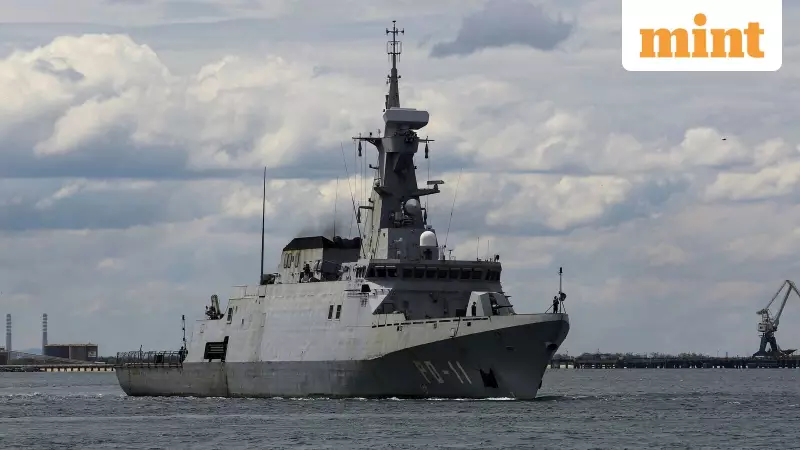
The Pentagon currently assigns twelve warships to Caribbean waters. Only six remain in the Middle East. A Navy official provided these numbers, highlighting a clear strategic pivot. More strikingly, no aircraft-carrier strike group operates in the Middle East or Europe. President Trump ordered the USS Gerald R. Ford carrier group from the Mediterranean to the Caribbean in October. This marks a major departure from past postures during tensions with Iran.
Without an aircraft carrier, the region lacks its associated air wing. This includes jet fighters, helicopters, and electronic-jamming aircraft. Military aircraft in the area are now limited to those allowed at allied bases. Admiral Daryl Caudle, the chief of naval operations, addressed this on Wednesday. He stated U.S. naval forces remain ready to operate globally. However, he acknowledged inherent risks.

"This is risk to mission, and can be risk to force, and certainly risk to objectives, if combined commanders don't have the forces they need," Caudle told reporters.
Strike Capabilities and Alternatives
This does not mean the military cannot execute orders. If President Trump authorizes strikes on Iran, options exist. The Pentagon could order Tomahawk missile launches from destroyers in the Middle East. It could also deploy jet fighters already stationed in the region. Long-range bombers based in the United States can reach Iran within hours.
Retired General Joseph Votel, former head of U.S. Central Command, noted past precedents. When Trump ordered strikes on Iran's nuclear facilities in June, bombers flew from the U.S. "We have mature infrastructure in place that allows us to move military capability and people into place fairly efficiently and effectively," Votel said.
Retired Lieutenant General David Deptula emphasized capability over location. Aircraft could deploy from European bases like RAF Lakenheath in the U.K., Aviano in Italy, and Spangdahlem in Germany. "It's not about where the airplanes come from, it's about what those airplanes can do," Deptula stated.
Political Signals and Non-Military Options
At the White House on Wednesday, President Trump suggested a pullback from military intervention. He claimed Iran had stopped killing protesters and would not execute anti-regime individuals. This contrasts with recent statements. On Tuesday, he told Iranian protesters "help is on the way" and advised Americans to consider evacuation. After visiting a Ford factory, he declared, "Make Iran great again," calling the situation "very fragile."
White House press secretary Karoline Leavitt confirmed airstrikes remain among "many, many options." Nonmilitary measures are also viable. These include boosting antigovernment sources online, deploying cyber weapons, and imposing additional sanctions. The Wall Street Journal previously reported these alternatives.
Defensive Challenges and Regional Context
Without a carrier's accompanying aircraft, assembling a rapid "strike package" becomes harder. A former senior defense official explained such packages typically need extra fighters and electronic-jamming planes for protection. Protecting U.S. troops in the region also grows more precarious without an aircraft carrier and its Aegis-equipped destroyers. These systems can shoot down incoming missiles.
Officials and experts assert the U.S. retains other defensive means. Patriot batteries and air-defense systems from regional partners across the Middle East offer protection. The U.S. recently opened a new "coordination cell" at Al Udeid Air Base in Qatar. This enhances missile defense integration with allies.

Retired Vice Admiral John Miller, former commander of U.S. Naval Forces Central Command, expressed confidence. "I'm confident that between the countries in the region and what the United States has available to it that not only can those countries defend themselves, they can defend whatever U.S. military unit happens to be in the country," Miller said.
Iran's Weakened Military Posture
Iran's military capabilities have degraded significantly in recent months. Israeli and U.S. strikes have taken a toll. Israeli airstrikes in 2024 devastated Tehran's strategic air defenses. They severely damaged missile production facilities. U.S. strikes against Iranian nuclear facilities in June further impaired its ability to field a nuclear weapon. These factors somewhat offset the U.S. naval deployment challenges.
Admiral Caudle summarized the situation with a quip. "I like to tell people, the Navy can be anywhere in two weeks." This underscores that while options are limited, capability persists. The strategic rebalancing toward the Caribbean, however, undeniably constrains immediate response flexibility in the Middle East.