

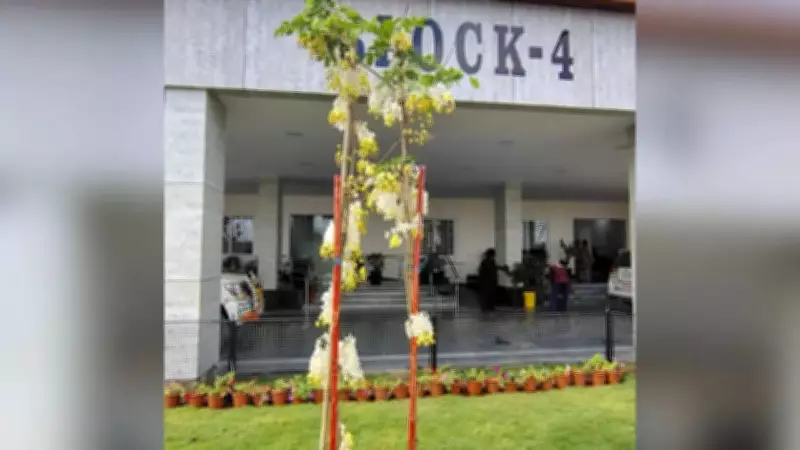
Cassia Fistula Blooms in Amaravati: Green Initiative Transforms Capital's Landscape
A small yet impactful green initiative in Amaravati is delivering vibrant results, with the ornamental tree Cassia fistula—commonly called Rela—adapting exceptionally well to the capital region's climate and blooming in a stunning display. Planted on a pilot basis in front of Block-4 of the Amaravati Development Corporation (ADC) office at Rayapudi, the tree has flourished rapidly, producing dense clusters of white-yellow blossoms from its base to the canopy.
Unique Aesthetic and Environmental Benefits
Globally recognized for its striking yellow flowers, the variation observed in Amaravati adds a distinctive aesthetic charm, motivating officials to consider its broader application across the capital. This initiative supports Chief Minister N Chandrababu Naidu's vision to develop Amaravati as a world-class city enriched with diverse flora from India and abroad. The goal is to introduce visually appealing and climate-resilient species that boost both beauty and environmental value.
Encouraged by the pilot's success, greenery officials have expanded the plantation, adding over 40 more Cassia fistula saplings in and around the Secretariat. These plants are nurtured using organic inputs like Jeevamrutam, ensuring sustainable growth without reliance on chemicals.

Ecological and Medicinal Significance
Beyond its visual appeal, the tree holds significant ecological and medicinal value. Cassia fistula is known to release higher levels of oxygen, contributing to improved air quality in urban areas, as highlighted by ADCL CMD Lakshmi Parthasarathy Bhaskar. She has directed officials to incorporate such species into a larger plan to enhance green cover and promote healthier living conditions in the capital.
The tree also boasts cultural and medicinal importance. Widely used in Ayurvedic formulations, it is valued for its therapeutic properties, including roles in certain anti-ageing treatments. In Kerala, its flowers are celebrated as the Vishu flower, symbolizing prosperity and renewal.
Flowering Patterns and Scalability
Another advantage is its flowering pattern. The tree typically blooms twice a year, with peak flowering between March and May and a second phase during October and November. During peak bloom, it sheds most of its leaves, allowing the flowers to dominate the entire structure in cascading clusters. Each mature tree can produce between 500 and 1,000 flower bunches, creating a visually striking landscape.
With the successful adaptation of Cassia fistula, Amaravati's planners are now looking to scale up such experiments, blending urban infrastructure with sustainable and aesthetically rich greenery to shape the identity of the emerging capital.

Why Cassia Fistula for Amaravati
- Adapts well to Amaravati climate
- Blooms twice a year with dense flower clusters
- Improves air quality with high oxygen release
- Used in Ayurvedic and anti-ageing formulations
- Culturally significant as Kerala's Vishu flower
- Scalable model for capital's green landscaping





