

Catholic Leaders Barred from Holy Sepulchre on Palm Sunday Amid Regional Tensions
In an unprecedented move that has drawn sharp international criticism, senior Catholic leaders were prevented from entering Jerusalem's Church of the Holy Sepulchre on Palm Sunday, one of the most sacred days in the Christian calendar. This incident, occurring against the backdrop of escalating regional tensions involving Iran, marks the first time in centuries that such access has been denied, triggering a wave of diplomatic responses and condemnation from church authorities and foreign governments.
What Happened: Clergy Turned Back on Sacred Day
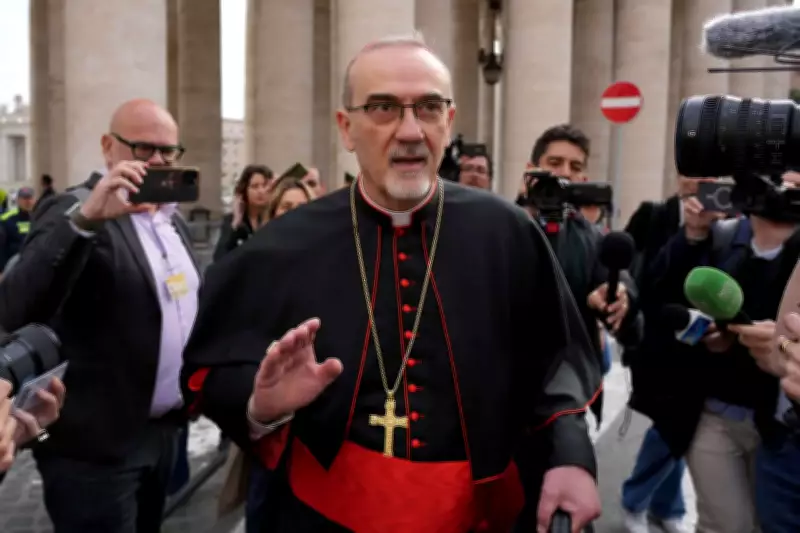
According to a joint press release issued by the Latin Patriarchate of Jerusalem and the Custody of the Holy Land on March 29, Israeli police stopped Cardinal Pierbattista Pizzaballa, the most senior Catholic authority in the region, along with Francesco Ielpo and two other priests as they made their way to the church. The statement emphasised that the group was travelling quietly, "proceeding privately and without any characteristics of a procession or ceremonial act" when they were compelled to turn back.
The Patriarchate described this as a historic rupture, noting that "for the first time in centuries, the Heads of the Church were prevented from celebrating the Palm Sunday Mass at the Church of the Holy Sepulchre." The church, revered as the site where Jesus Christ is believed to have been crucified, buried, and resurrected, holds profound significance for Christians worldwide, especially during Holy Week.

Why Palm Sunday and This Church Matter
Palm Sunday marks the beginning of Holy Week, commemorating Jesus Christ's entry into Jerusalem, when crowds laid palm branches along his path according to the Gospels. In Jerusalem, the day traditionally features a large procession from Bethphage on the Mount of Olives into the Old City via Lions' Gate, drawing thousands of pilgrims annually.
The Church of the Holy Sepulchre stands at the centre of these observances, regarded by many Christians as the holiest site in Christianity, encompassing both the crucifixion site (Golgotha) and Jesus' tomb. Holy Week culminates in Easter Sunday, making this period the most sacred in the Christian liturgical calendar, so restrictions on access carry immense religious and symbolic weight.
Israel's Explanation: Security Fears Amid Iran Conflict
Israeli authorities framed the decision as a security measure linked to the ongoing conflict with Iran. In a statement, Israeli police said the Old City's layout "does not allow access for large emergency and rescue vehicles," posing a real risk to human life in mass casualty incidents. They noted that all holy sites in Jerusalem's Old City had been closed to worshippers without protected spaces to safeguard public safety.
Prime Minister Benjamin Netanyahu intervened after international outrage, instructing authorities to grant Cardinal Pizzaballa "full and immediate access" to the church. He linked the restrictions to recent attacks, stating Iran had "repeatedly targeted the holy sites of all three monotheistic religions in Jerusalem with ballistic missiles," with one strike landing fragments just metres from the church. Netanyahu explained that Israel had asked members of all faiths to temporarily abstain from worshipping at key sites to protect civilians, citing special concern for Pizzaballa's safety.
Israeli President Isaac Herzog apologised to Pizzaballa, expressing "great sorrow" and attributing the incident to "the continuous threat of missile attacks from the Iranian terror regime" following recent strikes near the Old City.
International Backlash and Diplomatic Fallout
The decision drew swift criticism globally. US Ambassador Mike Huckabee called it "an unfortunate overreach already having major repercussions around the world," arguing that while limiting large gatherings may be justified, preventing a private visit was "difficult to understand or justify."

Italy responded strongly, with Prime Minister Giorgia Meloni stating the Church of the Holy Sepulchre "is a sacred place of Christianity, and as such must be preserved and protected," warning that blocking church leaders amounted to "an insult not only to believers, but to every community that recognizes religious freedom." Italy's foreign ministry summoned Israeli Ambassador Jonathan Peled to explain the incident, while other foreign embassies sought clarification from Israel's foreign ministry.
French President Emmanuel Macron expressed "full support for the Latin Patriarch of Jerusalem and the Christians in the Holy Land," condemning the Israeli police decision as part of "a disturbing sequence of violations of the status quo of the holy places in Jerusalem." He emphasised that "freedom of worship in Jerusalem must be ensured for all religions."
A Broader Pattern of Restrictions and Symbolic Rupture
The Patriarchate warned this incident is not isolated but part of growing pressure on religious life in Jerusalem during wartime. Cardinal Pizzaballa described it as "a wound that adds to many others inflicted by the conflict," highlighting deep impacts within the Christian community. Reports indicate constraints extend across faiths, with Jewish worship at the Western Wall limited to 50 people daily and Muslims barred from accessing the Al-Aqsa Mosque since the conflict escalated in late February, including throughout Ramadan.
This controversy adds to wider tensions over access to religious sites, with countries like Saudi Arabia, Jordan, and others recently condemning Israel's closure of the Al-Aqsa Mosque compound to Muslim worshippers as a "flagrant violation" of international law. The Palm Sunday incident underscores a symbolic rupture in religious freedoms amid ongoing regional conflicts.





