

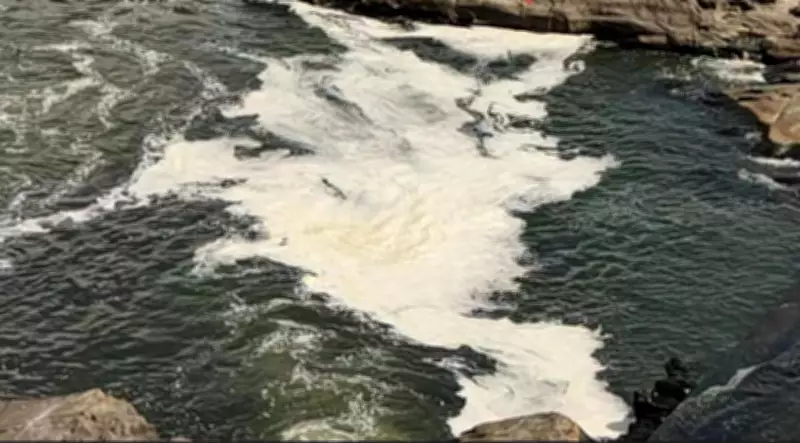
NAMAKKAL: The Cauvery River has been turning red, blue, and green as dyeing units in the textile hubs of Kumarapalayam and Pallipalayam in Namakkal district release hundreds of thousands of liters of untreated effluents into the river, openly defying directives from the Tamil Nadu Pollution Control Board. Farmers and fisherfolk report that toxic discharges over decades have damaged their livelihoods, and the situation persists regardless of political changes. "No matter which party comes to power, Pallipalayam people face the same fate," says S Murugan, a farmer.
Health and Environmental Impact
Doctors and health experts warn of serious health consequences from untreated dye effluents, which often contain heavy metals such as lead, cadmium, and chromium, along with carcinogenic compounds that seep into soil and groundwater. Prolonged exposure can lead to kidney disease, cancer, and neurological disorders. "We are already seeing rising cases of skin rashes, respiratory irritation, and gastrointestinal problems among people living near the river," says Dr P Rajesh, a physician in Erode.
Residents say agriculture has suffered as irrigation with contaminated water reduces soil fertility and crops absorb harmful residues that enter the food chain. "Our yields are shrinking, and our lands are turning barren," says K Selvaraj, a farmer in Kumarapalayam. Fisherfolk report dwindling catches as aquatic life struggles to survive in oxygen-depleted waters laden with toxins. "The river once gave us life, now it gives us nothing," says M Dinesh, a fisherman.

Enforcement Failure and Repeated Violations
Residents observe a recurring pattern: warnings are issued to the units by officials, but enforcement remains weak. Inspections are just a "farce," according to them. "We see officials come, we hear their warnings, but by the next morning, the river is colored again. It is a cycle of betrayal," says shopkeeper S Balaji of Pallipalayam. More than 25 officials inspected the river on Saturday and Sunday. Hours after the inspection, the units discharged effluents, residents say. "We woke up on Monday to see the Cauvery shimmering in colors no river should ever wear," says R Kumar of Pallipalayam.
Urban residents in towns such as Salem, Erode, and Namakkal, who depend on Cauvery water for drinking, feel vulnerable as well. "We used to trust the Cauvery as our lifeline. Now every glass of water is a gamble," says V Priya, a schoolteacher. Environmental activists say the Pollution Control Board's inability to enforce its own orders emboldens violators. "The Cauvery is not just a river, it is a heritage. To see it turned into a toxic drain is heartbreaking," says activist R Anitha of Erode. She has demanded the immediate closure of the units that are repeat offenders.
Cultural and Spiritual Significance
People living on the banks of the Cauvery say the river's cultural and spiritual significance deepens the crisis, as its water is considered sacred in rituals and festivals. "We used to bathe in the Cauvery, but now we fear touching it," says K Gopal, an elderly resident of Pallipalayam. The ongoing pollution continues to affect not only the environment but also the traditional way of life for communities along the river.






