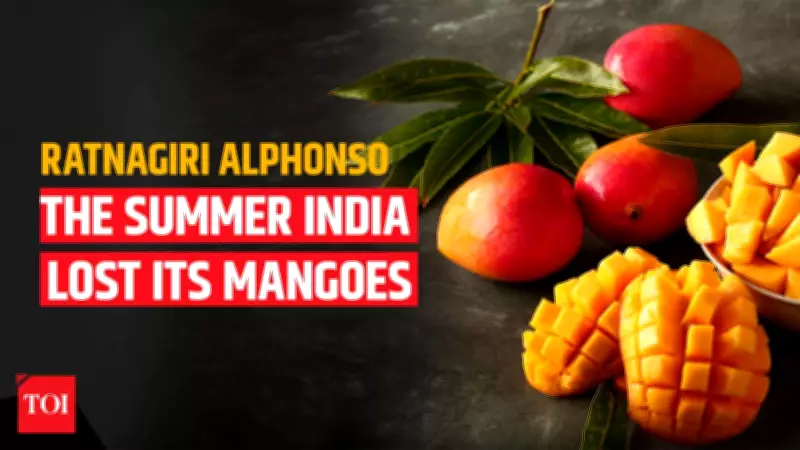
India's beloved Alphonso mango is facing one of its toughest seasons in years. Unseasonal rains, freezing temperatures and extreme heatwaves have badly damaged mango orchards across Ratnagiri, slashing production of the iconic Hapus mango. But weather is only half the story. Ongoing geopolitical tensions and shipping disruptions in the Middle East are making exports slower and more expensive, pushing prices even higher. As climate chaos and global conflict collide, India's King of Fruits is battling a silent crisis threatening both farmers and mango lovers worldwide.
The Impact of Extreme Weather on Mango Orchards
The Alphonso mango, known for its rich flavor and creamy texture, has been a symbol of Indian agriculture for decades. However, this year, farmers in Ratnagiri have reported significant damage to their crops due to erratic weather patterns. Unseasonal rains during the flowering season led to fungal infections, while sudden freezing temperatures and subsequent heatwaves caused fruit drop and reduced yields. According to local agricultural experts, the production of Alphonso mangoes has dropped by nearly 30% compared to previous years.
Geopolitical Tensions and Export Challenges
In addition to climatic challenges, geopolitical tensions in the Middle East have disrupted shipping routes, leading to delays and increased costs for exporters. The Red Sea crisis, which has affected major shipping lanes, has made it difficult for Indian mango exporters to reach key markets in Europe, the United States, and the Middle East. Freight costs have surged by over 40%, and transit times have doubled, forcing many exporters to reduce their shipments or pass on the higher costs to consumers.

Economic Consequences for Farmers and Consumers
The combination of reduced supply and higher export costs has led to a sharp increase in domestic prices. In major Indian cities, Alphonso mangoes are now selling at premium prices, with some markets reporting a 50% price hike compared to last year. Small-scale farmers, who rely heavily on mango cultivation for their livelihoods, are facing severe financial stress. Many have been forced to sell their produce at lower margins or abandon their orchards altogether.
Global Mango Market Implications
The crisis is not limited to India. As the world's largest producer of mangoes, India's reduced output has global repercussions. Countries that depend on Indian mango imports, such as the United Arab Emirates, the United Kingdom, and Japan, are experiencing shortages and price increases. This has led to a surge in demand for mangoes from other producing countries like Thailand and Mexico, but their supply cannot fully compensate for the shortfall from India.
Adaptation Strategies and Future Outlook
In response to these challenges, Indian agricultural scientists are developing climate-resilient mango varieties that can withstand extreme weather conditions. The government has also announced a compensation package for affected farmers and is exploring alternative export routes to mitigate shipping disruptions. However, experts warn that long-term solutions require sustained investment in sustainable farming practices and international cooperation to address climate change and geopolitical instability.
As the world watches, the fate of India's beloved Alphonso mango hangs in the balance. For now, both farmers and mango lovers can only hope that the coming seasons bring more favorable conditions and that the King of Fruits can once again reign supreme.