

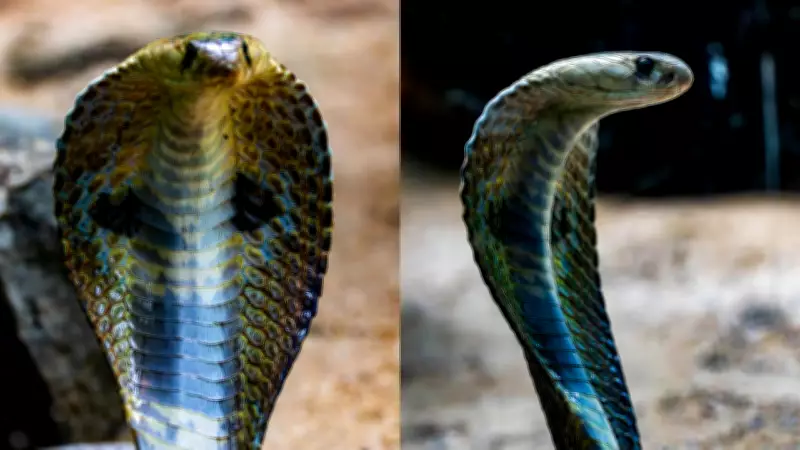
The Cobra's Hood: A Unique Biological Marvel
For centuries, people have marveled at the sight of a cobra spreading its impressive hood. This dramatic display is both awe-inspiring and terrifying, but it's far more than just a visual spectacle. It represents a highly specialized biological adaptation that sets cobras apart from all other snake species.
Why Only Cobras Can Expand Their Hoods
Contrary to popular belief, the cobra's hood isn't an additional body part but rather the result of sophisticated skeletal and muscular adaptations. When threatened, cobras can extend their cervical ribs to create that distinctive hood shape. These ribs are significantly longer and more flexible than those found in other snakes.
According to research on the functional morphology of hooding in cobras, these snakes possess unique muscles that coordinate rib movement and enable neck expansion. Additionally, the skin in this area has exceptional elasticity, allowing it to stretch and form the hood. These combined features create a biological mechanism that other snakes simply don't possess.

The Defensive Purpose Behind Hood Expansion
The primary function of hood expansion is defense through intimidation. By making themselves appear larger and more threatening, cobras can often avoid physical confrontation entirely. This aligns with natural survival strategies where most creatures prefer to avoid conflict when possible.
As researcher Bruce A. Young explains, "This behavior acts as a warning to any potential predator," significantly reducing the likelihood of attack. Cobras typically accompany hood expansion with hissing sounds and defensive postures, creating a comprehensive threat display that usually succeeds in deterring predators.
This defensive strategy offers evolutionary advantages since it conserves the snake's venom, which requires substantial energy to produce. By relying on intimidation first, cobras preserve their most valuable defensive resource for when it's truly necessary.
Why Other Snakes Lack This Ability
Most snake species lack the specific anatomical structures required for hood expansion. They don't possess the elongated cervical ribs or specialized muscles that cobras have evolved. When threatened, other snakes typically flatten their bodies rather than expanding a hood, which represents a different evolutionary adaptation strategy.
The divergence between cobras and other snakes developed through evolutionary processes where different survival strategies proved advantageous in various environments. While cobras evolved hoods as defensive displays, other snakes developed alternative adaptations like camouflage, speed, or different defensive postures.
The Evolutionary Advantage of the Cobra Hood
The cobra's hood represents a remarkable example of evolutionary efficiency. By relying on visual intimidation, cobras reduce the need for physical combat, conserving energy and minimizing injury risk. This strategy has proven highly successful for their survival across generations.
Scientific studies of animal behavior confirm that visual warnings play crucial roles in predator-prey interactions, often preventing escalation to physical confrontation. The hood serves as an effective communication tool that benefits both predator and prey by avoiding unnecessary conflict.
In conclusion, the cobra's hood isn't merely an impressive visual feature but a sophisticated survival adaptation honed by millions of years of evolution. While other snakes depend on stealth, speed, or camouflage, cobras have developed this unique intimidation display that continues to fascinate scientists and observers alike.






