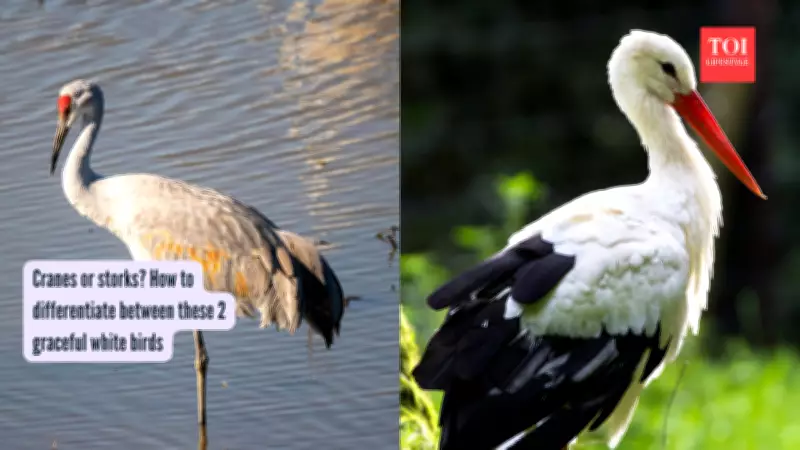
Cranes vs Storks: Decoding Nature's Elegant Lookalikes in Wetlands
Tall, graceful birds gliding across wetlands or soaring through skies often captivate our attention, leaving us awestruck by nature's elegant designs. Cranes and storks share a striking silhouette resemblance with their long legs, extended necks, and broad wings, which frequently confuses observers from a distance into believing they are a single species. Both inhabit watery habitats, hunting for sustenance and raising their young amid marshes and fields. Observing them feels timeless, connecting us to wild rhythms that have danced through seasons for countless generations.
Key Traits That Differentiate These Similar-Looking Birds
Here are the essential characteristics that help distinguish between cranes and storks, based on physical appearance, behavior, and habitat.
Based on Physical Appearance
Cranes exhibit a sleeker profile with straighter, thinner necks that are held outstretched while standing or in flight. In contrast, storks are bulkier, featuring heavier, longer bills and fully feathered heads, often curving their necks at rest. Cranes display bare red skin or crowns on their heads, adding to their distinctive look. Both birds stand tall on long legs, but cranes appear more elegant, whereas storks seem sturdier. The neck posture creates a stark difference: straight for cranes and tucked in for storks when on the ground.

Size and Wingspan
Cranes generally boast larger wingspans, ranging from 5.5 to over 8 feet, with species like Sarus cranes ranking among the tallest fliers globally. Storks have wingspans of 5 to 7.5 feet, though the marabou stork can match some crane species in size. Cranes maintain an upright poise, appearing taller in height, while storks present a heavier-built appearance. Although size varies by species, cranes typically claim a height advantage, making them tower prominently in fields and wetlands.
Behavior Contrasts
Cranes shine in social settings, engaging in elaborate dances with bows, jumps, and stick tosses to form lifelong mating bonds. They duet loudly in pairs, with their calls echoing across vast distances. Storks, on the other hand, remain relatively quiet, communicating by clattering their bills instead of vocalizing to partners. Cranes often flock in large groups during migration, whereas storks tend to eat solo or in small gatherings, focusing on practical hunting over showy social interactions. Essentially, cranes express passion through their behaviors, while storks prioritize feeding efficiency.
Flight and Diet
Cranes beat their wings steadily in V-formations during flight, keeping their necks straight and often trumpeting mid-air. Storks glide silently on thermals, showcasing a buoyant and effortless flying style. In terms of diet, cranes consume seeds, roots, insects, and frogs, whereas storks snap up fish, reptiles, and mammals in shallow waters, making them more carnivorous and even scavenging at times.
Nesting Habits
Cranes ground-nest in wetlands, laying 1-2 eggs that both parents guard fiercely. Storks build massive elevated nests in trees, cliffs, or rooftops, reusing and expanding them to hundreds of pounds in weight, typically laying 2-5 eggs. Cranes defend their nests boldly at ground level, while storks opt for safe heights to protect their young. This contrast highlights cranes' low, vocal nesting approach versus storks' elevated, quieter strategy.