

Understanding Crisis Fatigue: Are We Becoming Desensitized to Global Conflicts?
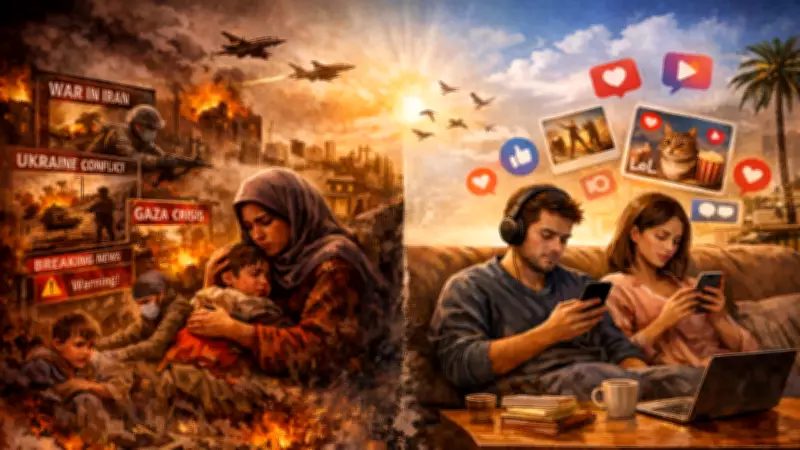
In today's world, headlines flash with alarming frequency: another bomb, another conflict, another tragedy unfolding somewhere across the globe. Images of children dying, buildings reduced to rubble, and sirens echoing through cities paint a stark picture of devastation. Yet, amidst these moments of global crisis, many of us find ourselves scrolling through social media reels, liking posts, or debating movie reviews, seamlessly transitioning from one reality to another. This jarring contrast highlights a pressing question: as global emergencies become a continuous state, are we growing numb to the suffering around us?
Defining Crisis Fatigue: The Emotional Toll of Sustained Stress
Crisis fatigue refers to the emotional, cognitive, and physical strain that develops from prolonged exposure to stressful or traumatic events. While not a formal medical diagnosis, it serves as a descriptive framework for understanding how the human mind and body respond to ongoing threats such as wars, pandemics, natural disasters, and economic disruptions. The phenomenon is closely tied to the body's stress response system, which releases hormones like cortisol and adrenaline in short bursts but can lead to exhaustion when activated continuously.
According to Kanika Jindal, Founder and Director of Harmony Therapy World, crisis fatigue manifests in various ways, including:

- Emotional exhaustion and apathy
- Decision fatigue and attentional difficulties
- Sleep-wake cycle disruptions and intrusive thoughts
- Feelings of helplessness, fear, and irritability
Dr. Radhika Goyal, a psychologist, explains that in today's information-saturated environment, crisis fatigue symbolizes the challenge of maintaining emotional engagement when exposure to distressing events becomes persistent rather than episodic. It affects anyone exposed to continuous stress, particularly those directly involved in crises or with pre-existing vulnerabilities.
Global Crises Shaping the Modern Era: A Cascade of Overlapping Events
Unlike earlier eras with slower news cycles, today's global crises unfold in parallel, creating a continuous stream of overlapping emergencies. The COVID-19 pandemic (2020–2023) marked a prolonged global crisis, causing over 7 million deaths worldwide and triggering economic instability and mental health challenges. This was followed by the Russia-Ukraine war, which began in February 2022 and continues to displace millions while disrupting global supply chains.
Further escalating tensions, the Israel-Gaza conflict has seen repeated flare-ups, with a significant escalation in October 2023 leading to hundreds of casualties. More recently, the situation in Iran escalated into a full-blown military confrontation in February 2026, with coordinated airstrikes by the United States and Israel targeting Iranian infrastructure. Although a two-week ceasefire was agreed upon in April, tensions persist, contributing to global economic disruptions and surging oil prices.
These concurrent crises, amplified by 24/7 news coverage and social media updates, stretch emotional and cognitive bandwidth, leaving little room for recovery or reflection.
The Psychology Behind Crisis Fatigue: Coping Mechanisms and Cognitive Limits
As global crises become more frequent, the psychological response involves complex cognitive and emotional processes. Dr. Goyal notes that what appears as desensitization is often psychological self-protection, as the human mind is not designed for sustained exposure to high-intensity distressing information.
Cognitive overload plays a key role, where too much information reduces our ability to process deeply. The brain filters repeated exposure to distress signals, leading to a sense of distance from ongoing crises. Additionally, emotional regulation and habituation occur, where repeated exposure diminishes emotional intensity over time.
This adaptation serves as a survival mechanism, creating emotional distance to prevent burnout. However, it carries a trade-off, potentially reducing sustained engagement and empathy. Thus, the response to continuous crises is a balancing act between staying informed and maintaining emotional well-being.

Crisis Fatigue in Everyday Life: Shifting Engagement Patterns
In daily life, crisis fatigue manifests through subtle shifts in behavior. Many people report feeling overwhelmed by negative news, leading them to consciously step back—not out of indifference, but as a coping strategy. Awareness remains high, but emotional engagement becomes uneven, with individuals recalibrating how they interact with global events.
Responses collected by TOI reveal that people are finding ways to manage exposure, such as:
- Limiting news consumption to avoid overstimulation
- Engaging in routine activities or spending time with loved ones
- Practicing mindfulness or other calming techniques
This adjustment reflects a need to remain informed without becoming emotionally overwhelmed, highlighting that crisis fatigue is less about withdrawal and more about sustainable engagement.
Strategies for Coping: Balancing Awareness and Emotional Limits
To cope with crisis fatigue, experts emphasize creating boundaries and engaging sustainably. Dr. Goyal suggests that the goal is not to disconnect entirely but to manage exposure in a way that preserves emotional capacity. Key strategies include:
- Taking breaks from news without guilt to allow for recovery
- Focusing on personal well-being through activities like reading or exercise
- Building psychological literacy to understand concepts like emotional regulation
Kanika Jindal adds that small shifts, such as engaging in calming practices or seeking social support, can help create space for recovery. Ultimately, coping involves individual calibration, recognizing that while awareness is important, constant exposure is not sustainable.
Navigating a World of Continuous Crises: The Human Element
Crisis fatigue raises profound questions about empathy and engagement in a world where distress is constant. Mental health professionals point out that the emotional toll is real, with examples like a Ukrainian woman feeling "chipped away" by war devastation or a Sudanese-German man dealing with post-traumatic stress after surviving conflict zones.
Experts urge a reframing of disengagement as a form of recovery rather than apathy. Dr. Goyal emphasizes that not every update requires emotional investment, and distinguishing between being informed and being immersed is crucial. Building resilience through understanding one's limits can help individuals navigate this landscape without sacrificing their mental health.
In conclusion, crisis fatigue does not indicate a loss of empathy but reflects the limits of human capacity under continuous strain. As global conflicts persist, finding a balance between caring for the world and caring for oneself becomes an essential skill for maintaining humanity in an era of unending crises.





