Delhi Breathes Easier as GRAP Stage III Restrictions Lifted
In a significant development for residents of the National Capital Region, the Commission for Air Quality Management (CAQM) has revoked Stage-III of the Graded Response Action Plan (GRAP) with immediate effect. This decision comes as a direct response to the consistent improvement in Delhi's air quality over the past several days.
AQI Shows Promising Downward Trend
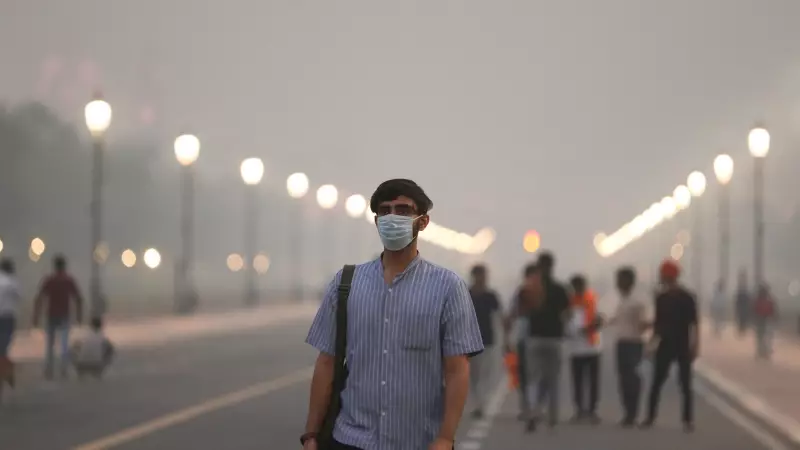
The capital's air quality has been on a downward trend for four consecutive days. The city recorded an average Air Quality Index (AQI) of 327 on Wednesday, showing a notable improvement from the 353 registered a day earlier. The CAQM sub-committee highlighted that the AQI has been "improving since the last three days" and is forecast to remain in the 'very poor' category in the coming days, according to predictions from the India Meteorological Department (IMD) and the Indian Institute of Tropical Meteorology (IITM).
Stage-III restrictions were initially invoked on November 11 when Delhi's Air Quality Index breached the critical 400 mark, entering the 'severe' category. The now-lifted measures included hybrid learning for students up to Class 6, work-from-home protocols for private and government offices operating at 50% strength, and the suspension of non-essential construction, stone crushers, and mining activities.

Lower Stages Remain Active as Precaution
While lifting the Stage-III curbs, the Commission emphasized that all actions under GRAP Stages II and I will remain in force as per the modified schedule issued on November 21. The panel cited the "disruptive nature of restrictions under Stage-III" and the encouraging downward trend in pollution levels as key factors behind the decision to withdraw these particular curbs.
Delhi Environment Minister Manjinder Singh Sirsa confirmed the development, stating, "As per the CAQM order, the GRAP-III restrictions in Delhi have now been lifted, and GRAP-2 is in effect in the capital. Under this, the 50 per cent work-from-home arrangement in offices has been discontinued, and the hybrid mode currently running in schools has also been shut down."
The Commission issued a stern warning that construction and demolition sites individually shut for violations "shall under no circumstances resume their operations without any specific order" from the authorities. Agencies have been directed to "intensify measures" to ensure pollution levels do not slip back into the 'Severe' range.
MCD Intensifies Anti-Pollution Measures
Meanwhile, the Municipal Corporation of Delhi (MCD) submitted a comprehensive status report to the National Green Tribunal detailing the measures being implemented to control air pollution in the Capital. The civic body has deployed substantial resources, including 52 mechanical sweepers that cover approximately 3,000 km of road, though the major arterial roads remain under the Public Works Department's (PWD) jurisdiction.
Additional anti-pollution measures include 167 water sprinklers/jetting machines and 28 mobile anti-smog guns (ASGs) deployed across various roads to combat dust pollution. "The frequency of water sprinklers deployment has been increased in the hotspots area as per the various stages of GRAP," the civic body stated in its report.
For manual road cleaning, 57,500 MCD sanitation workers are actively cleaning around 6,130 km of road, with commercial and market spaces receiving twice-daily cleaning. The report also mentioned that a 'Dust Control and Management Cell (DCMC)' has been constituted as per CAQM directions to monitor pollution control activities, with monthly reports being sent to the Department of Environment, GNCTD.

Enforcement actions have been robust, with surveillance teams issuing challans worth Rs. 5.8 lakhs for open burning and Rs. 3,53,10,000 for illegal construction and demolition waste dumping since January this year until November 15. Special attention is being given to the 13 identified pollution hotspots, where inter-departmental coordination among various agencies including Delhi Development Authority, PWD, Delhi Traffic Police, Delhi Metro Rail Corporation, Irrigation and Flood Control Department, Delhi Jal Board, and Delhi Police is actively working to curb pollution.
The CAQM sub-committee has assured that it will "keep a close watch" on the air quality scenario and will review the situation based on IMD/IITM forecasts, indicating that restrictions could be reimposed if air quality deteriorates significantly in the coming days.