

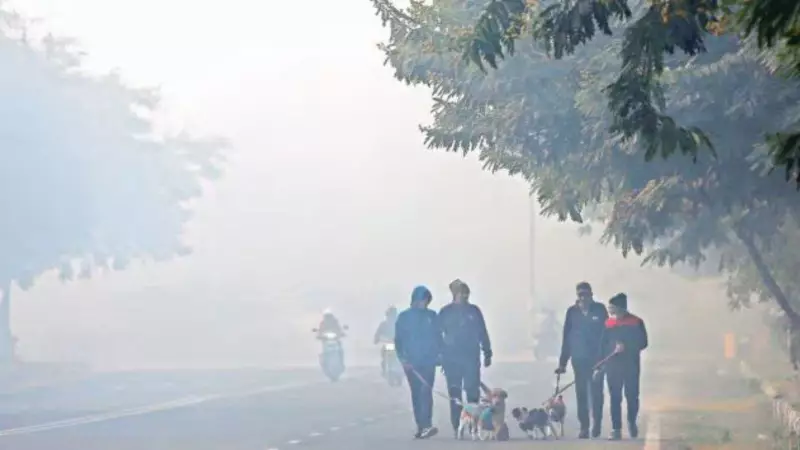
Delhi Gripped by Season's Chilliest Morning
The national capital woke up to its coldest morning so far this season on Monday, November 10, 2025, with the minimum temperature plunging to a brisk 10.4 degrees Celsius. According to the India Meteorological Department (IMD), this reading is a significant 3.9 degrees below the season's normal, marking the first time this winter that the mercury has dipped close to the 10-degree mark.
Steep Temperature Drop and Historical Context
The cold has arrived early and sharply this year. IMD data reveals a dramatic and nearly steady decline in night-time temperatures over the first ten days of November. Starting from 19.4°C on November 1, the minimum temperature fell to 12.7°C by November 6, further down to 11°C on November 8, and finally settling at 10.4°C on November 10. This represents a total drop of approximately 9 degrees Celsius in just 10 days, making it one of the most rapid early-November cooling trends in recent memory.
This sharp decline stands in stark contrast to the weather patterns of the last few years. During the same period in 2024, Delhi's minimum temperatures were comfortably nestled between 17°C and 18°C. The years 2022 and 2023 also saw a delayed onset of winter, with night temperatures remaining well above 14°C until mid-November. The last time a comparable early chill was witnessed was in 2020, when temperatures touched around 10°C in the first week itself.

Hazardous Air Quality Persists
As the city shivered, its air quality continued to pose a serious health risk. On Monday morning, the average Air Quality Index (AQI) was recorded at 344, firmly placing it in the 'Very Poor' category. While this was a slight improvement from the previous day's 4 pm reading of 370, the situation remained critical.
The Commission for Air Quality Management in NCR and Adjoining Areas reviewed the situation but decided against invoking Stage III of the Graded Response Action Plan. This decision was based on an observed "improving trend" in air quality after it had reached the upper end of the 'Very Poor' spectrum. Data from the Central Pollution Control Board (CPCB) showed that the Bawana monitoring station reported a 'Severe' AQI of 411, while other areas like Wazirpur were close behind at 397.
Weather Outlook and Expert Analysis
Meteorologists attribute this year's pronounced temperature dip to a combination of clear skies, dry northwesterly winds, and reduced humidity. These conditions are conducive to radiational cooling, where heat escapes rapidly into the atmosphere at night, leading to colder temperatures. The IMD bulletin noted that westerly winds with speeds of up to 15 kmph prevailed over Delhi in the past 24 hours.
Looking ahead, the IMD forecast predicts mainly clear skies with mist or haze in the mornings over the coming days. Some mornings may also experience shallow fog. The cold spell is expected to intensify, with minimum temperatures predicted to fall further to around 9-11°C by Friday. The maximum temperature during the day is likely to hover between 26°C and 28°C.






