

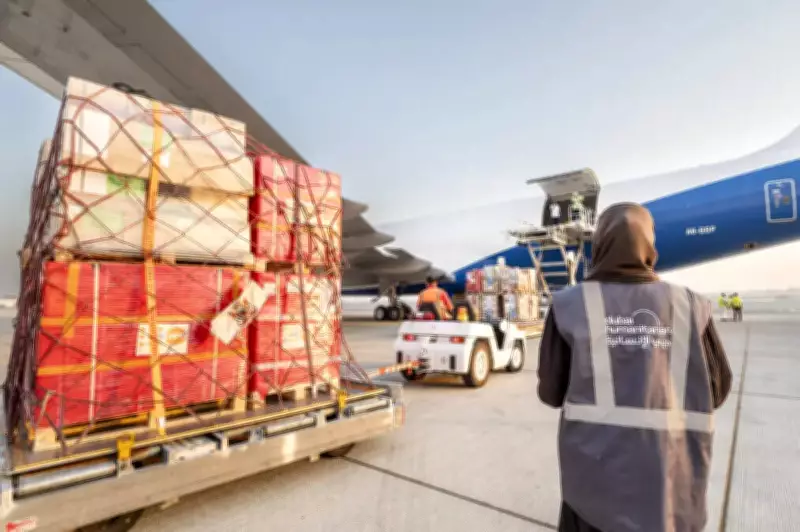
Dubai Strengthens Global Humanitarian Role with Major Airlift to Afghanistan
Dubai has significantly reinforced its position as a pivotal global humanitarian hub through a coordinated airlift operation delivering 96 metric tonnes of critical medical supplies to Afghanistan. The substantial shipment departed from Al Maktoum International Airport and successfully arrived in Kabul, marking a crucial intervention in the ongoing humanitarian crisis. This operation was executed as part of a highly coordinated response involving leading international agencies, including the World Health Organization, Médecins Sans Frontières, and UNICEF, demonstrating effective cross-border collaboration.
Critical Cargo to Support Vulnerable Populations
The airlifted cargo comprises emergency health kits, essential medicines, and primary healthcare supplies specifically designed to sustain hospitals and clinics operating under severe constraints in Afghanistan. Officials have confirmed that this comprehensive shipment is expected to support more than 250,000 vulnerable individuals for up to three months, playing a vital role in maintaining continuity of care in critical regions where healthcare access remains inconsistent and fragile.
Operation Under UAE Leadership and Logistics Excellence
The airlift reflects a meticulously coordinated logistics effort involving government authorities, humanitarian agencies, and supply chain partners, with Dubai Humanitarian acting as the central operational hub. This entity enabled the consolidation, storage, and rapid dispatch of supplies within a remarkably short operational window, showcasing Dubai's advanced logistical capabilities.

According to Giuseppe Saba, CEO and Board Member of Dubai Humanitarian, this mission powerfully demonstrates how integrated logistics platforms can ensure fast, reliable, and uninterrupted delivery of humanitarian aid, even in complex and high-risk environments like Afghanistan. Dubai's world-class infrastructure allows humanitarian partners to pre-position supplies and deploy them swiftly when crises escalate, with the hub currently connecting around 80 international organizations, including UN agencies and global NGOs, making it one of the largest humanitarian logistics centers worldwide.
Addressing the Deepening Afghanistan Healthcare Crisis
This latest shipment arrives as Afghanistan continues to face a deep and prolonged humanitarian crisis, with its healthcare system under sustained and severe pressure. Medical facilities across the country are grappling with multiple challenges:
- Critical shortages of essential drugs and medical consumables
- Severely limited funding and operational capacity
- Increased patient loads driven by economic hardship and widespread displacement
In many remote and conflict-affected areas, access to healthcare remains inconsistent and unreliable, making external support absolutely vital for survival. Without regular supply inflows, hospitals risk scaling back essential services, directly impacting vulnerable populations including women, children, and the elderly. Humanitarian agencies stress that timely delivery of medical supplies is critical not only for emergency care but also for routine treatments, vaccinations, and disease control efforts that prevent larger public health disasters.
Dubai's Expanding Humanitarian Response Network
The Afghanistan airlift represents just one component of a broader surge in humanitarian activity led by Dubai. Over the past two weeks alone, Dubai Humanitarian has facilitated the movement of more than 140 metric tonnes of aid across multiple regions facing acute crises. These comprehensive operations include:
- Strategic air cargo missions to Afghanistan
- Overland medical aid deliveries to Gaza
- Ground convoy support to Lebanon and other conflict zones
This multi-channel approach ensures that humanitarian aid continues to flow even when certain traditional routes are disrupted or become inaccessible. By skillfully combining air, land, and sophisticated logistics coordination, Dubai maintains consistent humanitarian access across volatile regions, demonstrating remarkable operational flexibility.

Strategic Implications and Future Humanitarian Logistics
The scale and speed of these efforts underline Dubai's growing importance as a global logistics gateway for emergency response, capable of delivering life-saving assistance within hours of mobilization rather than days. This latest operation reflects a broader shift in humanitarian response methodology toward faster, more coordinated, and logistics-driven interventions that can adapt to rapidly evolving crises.
Dubai's humanitarian model is fundamentally built on speed and scale, where pre-positioned supplies, centralized coordination, and multi-agency partnerships converge to ensure aid moves without dangerous delays. This approach is becoming increasingly critical as conflicts, climate events, and economic instability continue to strain traditional supply chains worldwide. As global crises grow more complex and interconnected, the ability to deliver assistance within hours rather than days is no longer merely an advantage—it has become an absolute necessity for saving lives.
Dubai's expanding humanitarian network demonstrates how strategic infrastructure investment and international collaboration can transform urgent needs into immediate action on the ground. For the UAE and the wider Gulf region, this goes beyond traditional relief efforts. It signals a deeper, more influential role in shaping how humanitarian aid is delivered worldwide—faster, smarter, and with far greater reach and impact than previously possible.





